À propos de ce voyage
Traveling along the Baima Snow Mountain route is a scenery we've long wanted to present and have been brewing for a while. There, you can not only visit centuries-old monasteries and exotic churches, but also experience authentic Tibetan village life, stroll through primeval forests, gaze at continuous snow peaks from afar, and encounter diverse and integrated cultural customs. With magnificent landscapes and rich experiences, it will be an unforgettable journey in Tibetan land.
2026.05.22-24 Baima Snow Mountain Route Travel Record
Activity Arrangement:
🚩Activity requires two participants to proceed. The trip lasts 3 days (2 nights). Departure every Thursday, but you can also coordinate with the guide according to your own schedule; generally flexible.
Departure Time:
On the first day at 10:00 AM, gather at Mountain Coffee in the foothills. Drive about 4 hours to Weixi County for lunch at a halal restaurant. Arrive at Shouguo Temple at 4 PM, then head to Cizhong Church after the visit.
Dinner and accommodation in a Tibetan village in the mountains; have dinner at a Tibetan brother's home. Accommodation options include a village guesthouse or the Tibetan brother's home.
Second day: Breakfast at the Tibetan brother's home at 8:00 AM (Tibetan style: butter tea, fried flatbread). After breakfast, depart for a mountain hike. The hike is 7 km total with an elevation gain of about 350 meters. Midway, have a tea break at a mountaintop pasture.
In the evening, drive over the Baima Snow Mountain pass. Arrive at a hotel near Dongzhulin Temple around 8:30 PM. Have dinner at the hotel restaurant and rest.
Third day: Wake up naturally in the morning, have breakfast, then visit Dongzhulin Temple.
Have lunch in Benzilan town at noon. Start the return journey around 2-3 PM, expected to arrive in Dali at 8:00 PM.
Notes
1. The Baima Snow Mountain route trip is a 3-day, 2-night road trip in the Baima Snow Mountain area. You will stay in mountain homes and hotels. Guests with a relaxed travel mindset, not too picky, and with a refined sensibility are welcome.
2. The entire activity covers altitudes from 2000 to 4300 meters, with significant temperature differences. Please prepare clothing according to your own situation.
3. Accommodation defaults to one room per person.
4. The fee includes guide fee, round-trip transportation, travel insurance, 2 nights accommodation, 6 meals, and mountain entry fee. That is, all expenses except personal shopping.
5. The fee is per person, same price for adults and children, no group discounts.
Cancellation and Modification Policy: See the end of the text.
For activity details and post-booking itinerary arrangements, please add the responsible guide's WeChat:
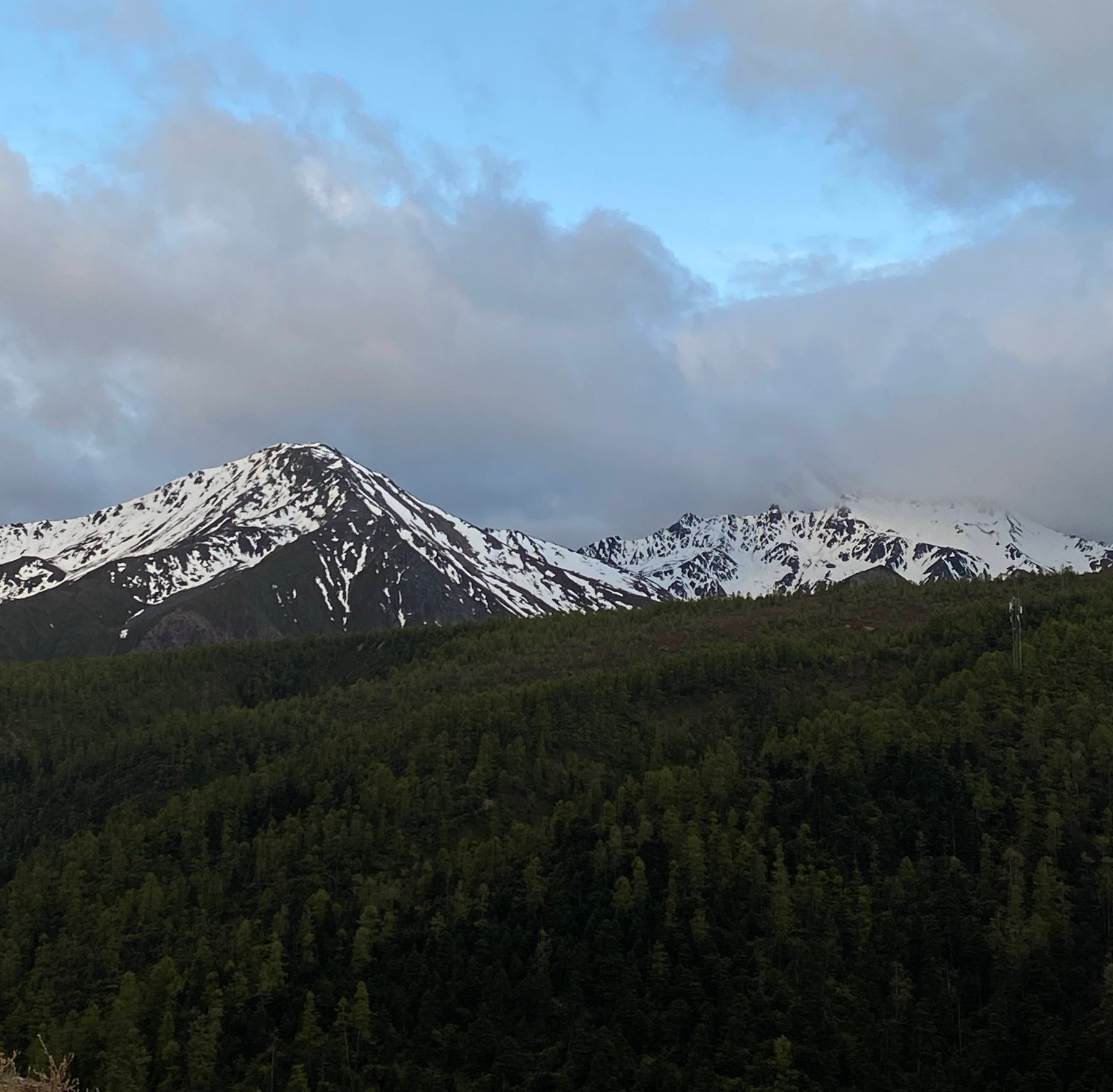
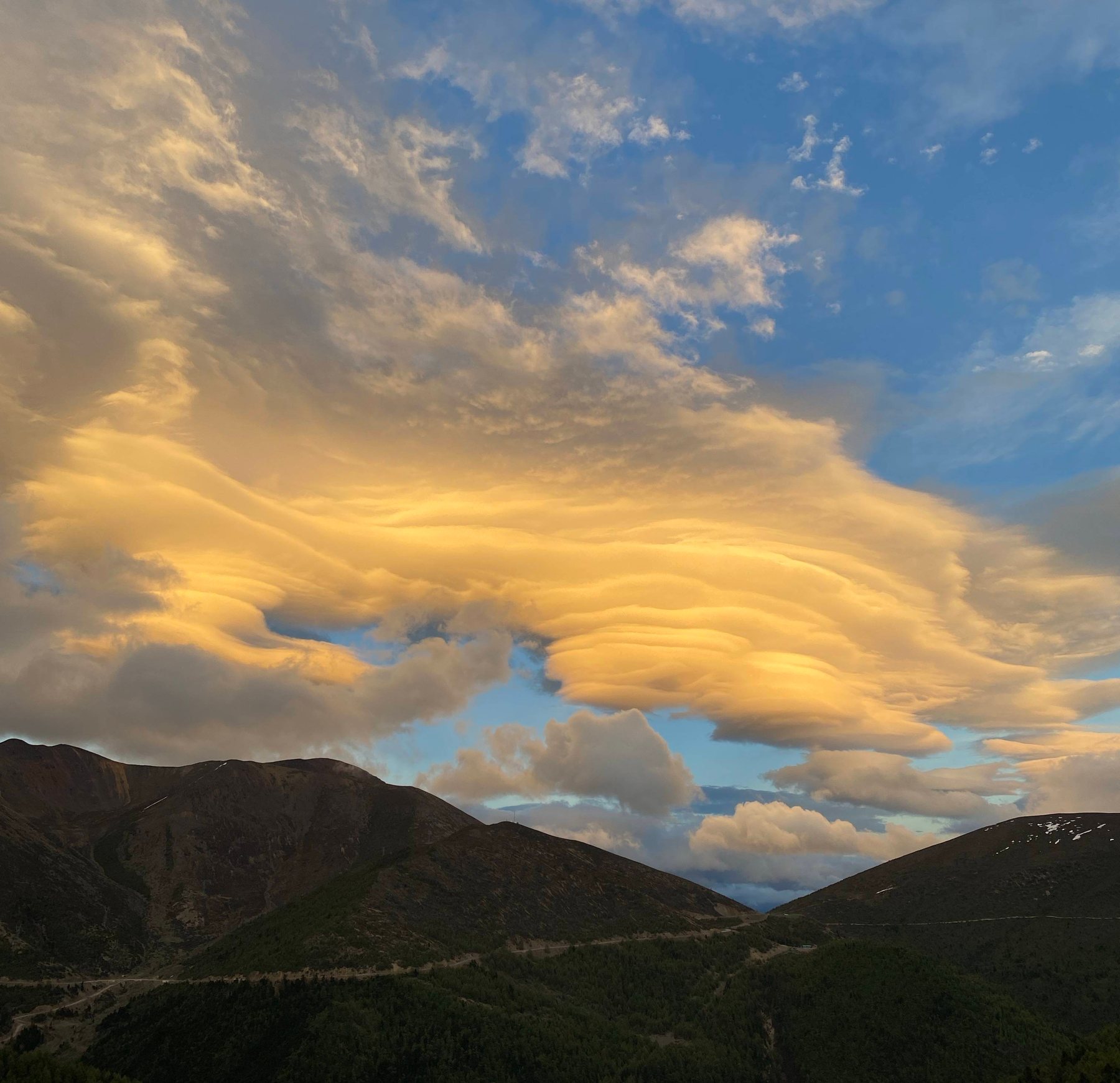
At dusk, the phone screen showed we were approaching 4300 meters. As the altitude increased, the temperature inside the car dropped. Foolish as we were, we were stunned by the magnificent scenery and forgot to turn on the heater. Shivering while exclaiming, we were crossing the Baima Snow Mountain pass. Zalaquenue's silhouette loomed in the clouds, with a huge spiral golden cloud nearby. Excited, I immediately sent a photo to Jason, saying: Our exploration luck.
This trip originated in the autumn of 2025 when He Chen, after returning from a trip, repeatedly told me about a Tibetan village at the foot of Nongbugeche Mountain and a Tibetan brother he met, saying I would definitely like it too, as well as the forest, temples, churches, and people surrounded by snow-capped mountains...
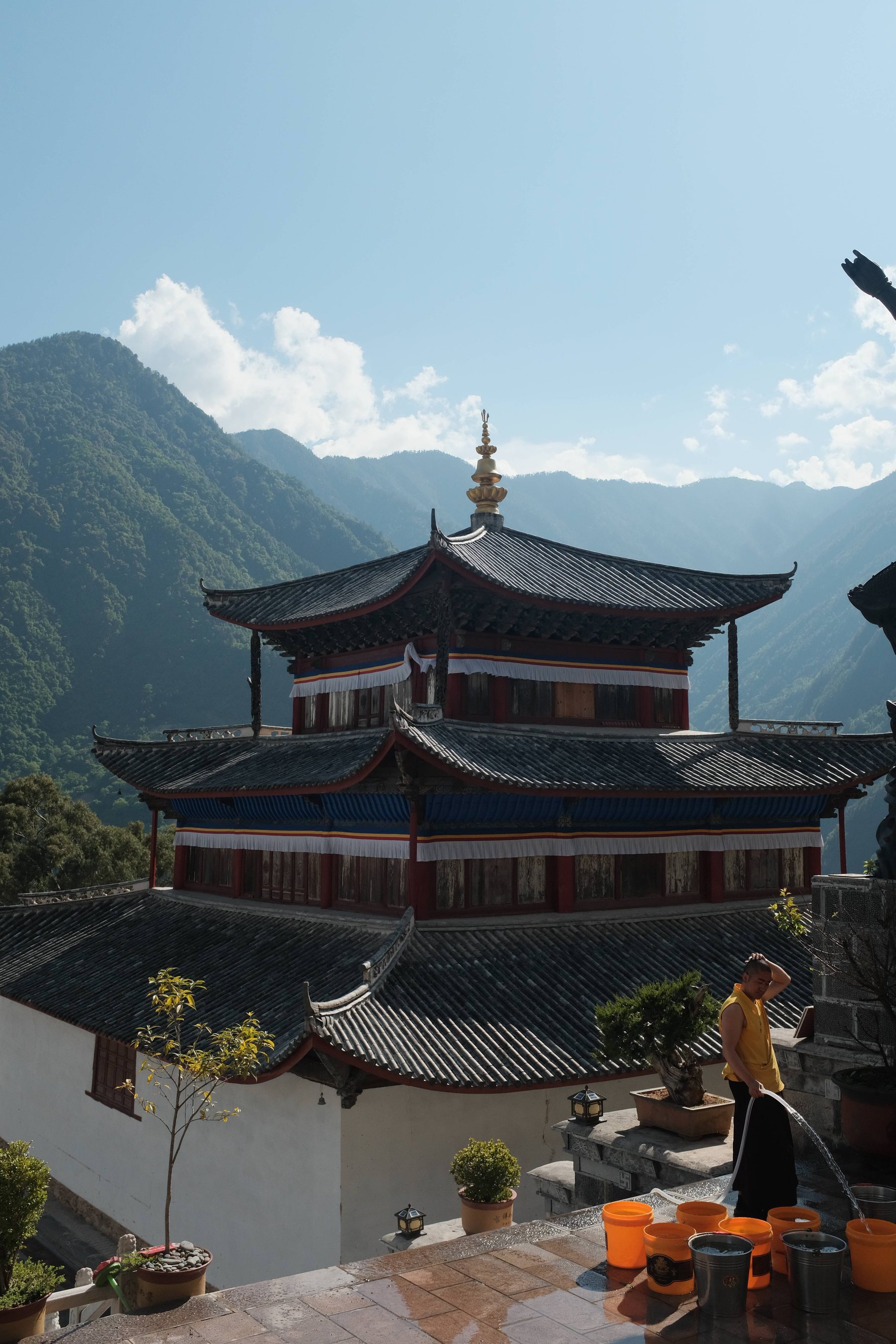
When we left Dali, the May heat chased us along the green Lancang River until we reached Kangpu in Weixi, where it slightly subsided. The afternoon breeze picked up, stirring the prayer flags, victory banners, and wind chimes at Shouguo Temple. This little-known Kagyu monastery hidden in the Lancang River Gorge might be the most unique Tibetan Buddhist temple I have ever visited. It was our first stop.
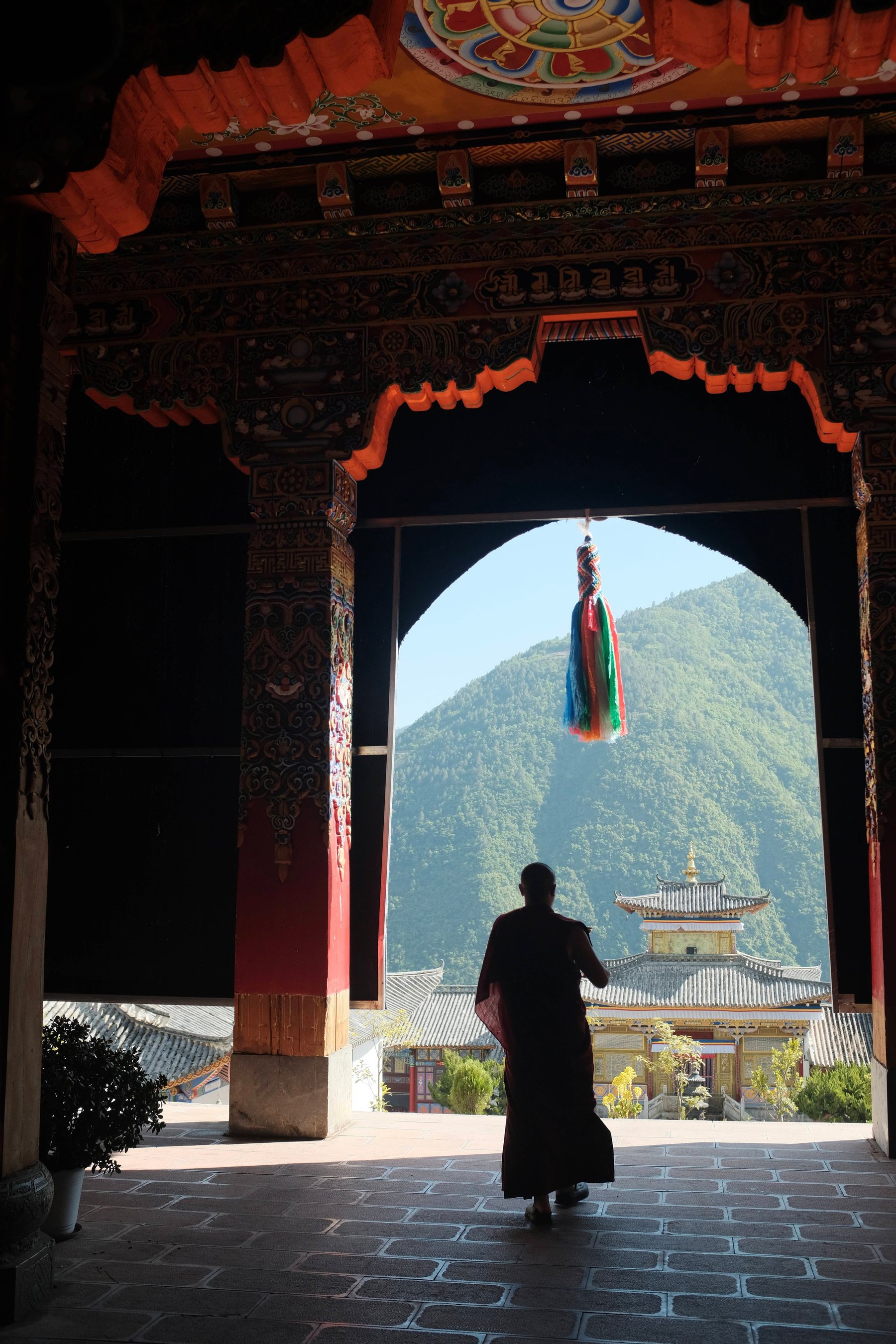
Upon arrival, monks were chanting in the main hall. I somewhat rashly stepped through a slightly ajar courtyard gate beside the hall. In the center of the courtyard stood an old, gracefully shaped crape myrtle tree. Inside hung several black curtains. A young monk chanting saw me, startled for a second, then calmly said: Since you're here, kneel and kowtow three times, then pour this bottle of wine into the cup. I did as told without knowing why, and the wine made a lovely tinkling sound as it poured. We chatted a bit, and he politely informed me that this courtyard is not open to outsiders. He saw me out and gently closed the gate.
In the 7th year of Yongzheng of the Qing Dynasty, in response to the policy of "replacing native chieftains with appointed officials" (liuguan policy), the Naxi female chieftain He Niang of Yezhi, who believed in the Kagyu sect, voluntarily funded the construction of Shouguo Temple. During the "gaitu guiliu" period, Shouguo Temple was protected by Naxi chieftain forces, avoiding forced conversion by the Gelug sect. Thus, the Kagyu sect was fully preserved here, making it the largest existing Kagyu monastery in northwest Yunnan.
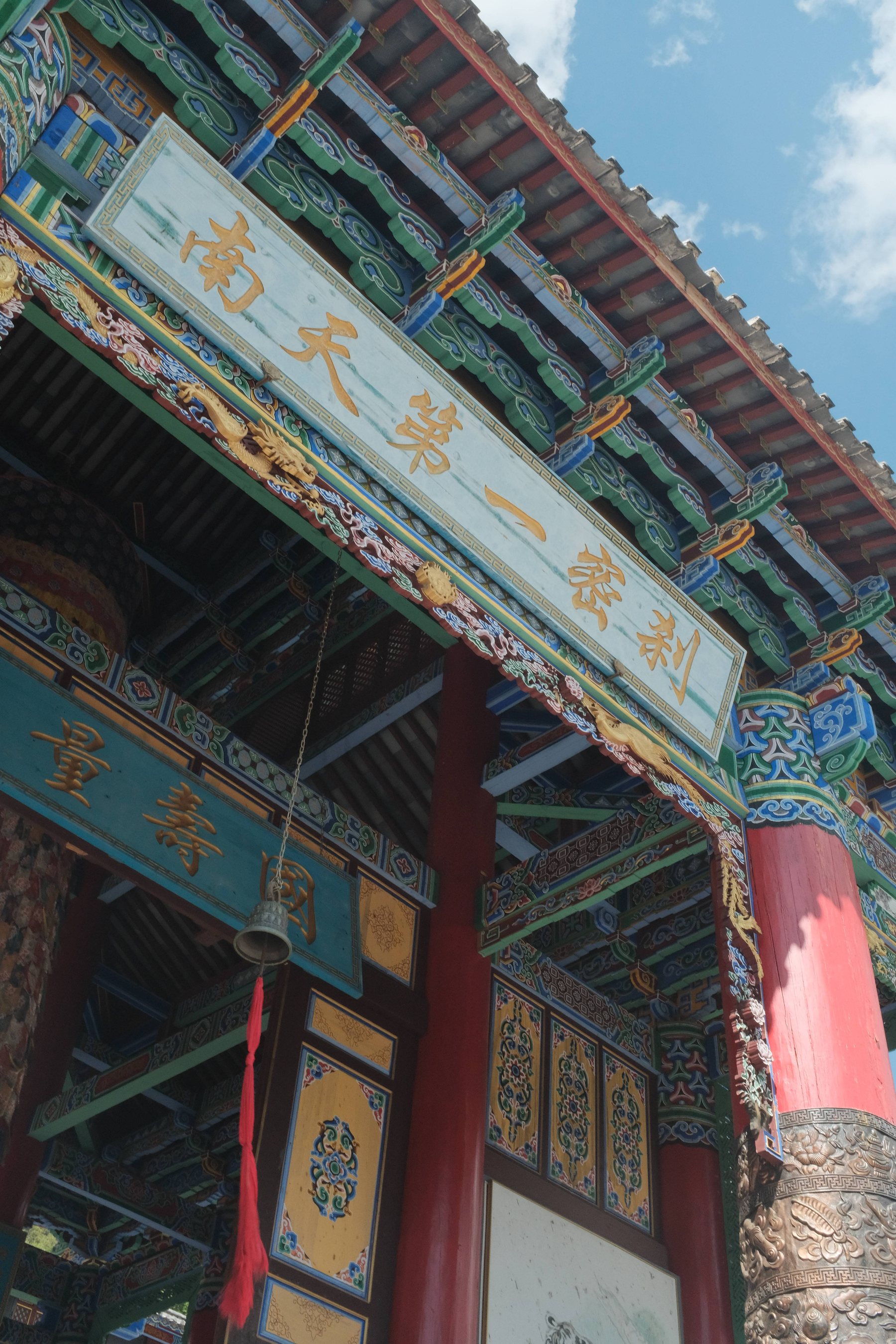
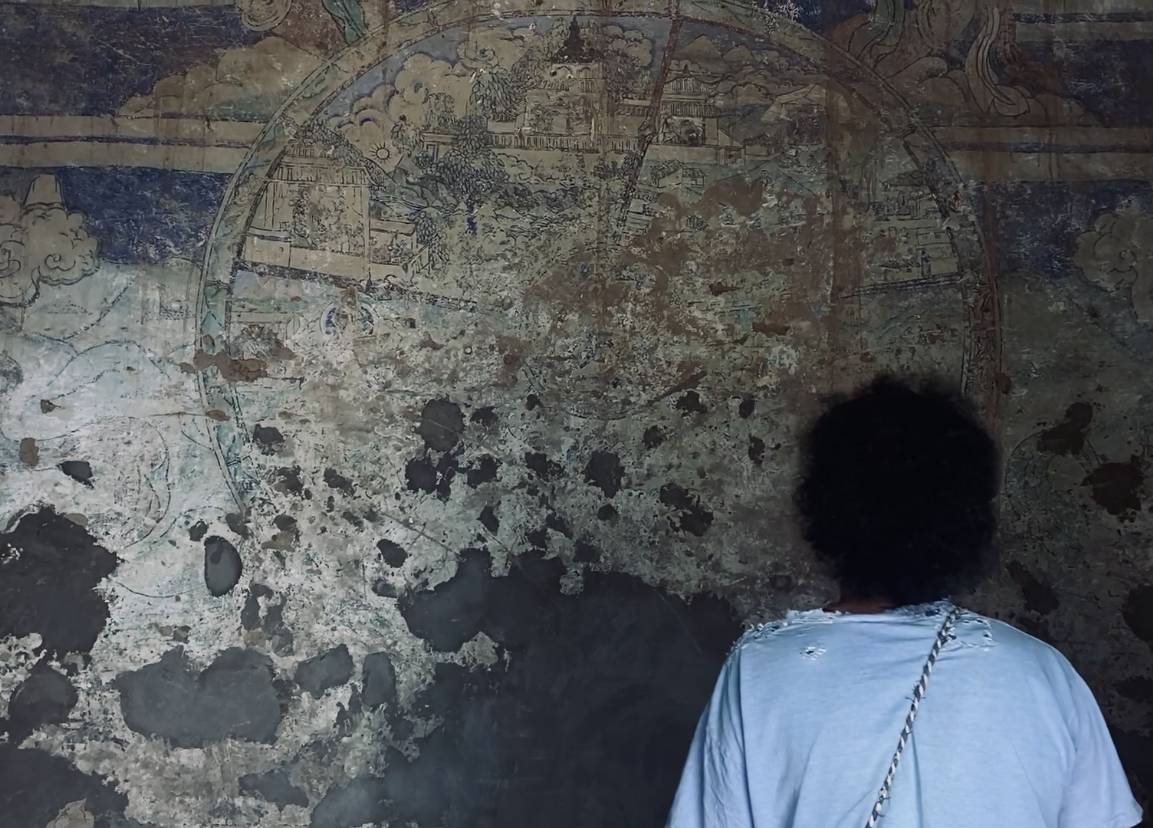
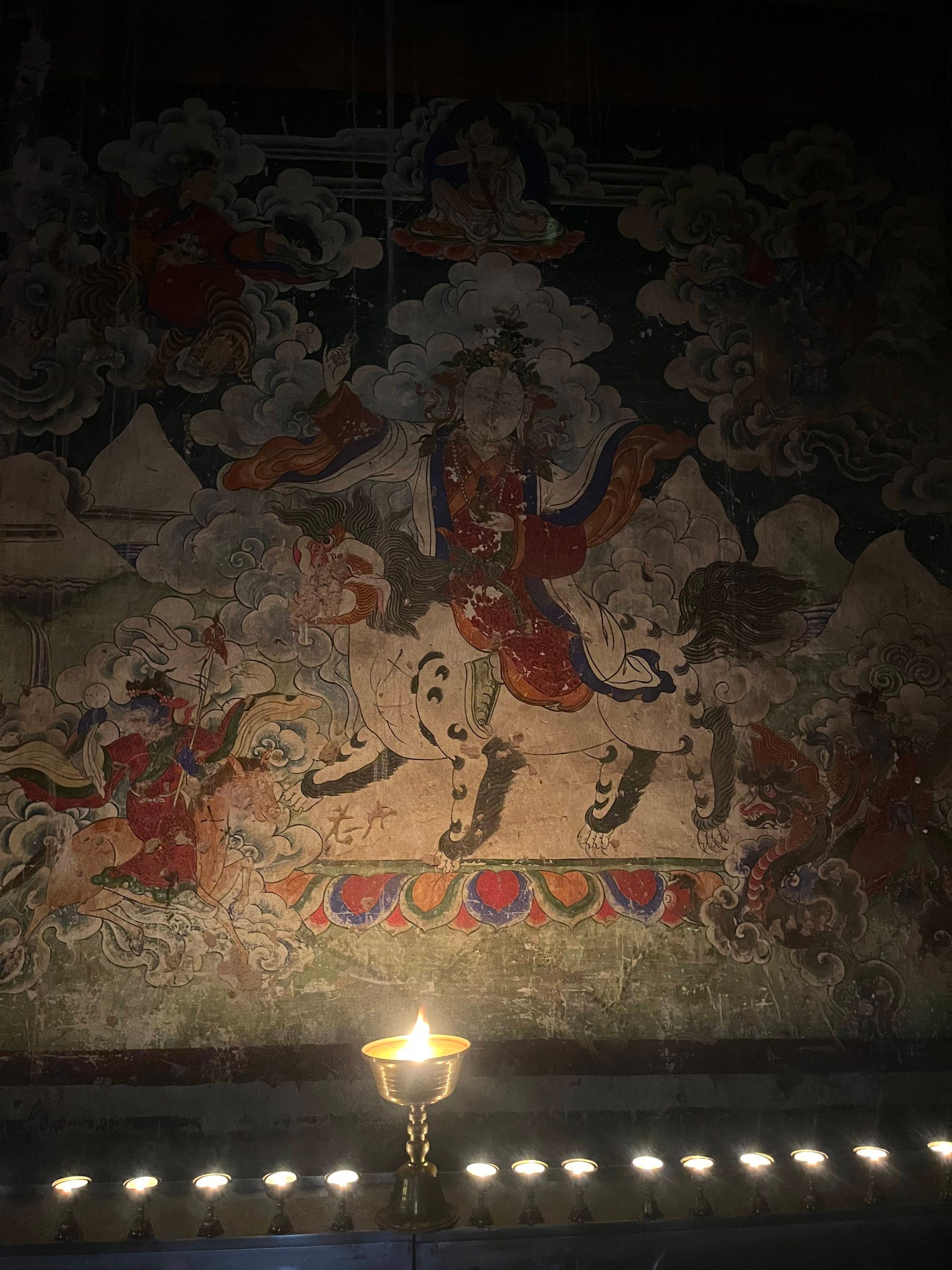
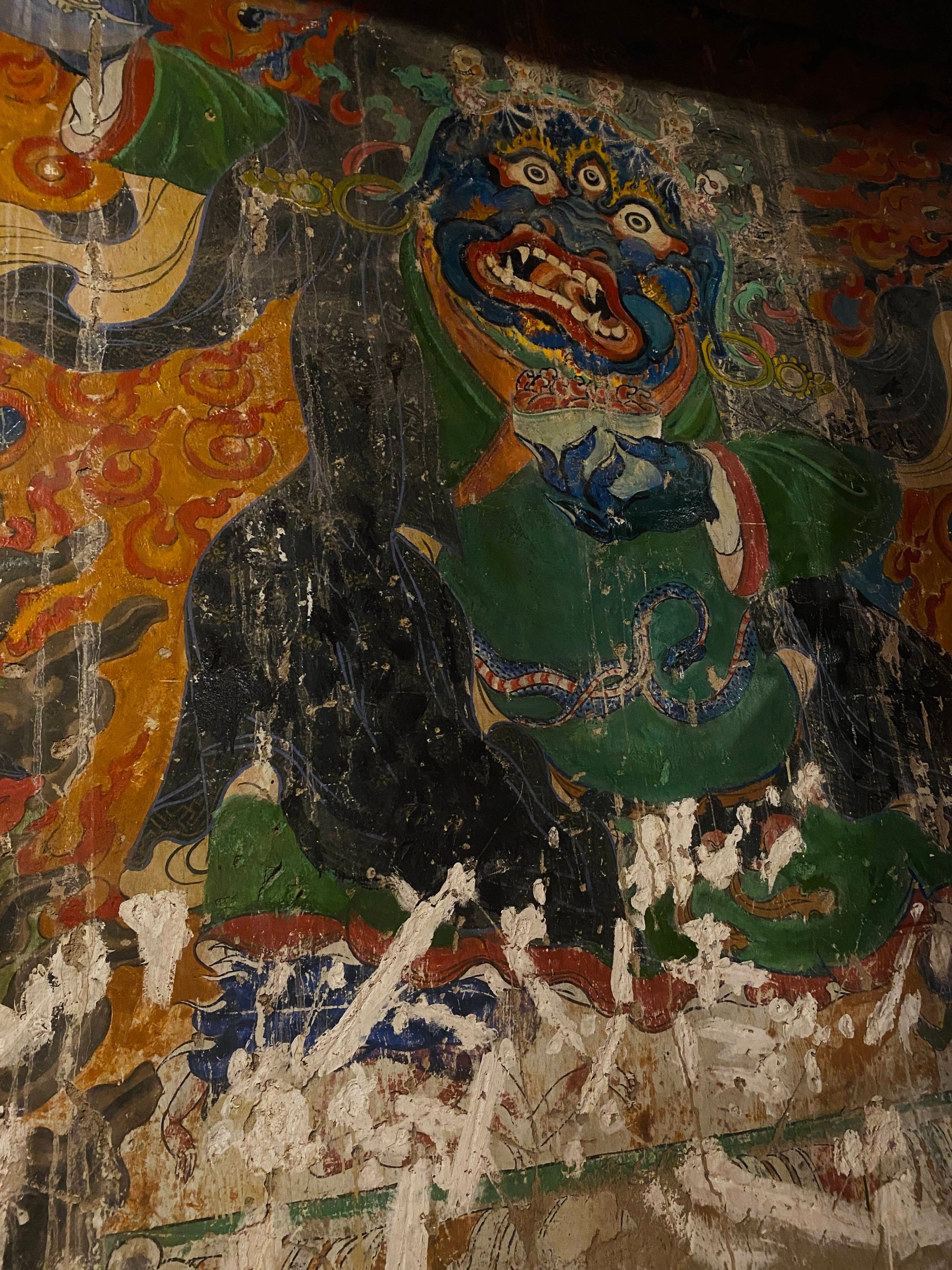
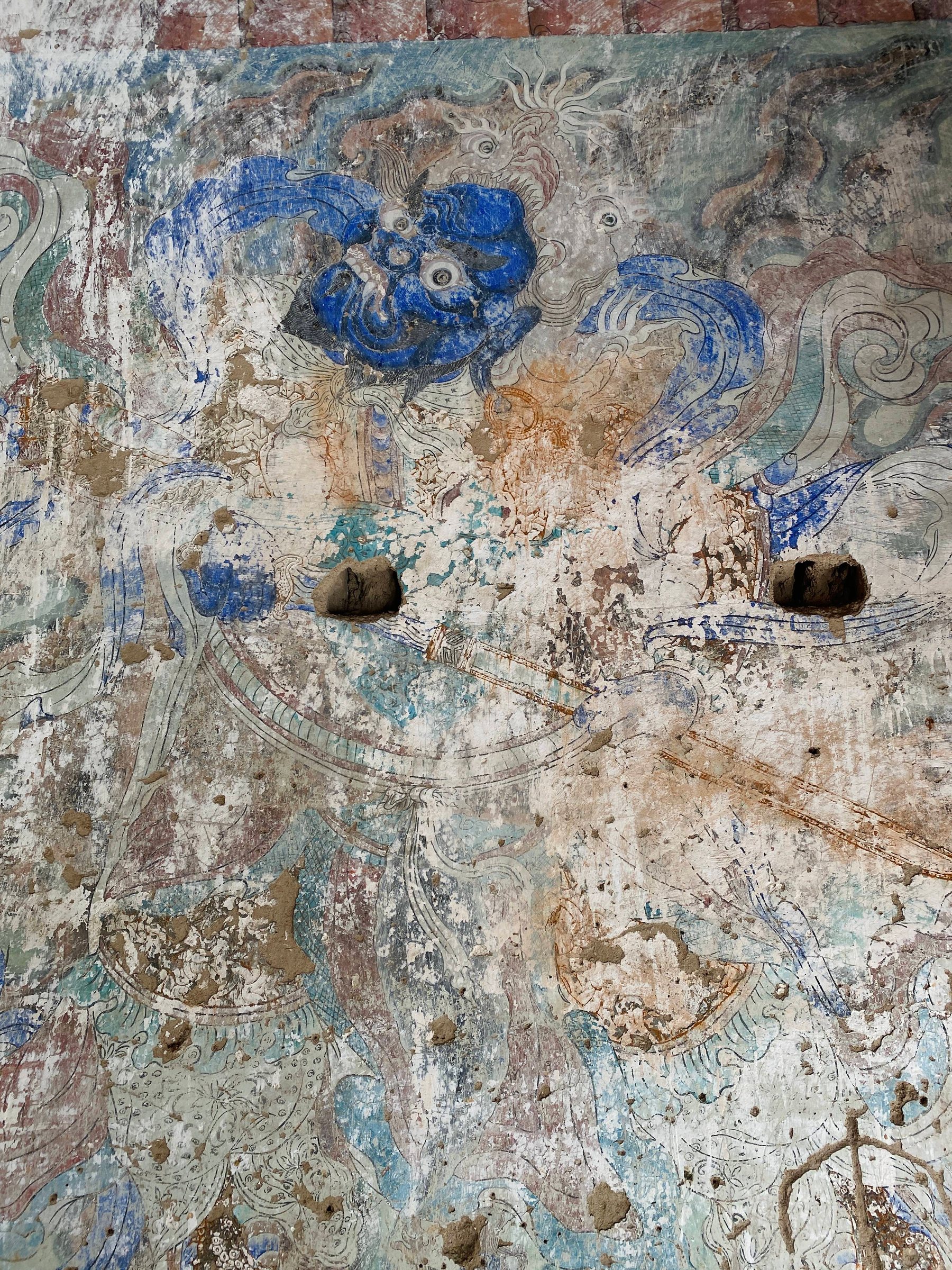
Shouguo Temple blends Han, Tibetan, and Bai architectural styles. The temple still preserves many exquisite murals with elements of multiple ethnic beliefs and cultures. Amid the balance of Naxi chieftains, Tibetan lamas, and Han officials, it has traversed a long, lonely history in this valley.
Across the Lancang River, facing Shouguo Temple from afar, another "century-old loner" is Cizhong Church. On the way to Cizhong Village, we drove through Yezhi Town, the new county seat of Deqin, currently a large construction site bustling with activity.
We parked outside the wall of Cizhong Church. While turning into the alley leading to the church, we saw a vineyard. The old man in the vineyard said these were grape varieties brought from France by the "foreigners" who came from afar. Over 100 years ago, these French missionaries brought not only the Bible but also Bordeaux grape seeds. This ancient variety called "Rose Honey" completely disappeared from its homeland due to a phylloxera epidemic in Europe, but survived in this small village at the foot of a Tibetan snowy mountain, quietly growing until today.
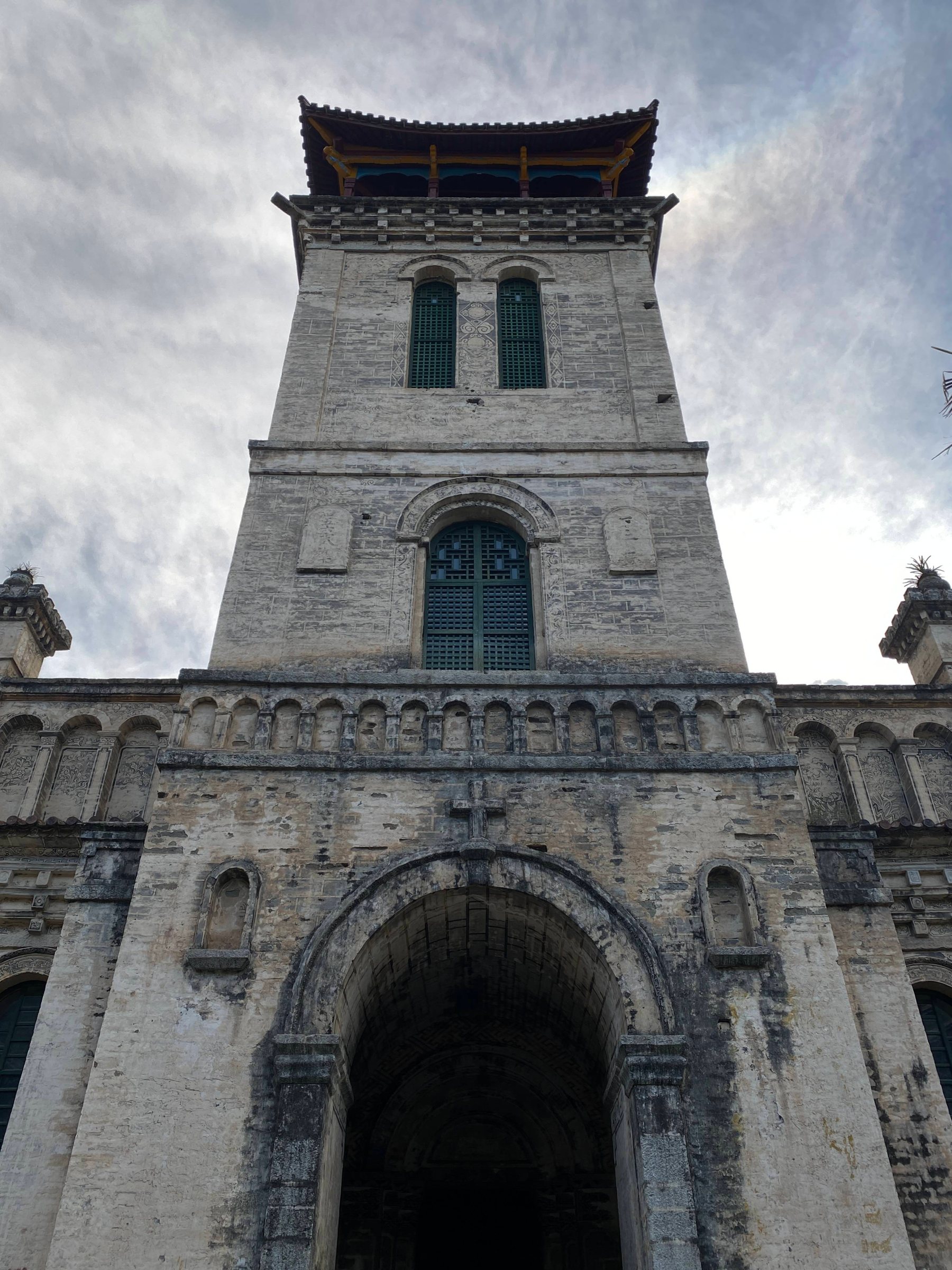
Entering the courtyard, I was in awe of the church. It might be more unique than any church I've seen in many countries: Western stone architecture with a Chinese-style flying eaves roof. Inside, the walls and ceiling paintings incorporate Bai and Tibetan decorative elements. Worshippers, mostly local middle-aged and elderly people, sat scattered on pews in silent prayer.
In 1905, with growing land and religious conflicts with locals, the famous Weixi Incident broke out. Priest Yu Bonan was killed, and Cigu Church nearby was burned. The Qing government, under diplomatic pressure, forced major monasteries in Deqin and the public to fund the rebuilding of the church. Twelve years later, Cizhong Church was completed, becoming the Catholic cathedral of the Yunnan mission area. As time passed, statistics show that currently, about 60% of Cizhong Village's population are Catholic, with the rest believing in Tibetan Buddhism, covering Tibetan, Han, Lisu, Naxi, and other ethnic groups. Families of different beliefs and ethnicities now live in harmony.
Leaving the church, we rested by the roadside. Occasionally, we saw Western faces visiting; they must know the story, and I wondered what feelings brought them here.
The Tibetan brother He Chen mentioned sent a message saying he was working at a construction site today and would be home late, so we should go to his house ourselves. By the time we arrived, it was dark and we couldn't see the village. Entering the living room, his family was there and said they had already killed a chicken. While He Chen was busy in the kitchen, we lay on the second-floor terrace to rest. There were so many stars in the sky. The fatigue of the day's journey slowly dissipated. It was so quiet here. I immediately liked it, perhaps also because I'm accustomed to Tibetan furniture and smells. It truly felt like visiting a relative's home when I was little.
Late at night, the brother returned on his motorcycle, looking tired. When asked about his work, he said he was building government houses in Yezhi Town. This reminded me of a distant but not-so-distant event, which I had just read about in a book two months ago. Seeing it reflected in his tired face gave me a strange sense of time travel.
In 1991, a Sino-Japanese expedition team attempting to climb Kawagebo Peak encountered a disaster. All 17 members disappeared in the snowy, windy night with no survivors. The aftermath and discussions lasted for years. To some extent, this made the sacred mountain known as Kawagebo among Tibetans famous to the outside world under the inaccurate name "Meili Snow Mountain." The "unconquerable sacred mountain" began attracting tourists, but Deqin County, located in a steep gorge, has been under constant threat from increasing geological hazard sites since the 1990s. In the early 2000s, the ban on logging natural forests, the influx of tourists, and considerable economic benefits temporarily shelved this Damocles sword. By 2020, the number of geological hazard sites had surged to over a hundred, making the relocation decision unavoidable. Yezhi Town, with its flat terrain, low altitude, and low risk of geological hazards, became the first choice for the new Deqin county seat. The brother said construction started last year and will take another 2-3 years.
We called the village secretary to coordinate the brother's accompaniment the next day for our mountain hike, then went to sleep. If you can wake up early the next morning, I strongly recommend taking a walk in the village. You'll grow to like it even more. The quaint, natural Tibetan houses line the village paths. Villagers leisurely walk on roads and between fields. The village feels like a paradise surrounded by layers of tall walnut trees.
After breakfast with butter tea and delicious fried flatbread, we set off up the mountain. Light rain began to fall, and mist rolled in. Yanzi and Zhenhao were eagerly hoping to find a morel mushroom today.
The forest here is primitive and open, with giant trees covered in hanging moss everywhere. It was a type of forest I had never seen before. The path wound upward through the woods, extending to a pasture at the top. From there, you could see Baima Snow Mountain, Bila Snow Mountain, and the Lancang River Gorge all at once. We took a short tea break in an abandoned log cabin in the pasture, exclaiming together: What a spectacular view!
Zhenhao doing Baduanjin
Indeed found one
Even taken on its own, this hiking route is an impeccable, perfect hike for most people, I thought as a hiking guide then.
In the evening, we said goodbye to the lovely brother and this beautiful village, then drove over the Baima Snow Mountain toward Benzilan. He Chen raced against the sun, driving the green car named Asai through the snowy world, slapping the door to drive away yaks strolling on the road. Kawagebo (Meili Snow Mountain) appeared near and far. "I've finally returned to Tibetan land!" The advantage of being good at segmenting different phases of life is that sneaking a peek into the past feels wonderfully strange.
As night fell, we arrived at the hotel near Dongzhulin Temple. The hotel was run by an elderly Tibetan couple, exuding an atmosphere of the "backpacker era." It had been a long time since I stayed in such a place. During dinner, we talked about those times with a slightly awkward but nostalgic feeling.
Early in the morning, we waited for noodles in the hotel dining room. Outside the window, in the barley fields, villagers sat together having breakfast. On the road, an elderly woman tirelessly used a long bamboo pole to drive away birds, preventing them from pecking her cherry tree. From here, we could already see the golden roof of Dongzhulin Temple from afar. When we left, the old woman was still "fighting" with the birds.
We entered the temple through a quiet alley at the back, passing by rows of monks' living quarters. It felt like walking through a quiet Tibetan village. The monks' quarters were tidy and modern. The monks had planted many lovely flowers and plants on their small balconies. Caring for plants is also a practice in cultivating patience and focus—a subject I'm poor at.
Gaden Dongzhulin Temple, like Shouguo Temple, originally belonged to the Kagyu sect but had a completely different fate. As a Kagyu monastery at the time, it participated in the turmoil against the Gelug sect in the Kham Tibetan region in the 17th century. After defeat, it was ordered by the Fifth Dalai Lama to convert to the Gelug sect. By merging with surrounding monasteries, Dongzhulin Temple actually grew larger.
Stepping into the main assembly hall, the central statues are of Gelug founder Tsongkhapa and his disciples, declaring to every visitor that this is a Gelug monastery.
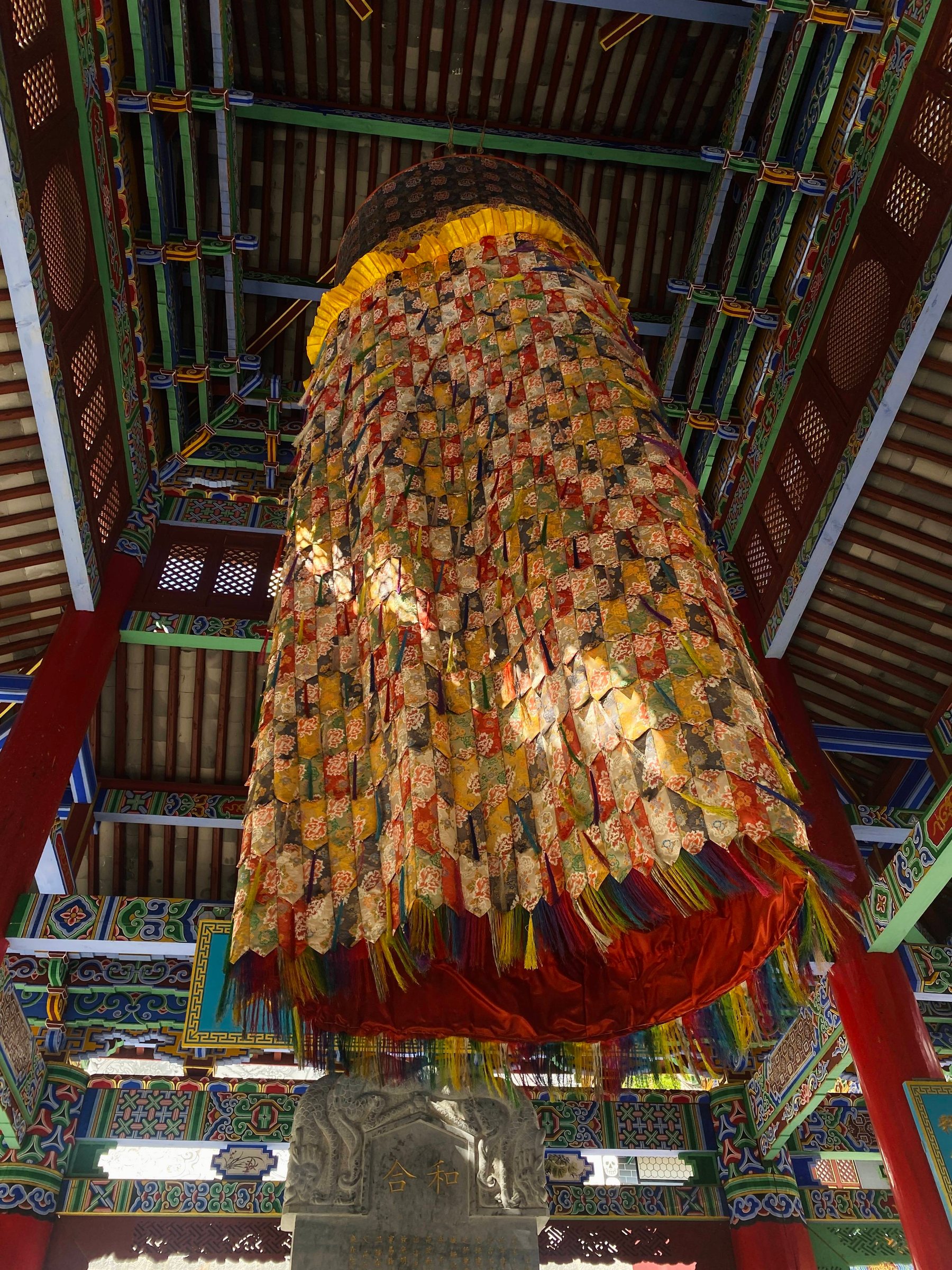
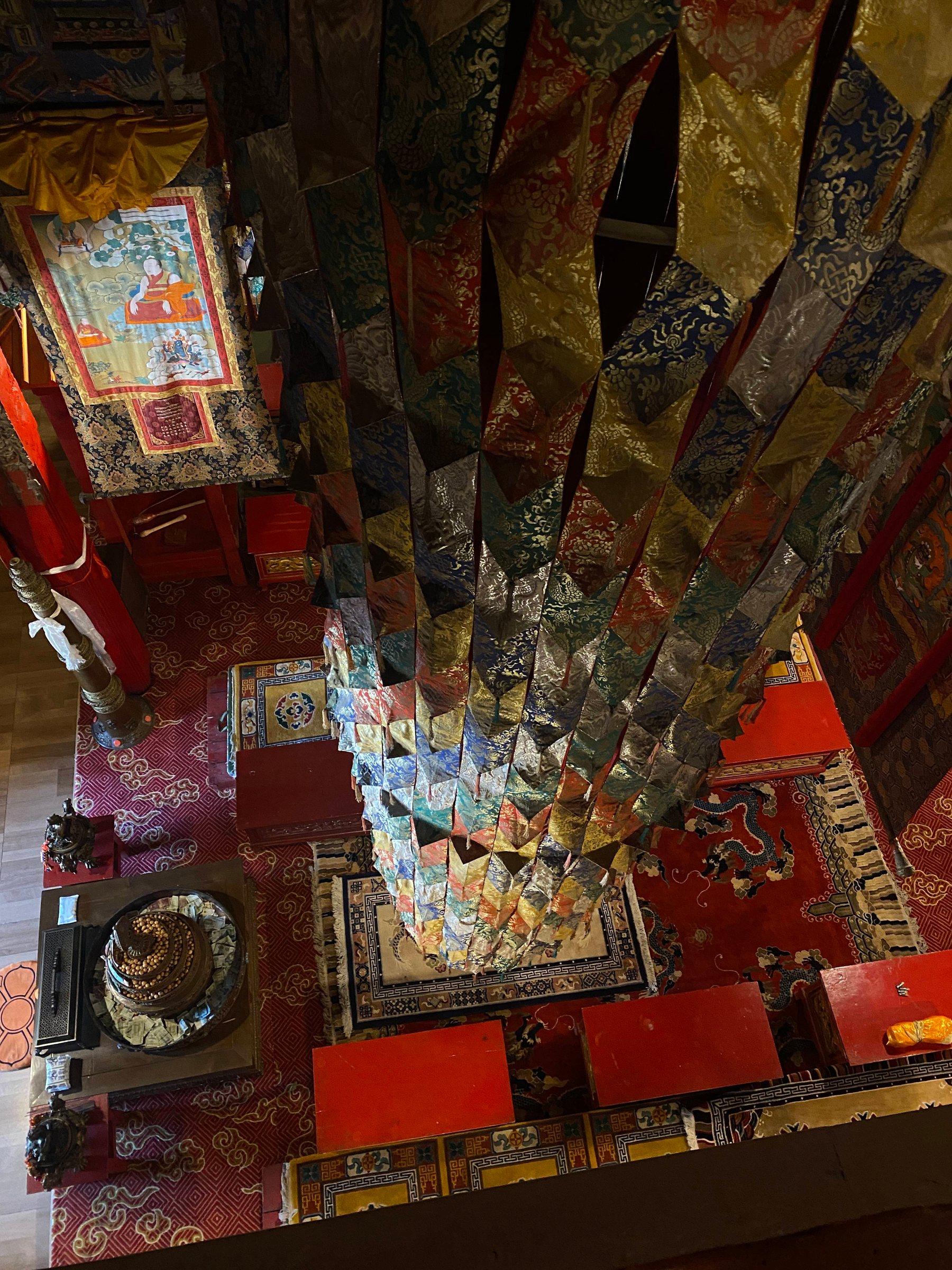
Climbing the wooden staircase on the left side of the hall, you can visit floor by floor. On the third floor, at the center of the hall, stands a huge golden three-dimensional mandala inlaid with various gems and agate, resembling a miniature palace, extremely intricate and solemn. Dongzhulin Temple has three such mandalas, and there are only three of this kind in the entire Kham-Tibet region.
We returned along the old National Highway 214. Outside the window were narrow, steep cliffs. This forgotten road cut straight through villages along the way, seemingly becoming part of them. Nowadays, few cars use it, and village cattle and sheep casually walk on the road. We had to stop and gently remind them to make way.
Nearing Shangri-La, a village appeared on a distant hillside, surrounded by a vast dark green pine forest, with Shika and Tianbao Snow Mountains behind it. I fell in love with it at first sight and plan to come stay here this autumn and walk through that forest. Although I couldn't find its name, not knowing the name is better—so the world doesn't shrink.
Cancellation and Modification Policy (Operate on your own in the mini-program order system):
Before the activity starts:
Within 12 hours: 30% refund
12-24 hours: 50% refund
24-48 hours: 70% refund
Over 48 hours: 100% refund
No refund after the activity starts.
Full refund due to weather (guide handles cancellation).
*Principle of fairness: Our cancellation policy is mutual. If the trip cannot proceed after booking and confirmation (excluding weather reasons), compensation is made at the same proportion.
Photos