

Über diese Reise
Itinerary:
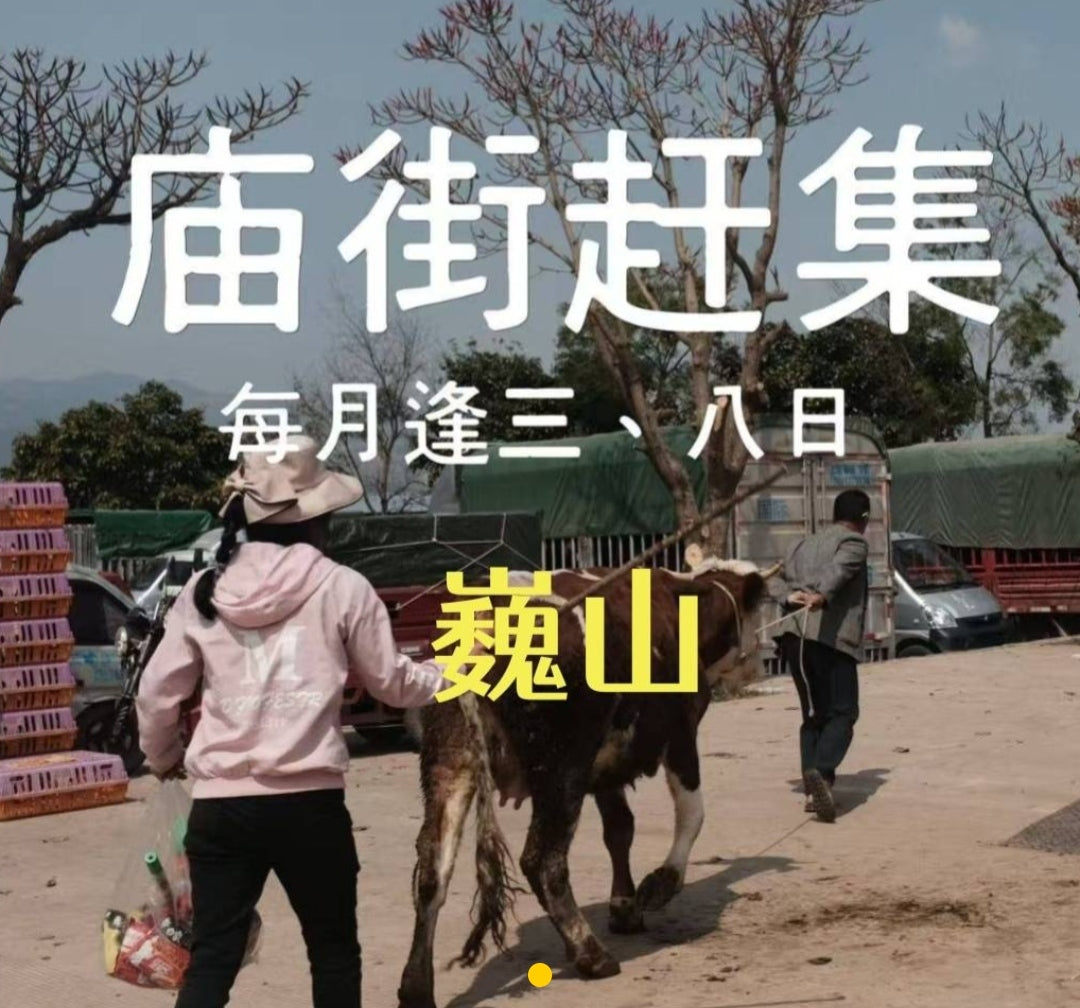
Destination: Weishan Temple Street (60 km from the ancient city, driving time: 1 hour)
Departure: 10:00 AM, meet at Simple Stone Bakery opposite Dali University
After the market visit, we'll have lunch at the livestock trading area in the market, eating local braised dishes and snacks (cost shared, affordable, you can order according to your preferences)
Return to Dali Ancient City: 5:00 PM
Record: May 18, 2026
For itinerary inquiries: please directly add the WeChat of the following team leader.
After booking, send the order to the team leader, who will add you to the trip group chat.
I've long wanted to properly record the market days in Yunnan, because they are rich, interesting, like a window through which to understand a place, a local person, and a microcosm of life. In various trips in Yunnan, the route from village markets to forests has always been a theme. What locals eat and wear, what grows in the local forests.
But every time I go to the market I get very excited, and when excited I have no mind to record, and when I calm down I don't know where to start, because it's so trivial, daily, and richly complex.
We have two market activities: Fengyu and Shangguan, each with its own characteristics and temperament. Temple Street is not my first time either, but today it felt especially different. When I came back I thought I could try to record it. Write a long, rambling account of a short trip.
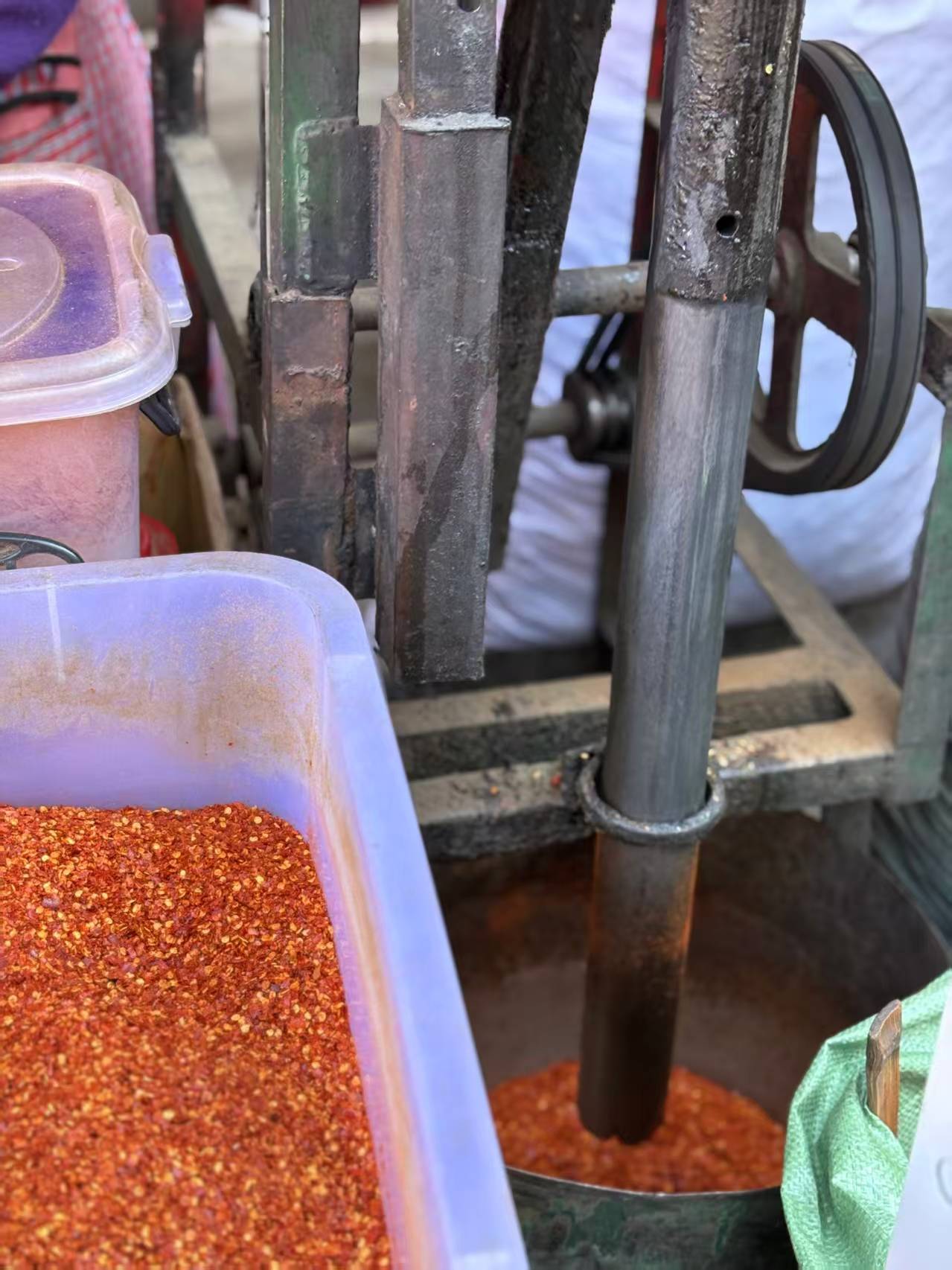
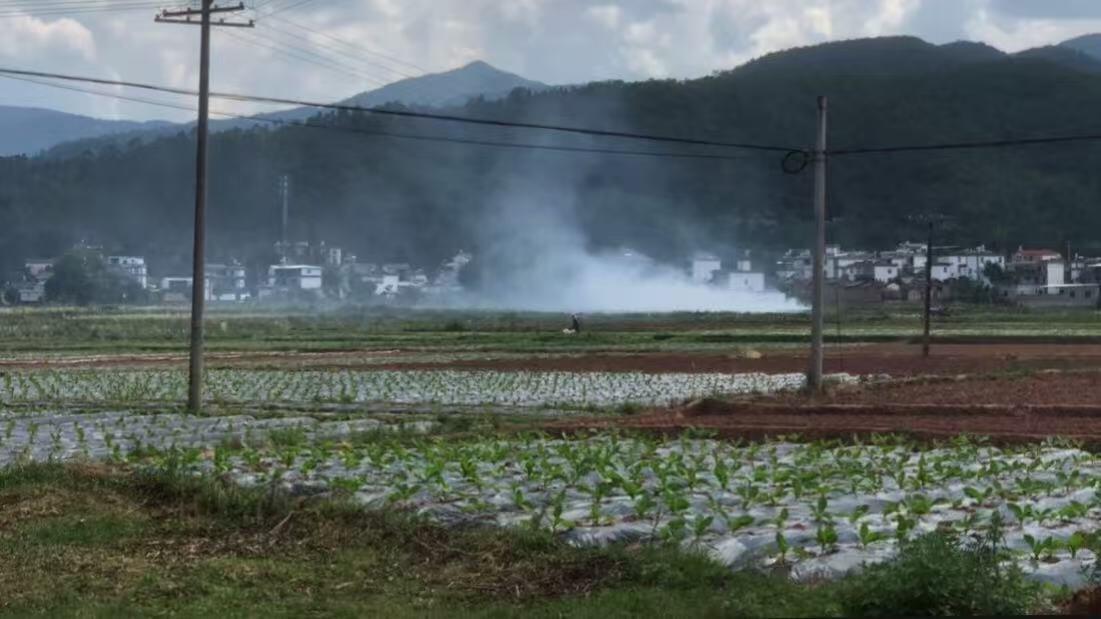
My first visit to Temple Street market was before the New Year, still winter. Wangwang and I each bought a 20-yuan cotton vest, and I really liked mine. Temple Street's fermented black beans are famous, and chili is one of the main ingredients for making them. It happened to be chili season, so the whole market was filled with the rhythmic "dong dong dong" of pounding chilies, like a unique rural market symphony unique to Temple Street, with people and scenes like a stage play.
Weishan chili-pounding machine
Going again today felt different again. Besides the hustle and bustle of the market, there was more gentleness and loveliness. From the livestock trading area to the daily necessities area, from the lively downtown to strolling through ancient, abandoned villages, crossing the village and walking along the pond, we could overlook the entire century-old village. Then resting in the shade by the pond felt like slowly crossing time.
About the market
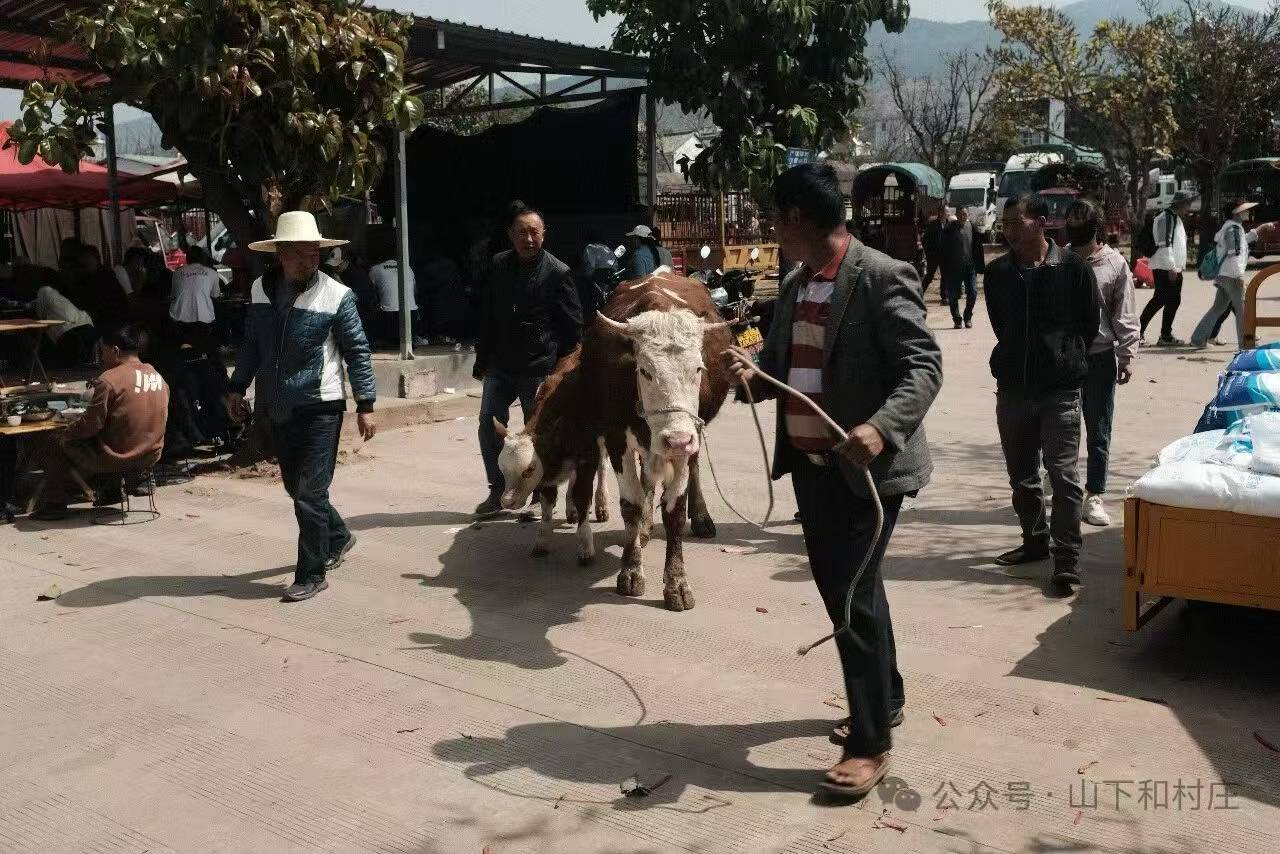
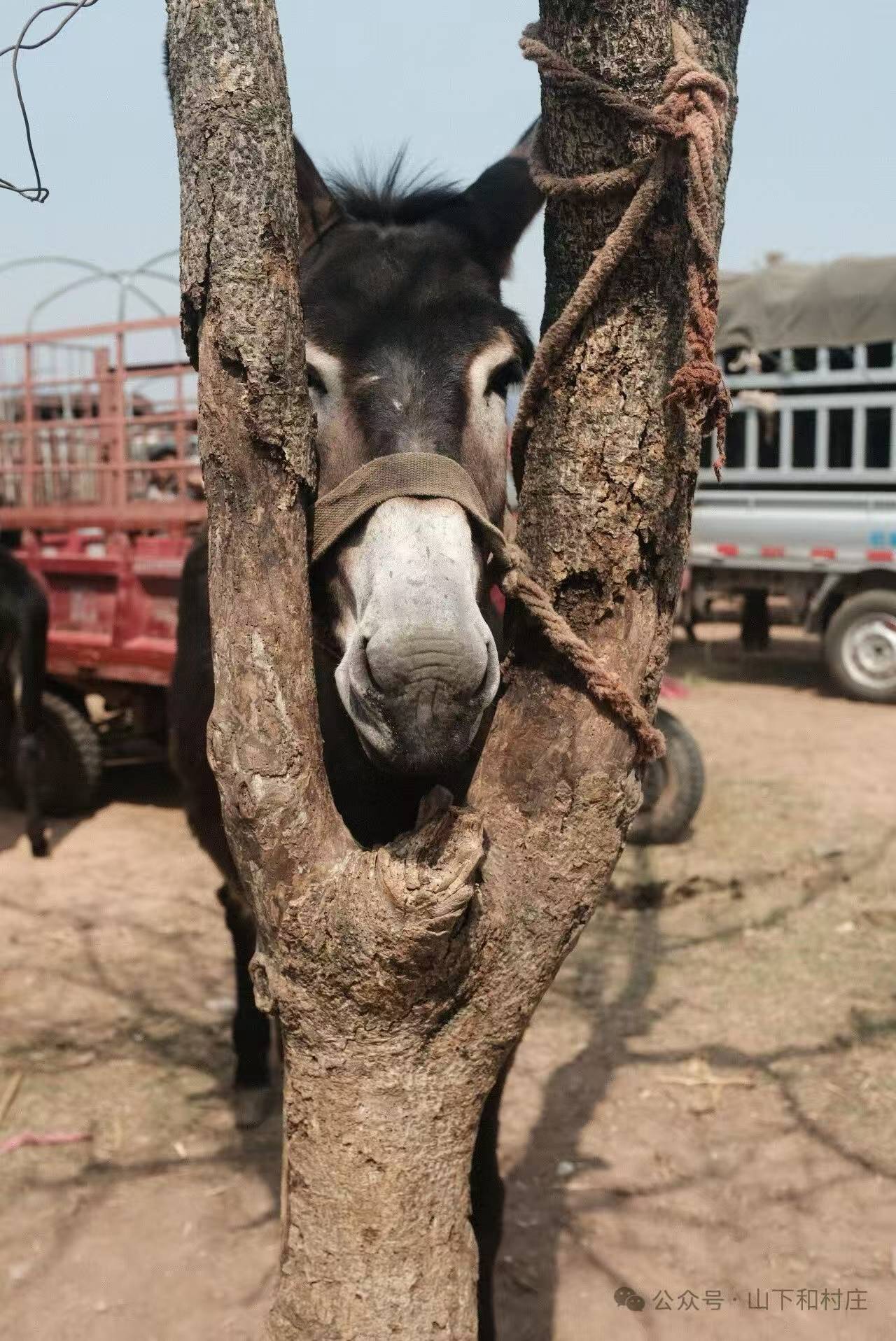
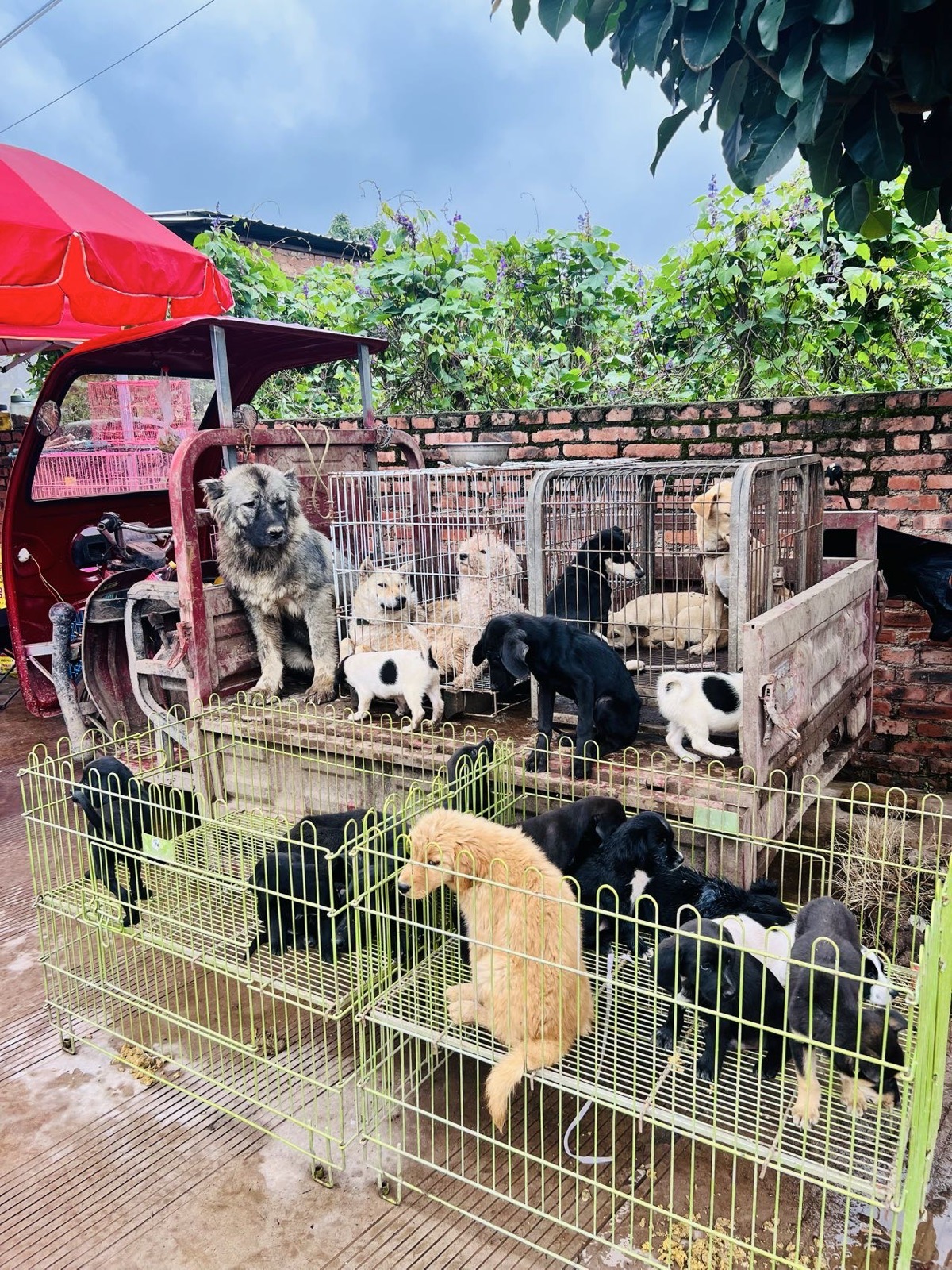
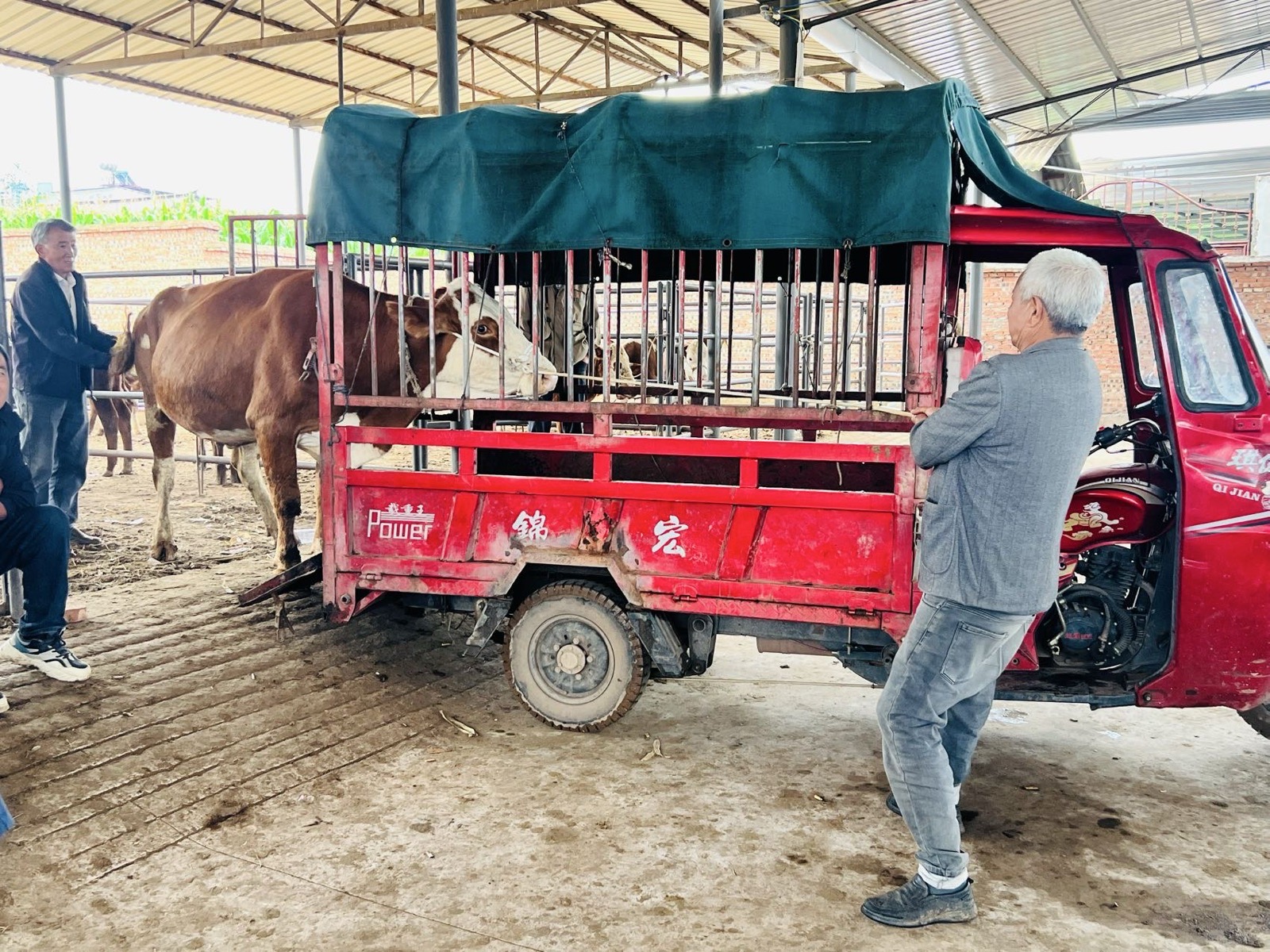
I've been to many markets in Yunnan, and the livestock trading area usually has many cattle, sheep, pigs, chickens, ducks, as well as cats, dogs, pigeons, rabbits, hamsters, etc. At the Fengyu market, I once saw a big brother leading a camel for sale. Haha, seeing a camel for sale at a rural market in Yunnan is rare, but it was the first time I saw so many donkeys and mules in a town market. The sellers were greeting, and the buyers looked happy, adding a living thing to the family always feels like a joyful occasion.
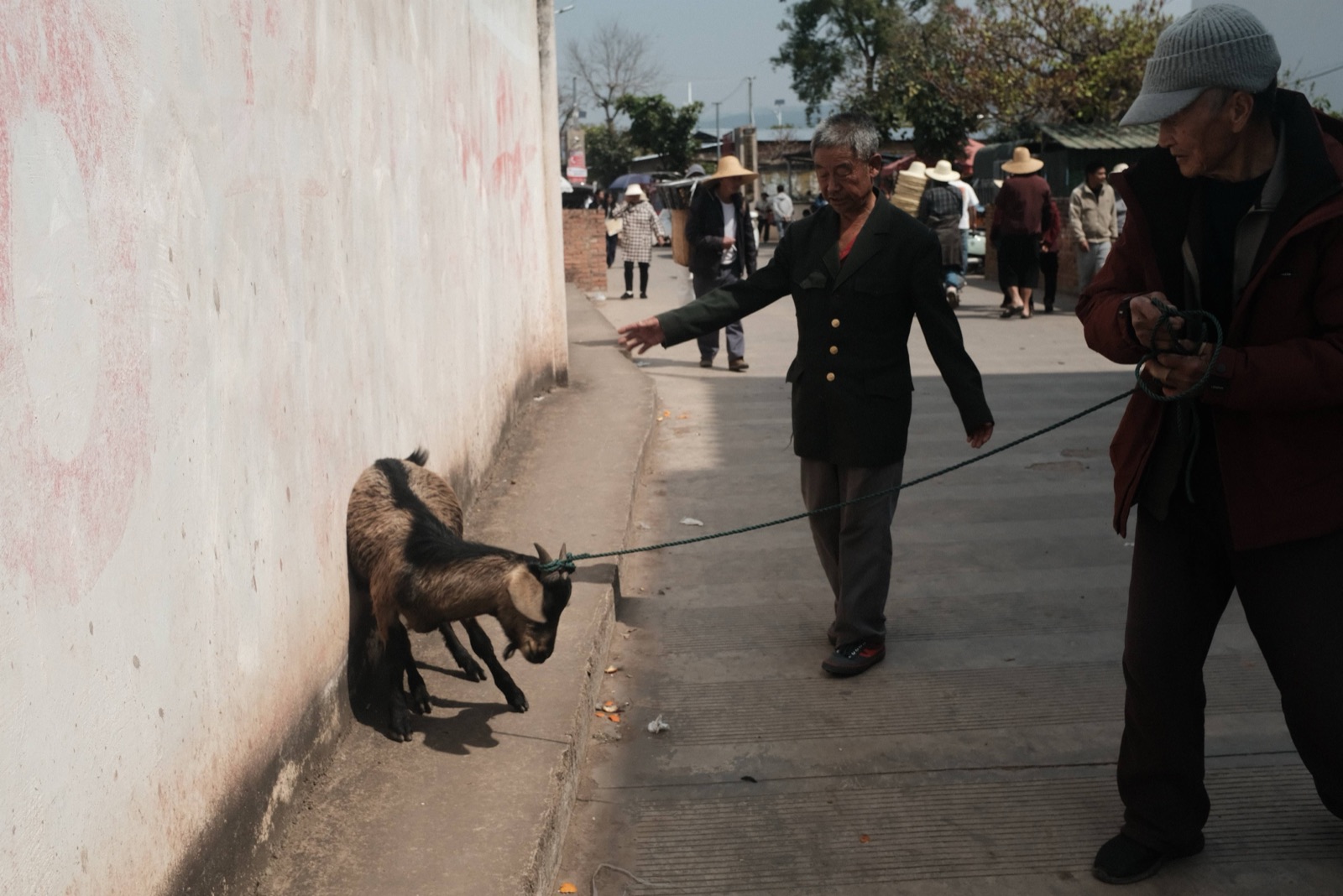
A little sheep that was just bought but stubbornly refused to go (like myself when being stubborn)
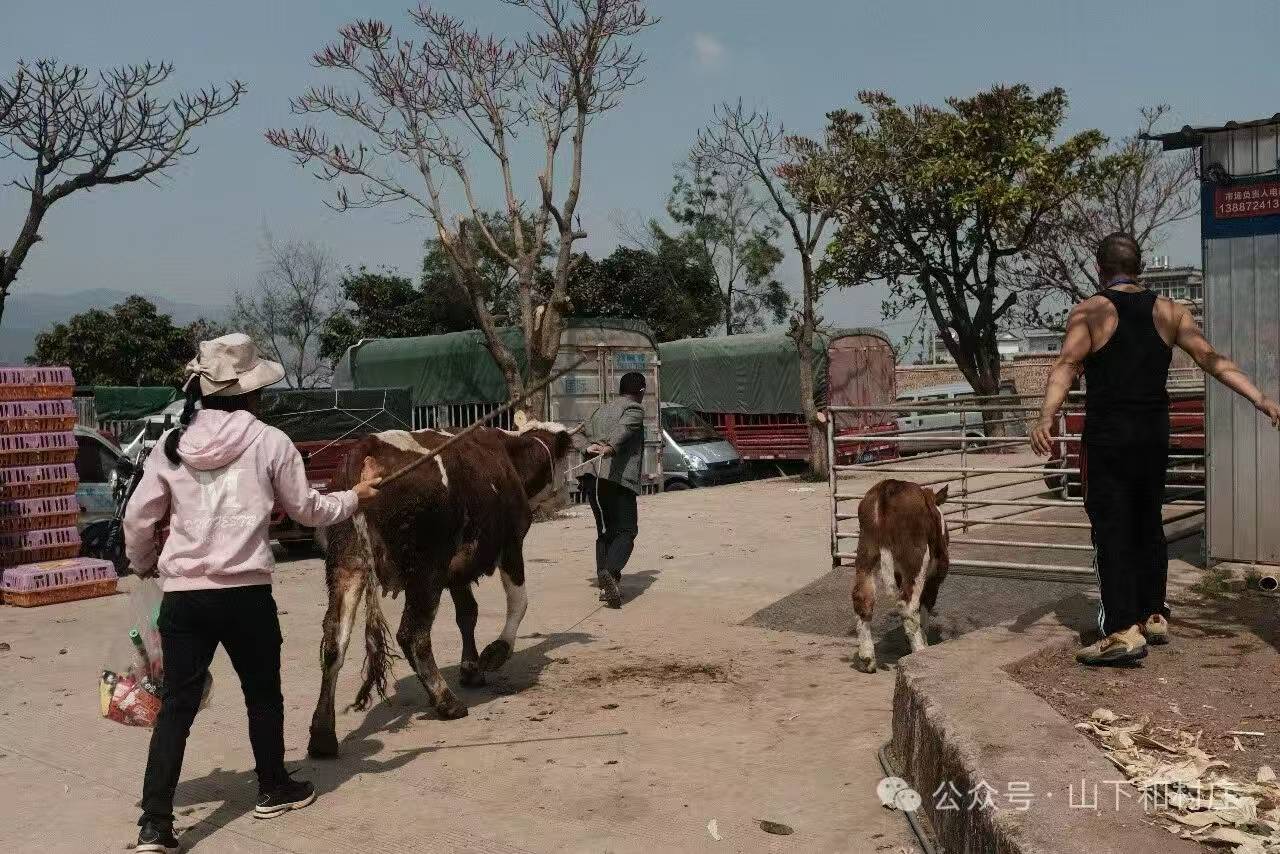
A cow mother and calf for sale, led by the owner to a possibly better-selling spot.
A mule stuck by a branch
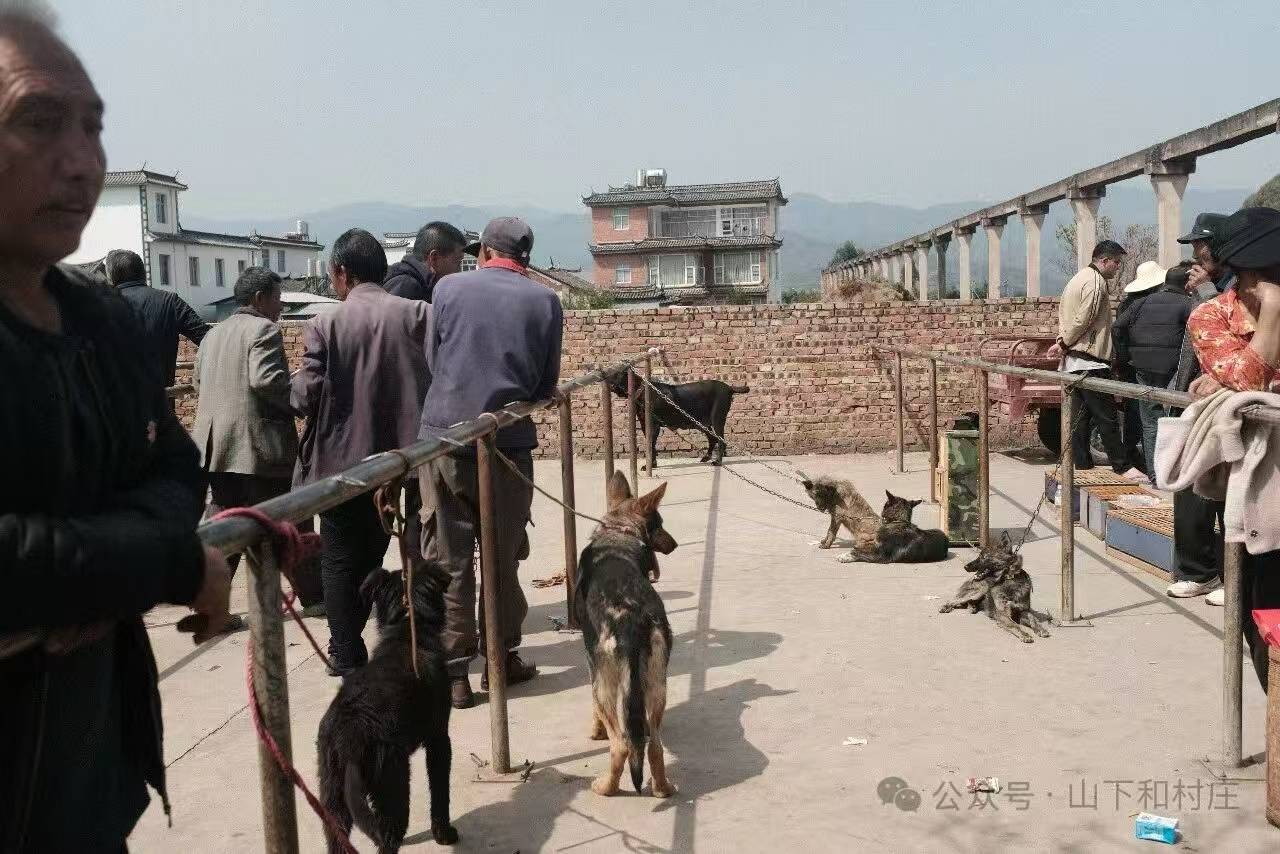
The most neatly arranged dog sale area, with several rows of regular iron poles, a dog parking lot, a dog parking area. A row of various local mixed-breed dogs interspersed with some purebreds.
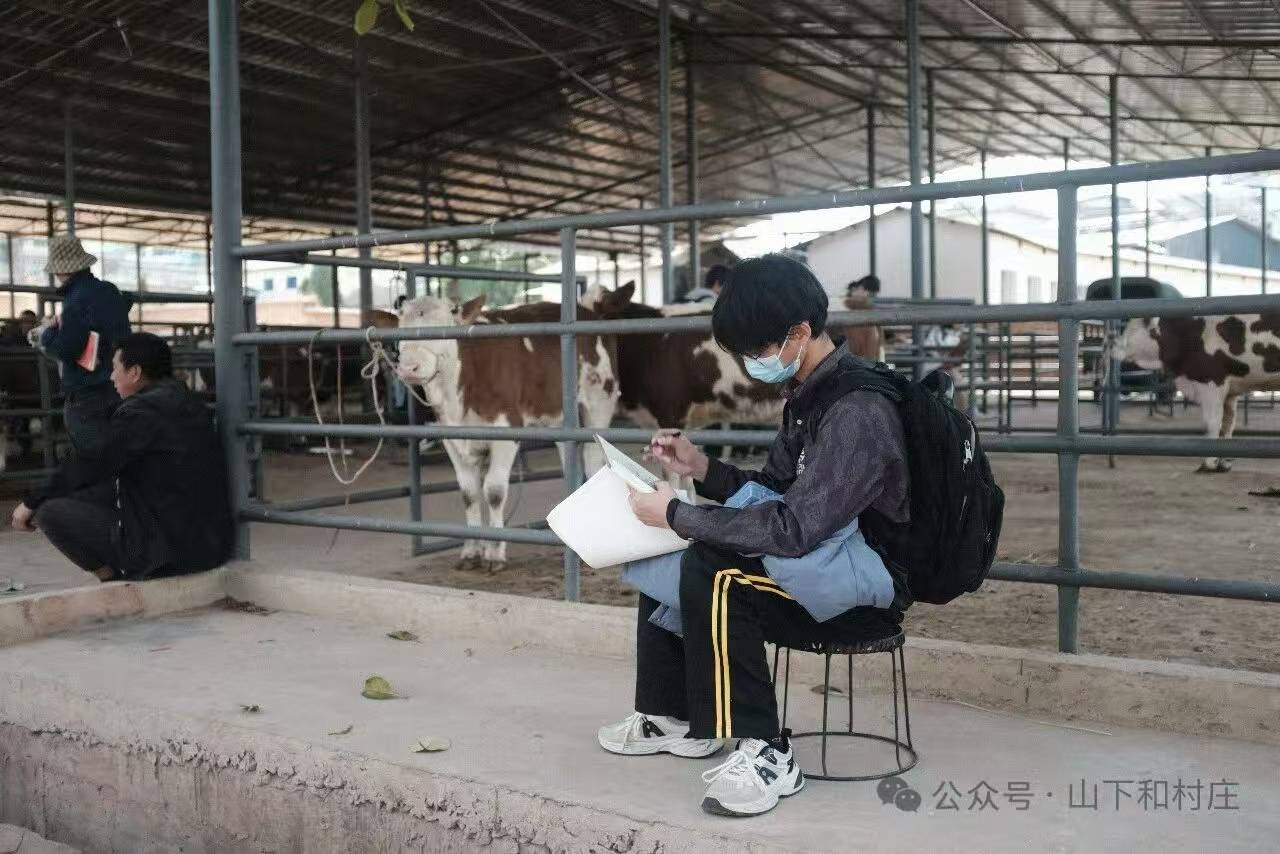
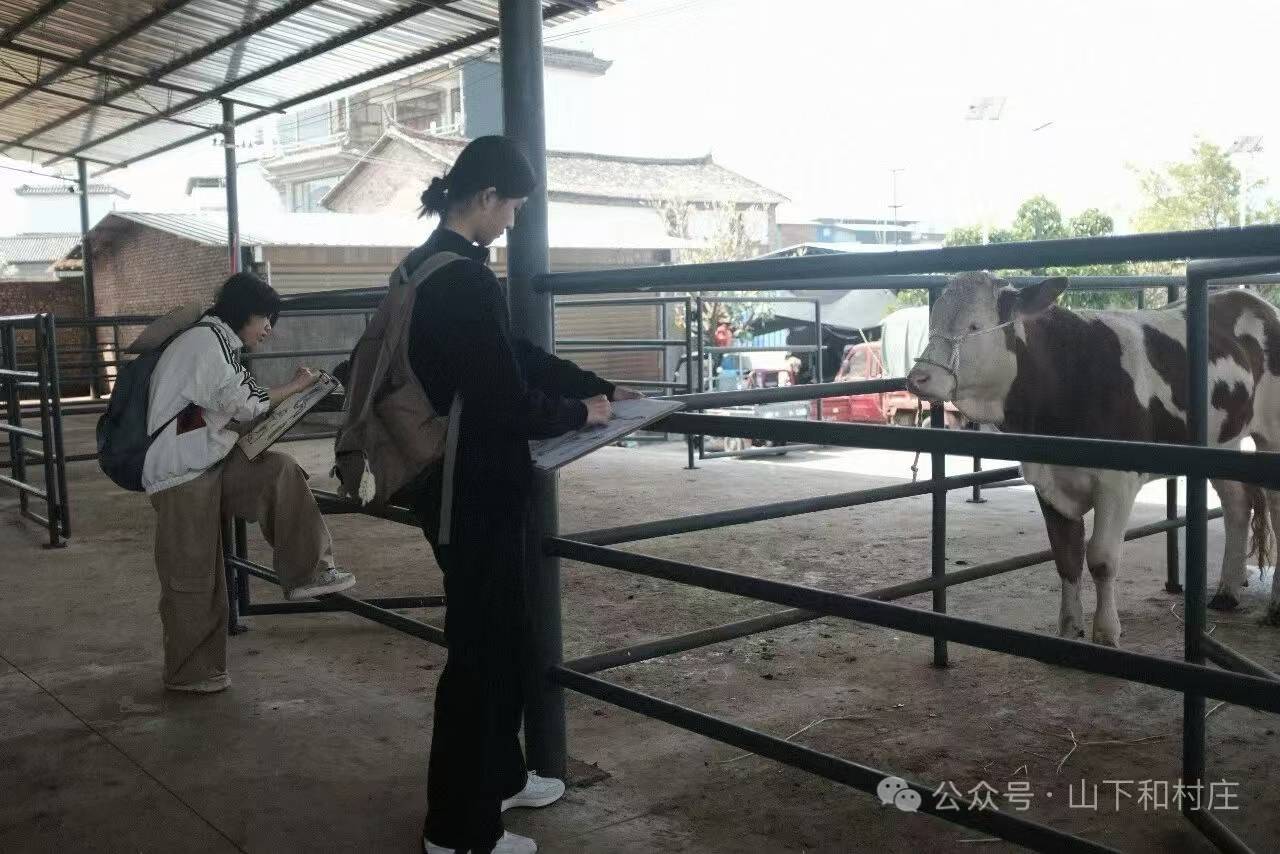
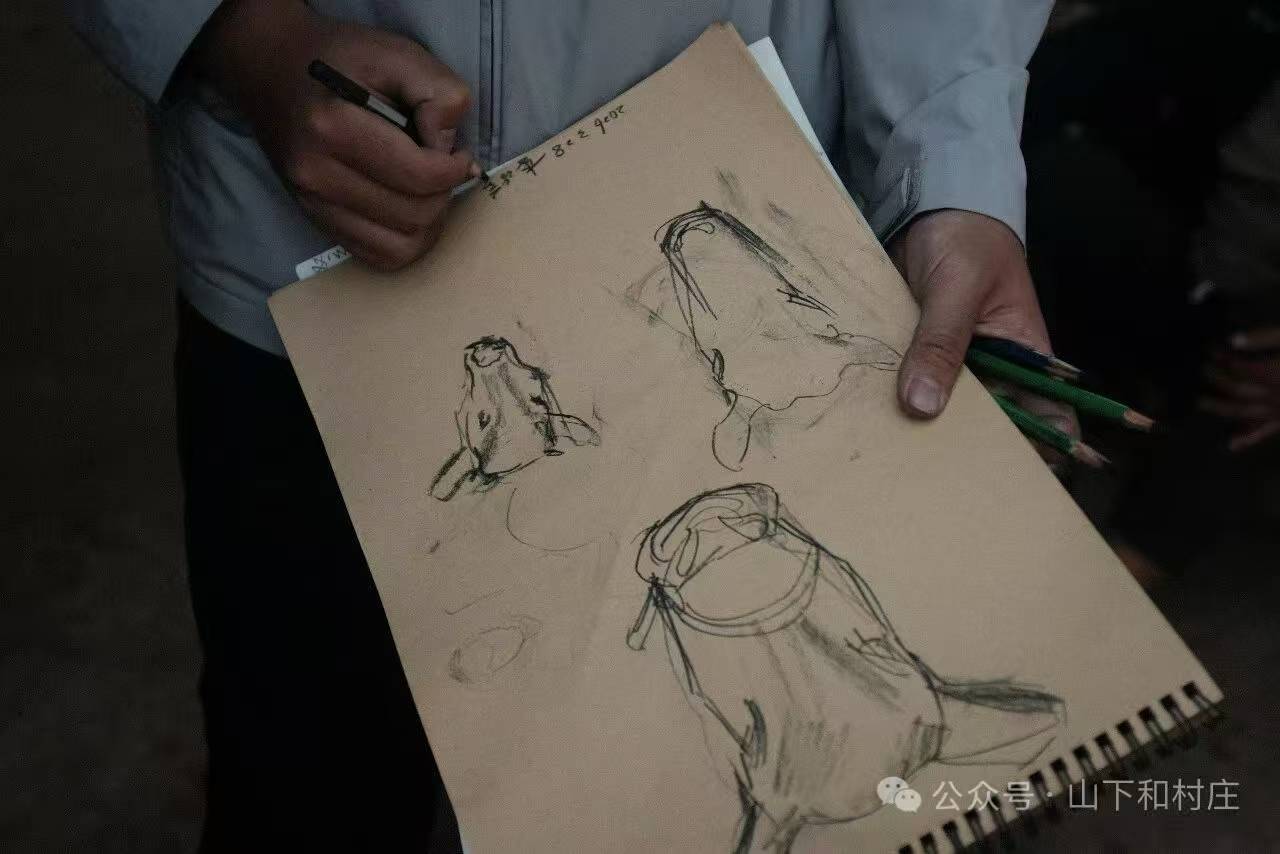
Encountered a group of high school students from Guangzhou sketching, and their paintings, next to a cowshed, by the roadside in the market.
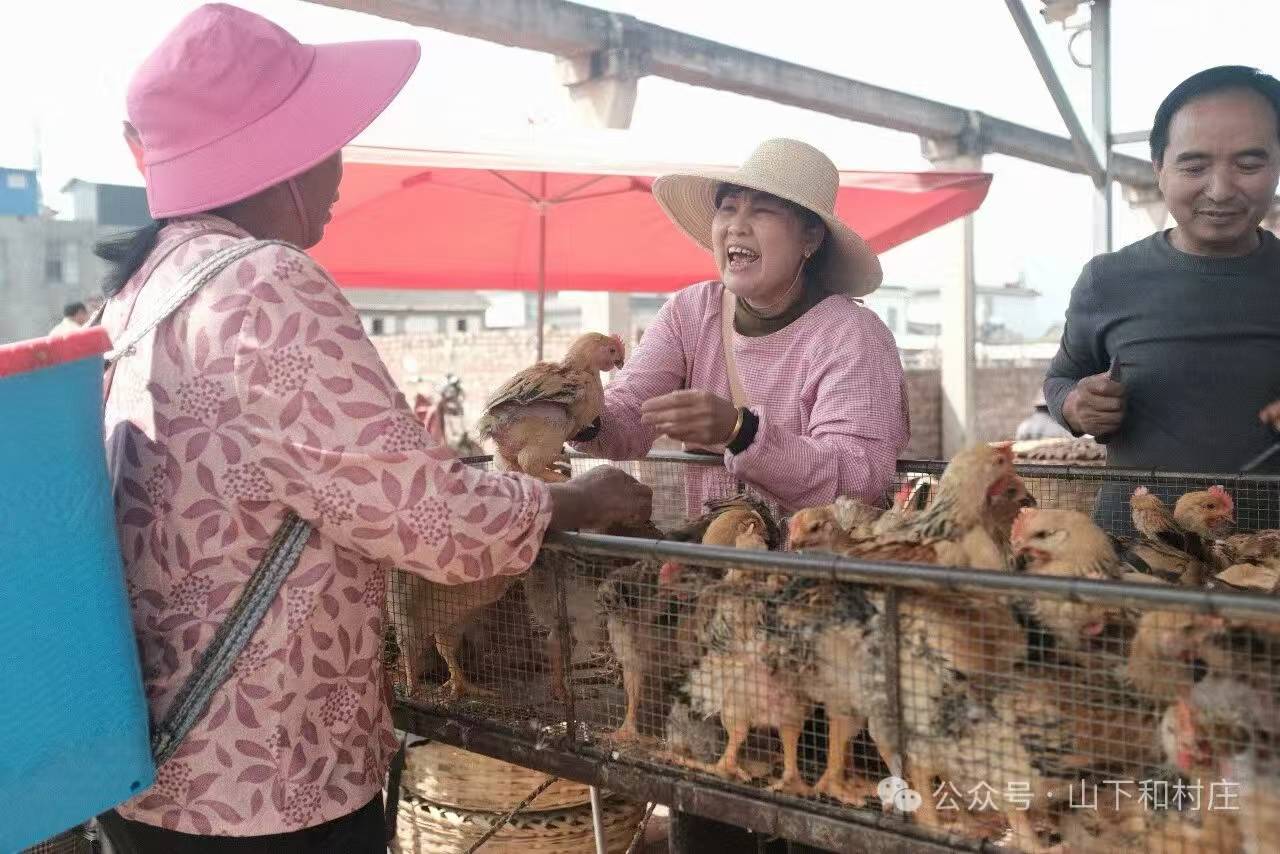
Sister will definitely take a little chick home today.
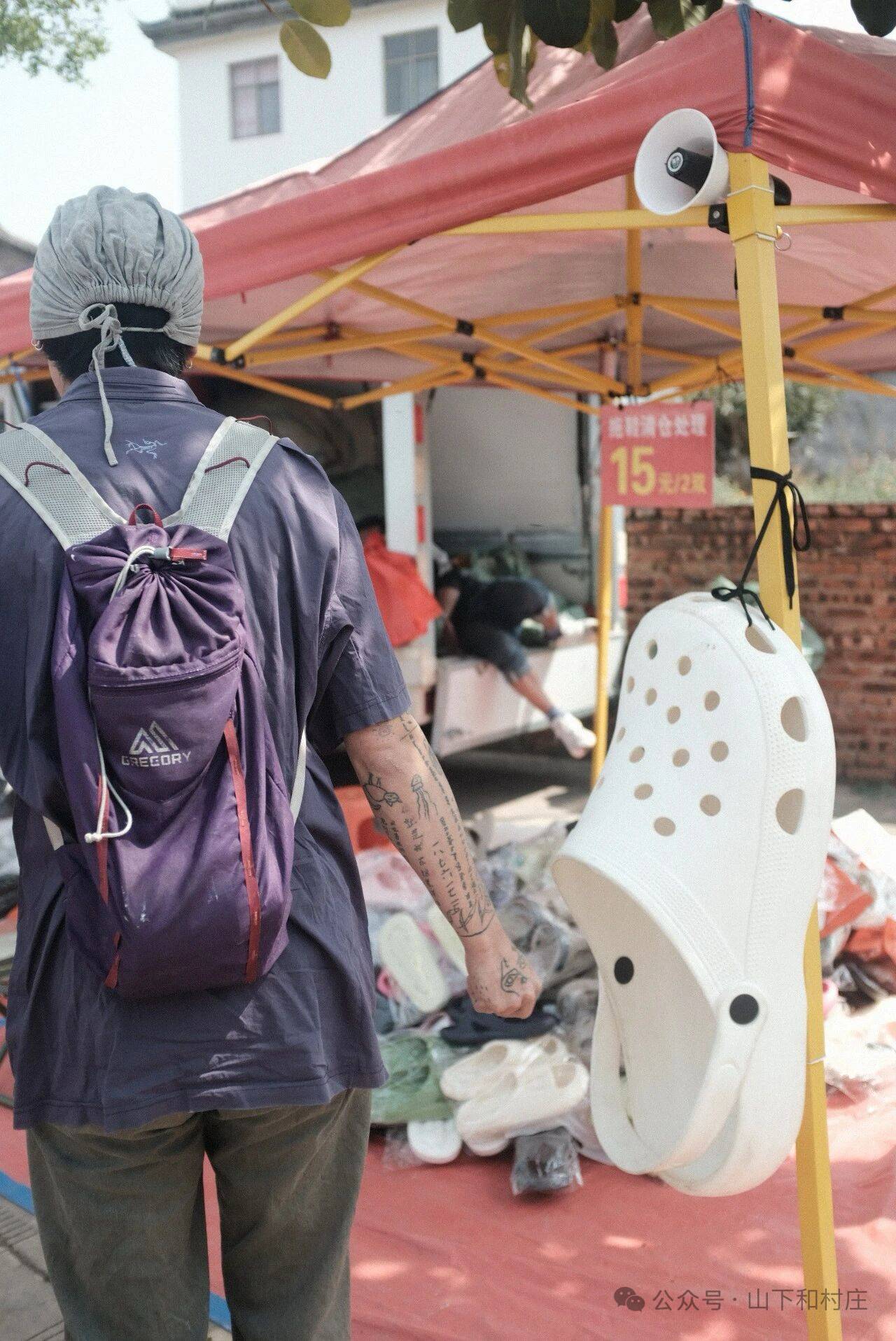
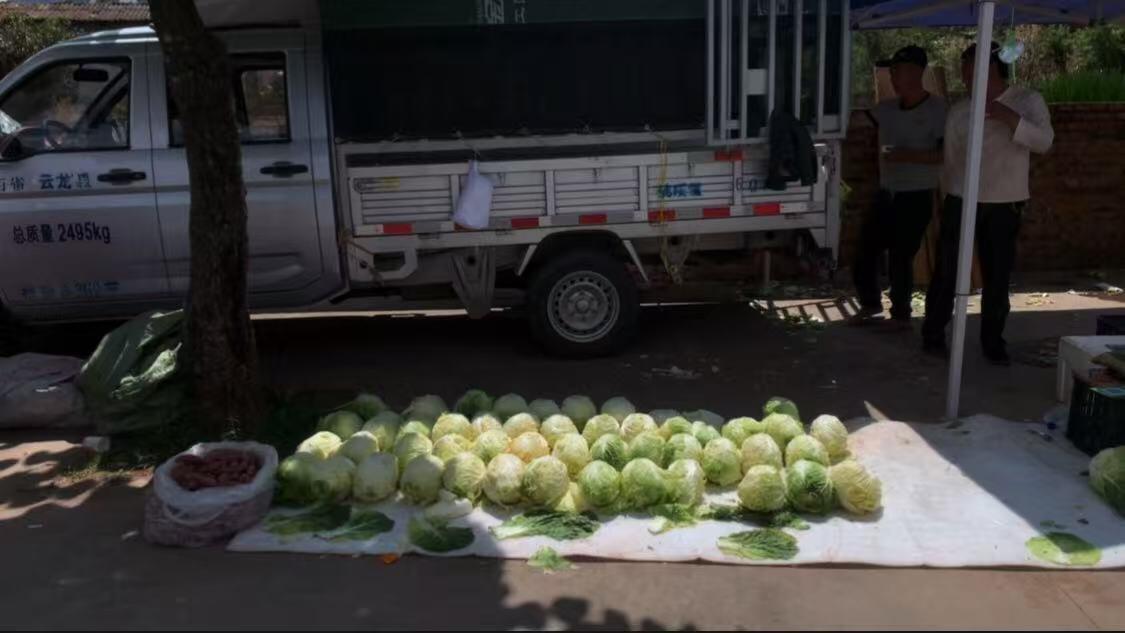
In a market where you rarely see outsiders, shoes and clothes may not have beautiful displays; they might be piled on cloth on the ground, on a temporary wooden board, or in the back of a small truck. Even though some stalls are neatly arranged, they never look as shiny as urban goods, but there is no lack of a steady stream of customers.
Village markets are mostly like this; all goods don't look much like commodities, but rather like a practical "household item" that might be needed at home. In my childhood rural home, every household had some items for eating, wearing, and daily use, from large things like doors, wardrobes, chairs, to kitchen pots and pans, to small things like pliers and wires for repairs, needles and thread for mending, not a single one was redundant. The miscellaneous goods in this market are like those items that always appear at home, indispensable, practical but not beautiful.
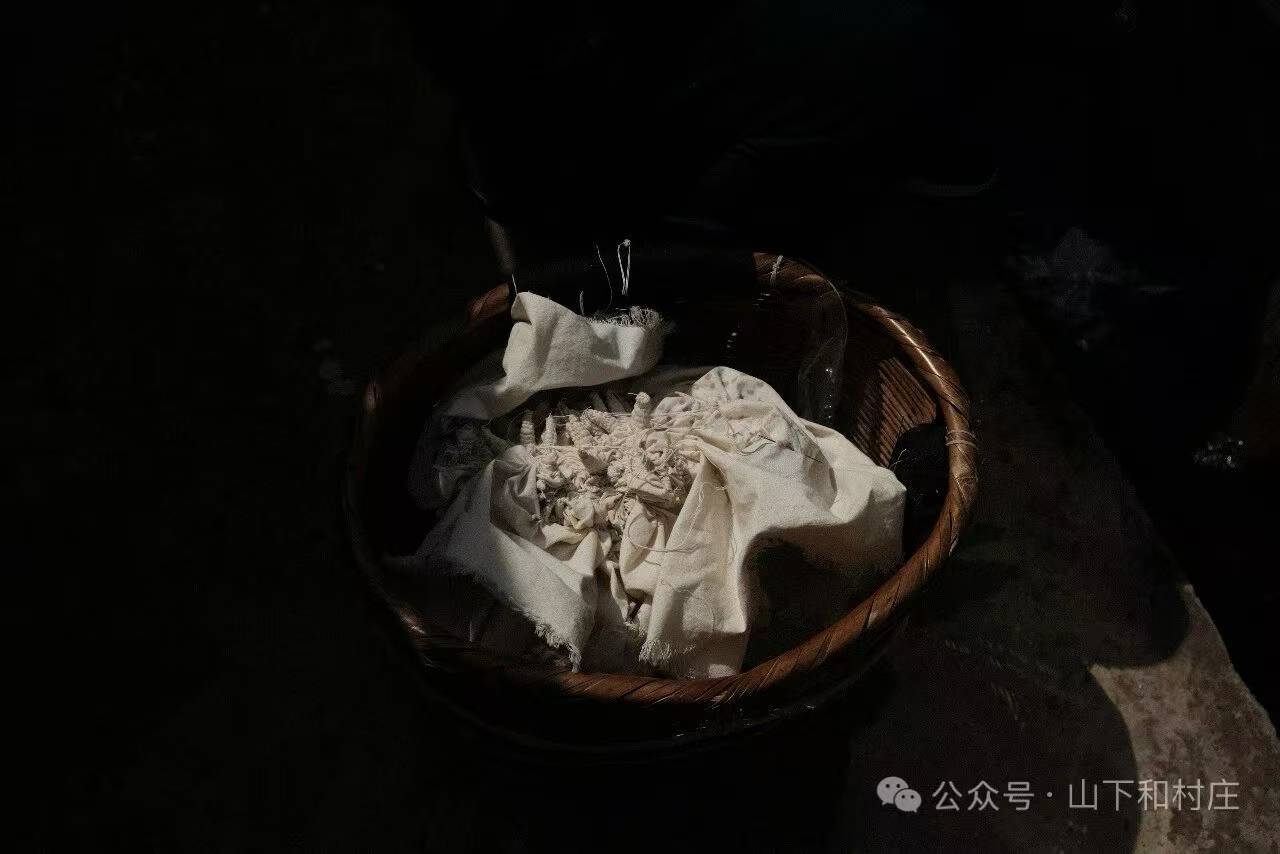
Granny's half-tied tie-dye cloth
15 yuan for two pairs of crocs sandals, we lingered at this stall for a long time.
The hat-selling uncle
Cherry wood cutting board, I really like cutting boards like this; they feel solid and stable, as if they can last a lifetime. In March, we went from southeastern to southwestern Guizhou, visiting markets along the way, and brought back a camphor wood cutting board. We were happy for a long time, feeling that life had become more steady and secure. This is my personal, strange emotional attachment to objects, haha. Perhaps besides difference and fun, it's another reason I like going to markets.
Granny's self-woven cushions and shoes
Mini local "Panjiayuan" – although most things are the same, I can't help but look for strange and interesting things.
2 yuan for a set of paper talismans, four or five pieces per set, choose your own. I picked a few.
The mending sister – living in the city for a long time makes you almost forget that in childhood everything was repaired and patched for years. If something broke, you bought a new one; if you didn't like it, you bought a new one. I forgot there was mending. After moving to Dali, I kept that habit. It wasn't until Yanzi moved to the studio next door that I realized mending can be fun. I remembered that when something broke, I would first think about repairing it.
The incense-selling sister – locals burn incense at their doorsteps on the 1st and 15th of the lunar month. Elderly people mostly make their own incense from pine, cypress, and mugwort, or buy it at the market if they don't want to make it.
Wangwang and the "magic broom" he encountered
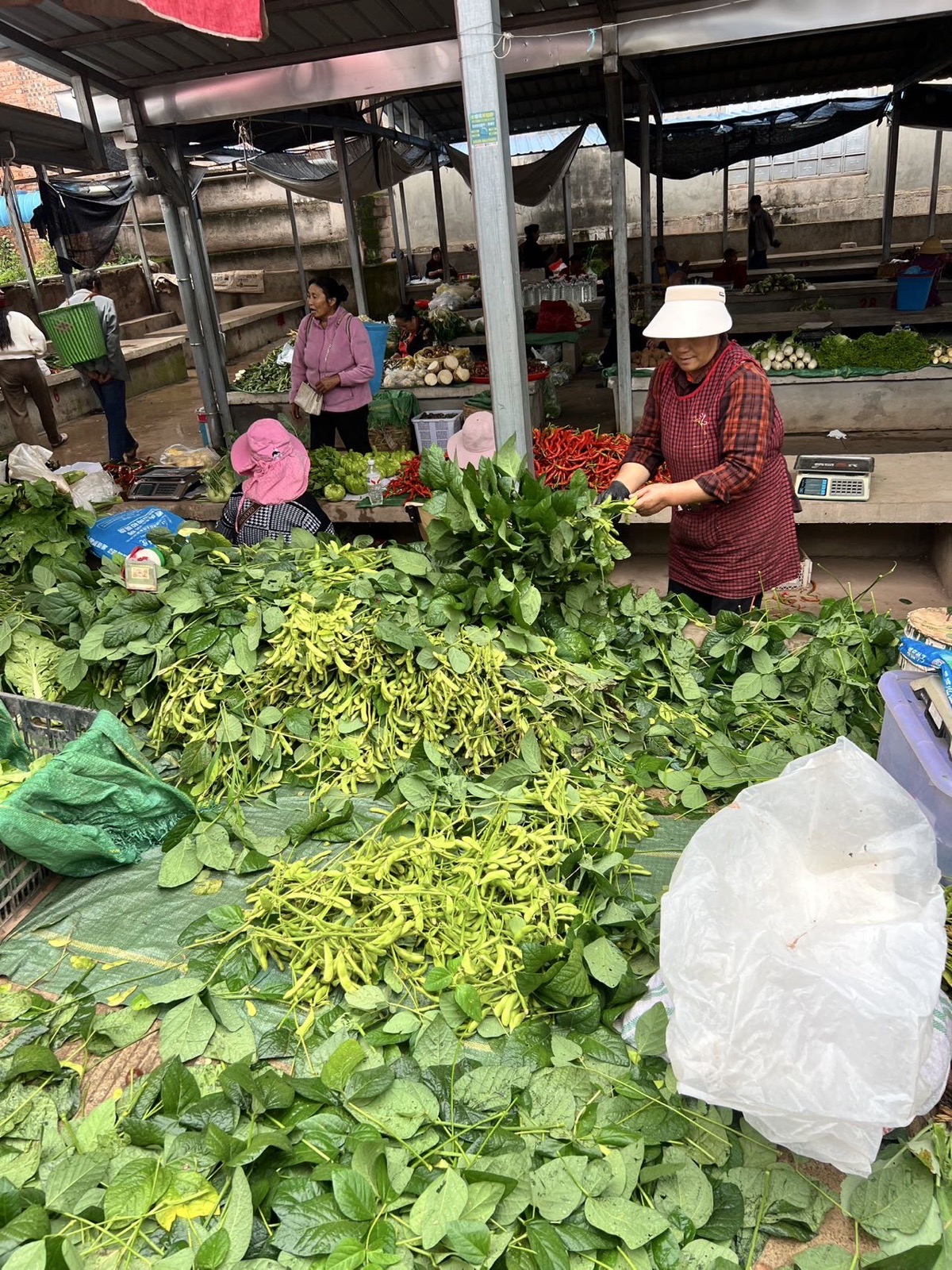
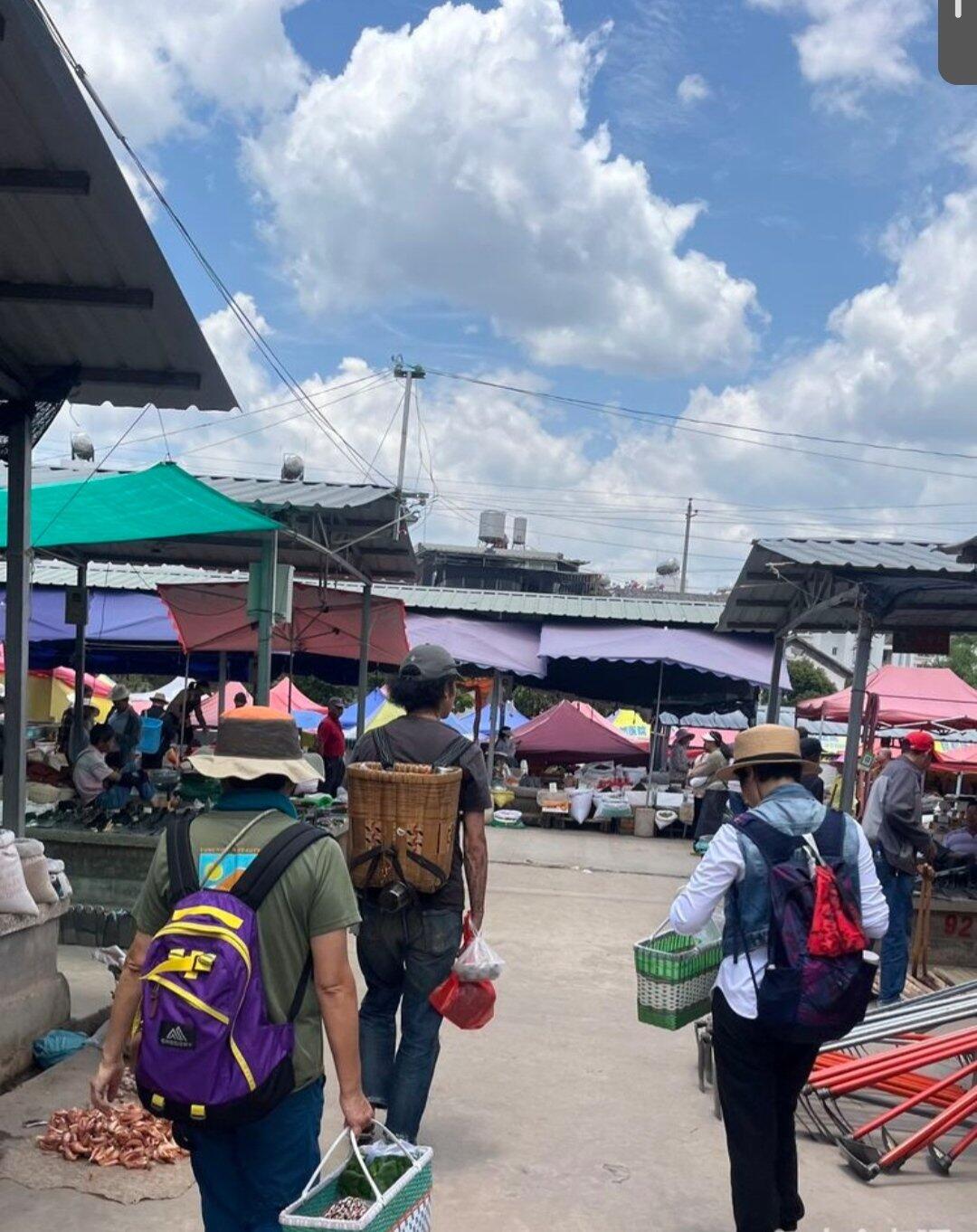
Going to the market is a physical effort; it takes a whole day, but you won't go hungry at the market. People who come to the market also have lunch there, besides the food stalls, there are various snacks and fruits. It's also my main battlefield for shopping. After visiting many markets, I know what grows in this land, how to eat wild herbs and medicinal plants, what seasons bring, and what things I haven't seen before.
Fresh thorn buds and toon are representative of spring.
Yunnan produces green plums, so almost every market has pickled plums and pickled pears.
Granny's stall has few items, two or three kinds of vegetables she grew herself, and the rest are wild plants and flowers, like jasmine flowers and fleabane for medicinal tea (I've read about fleabane's medicinal use in books, first time seeing it sold as medicine locally), and picked thorn tips.
Baby green plums that haven't grown yet. Wangwang says they taste good because they're sour and astringent. I think they're like American coffee; if you really want to eat them, dipping in chili powder would make them better.
Bundles of tobacco leaves – not hard to find at any market in Yunnan, but also a part of daily life.
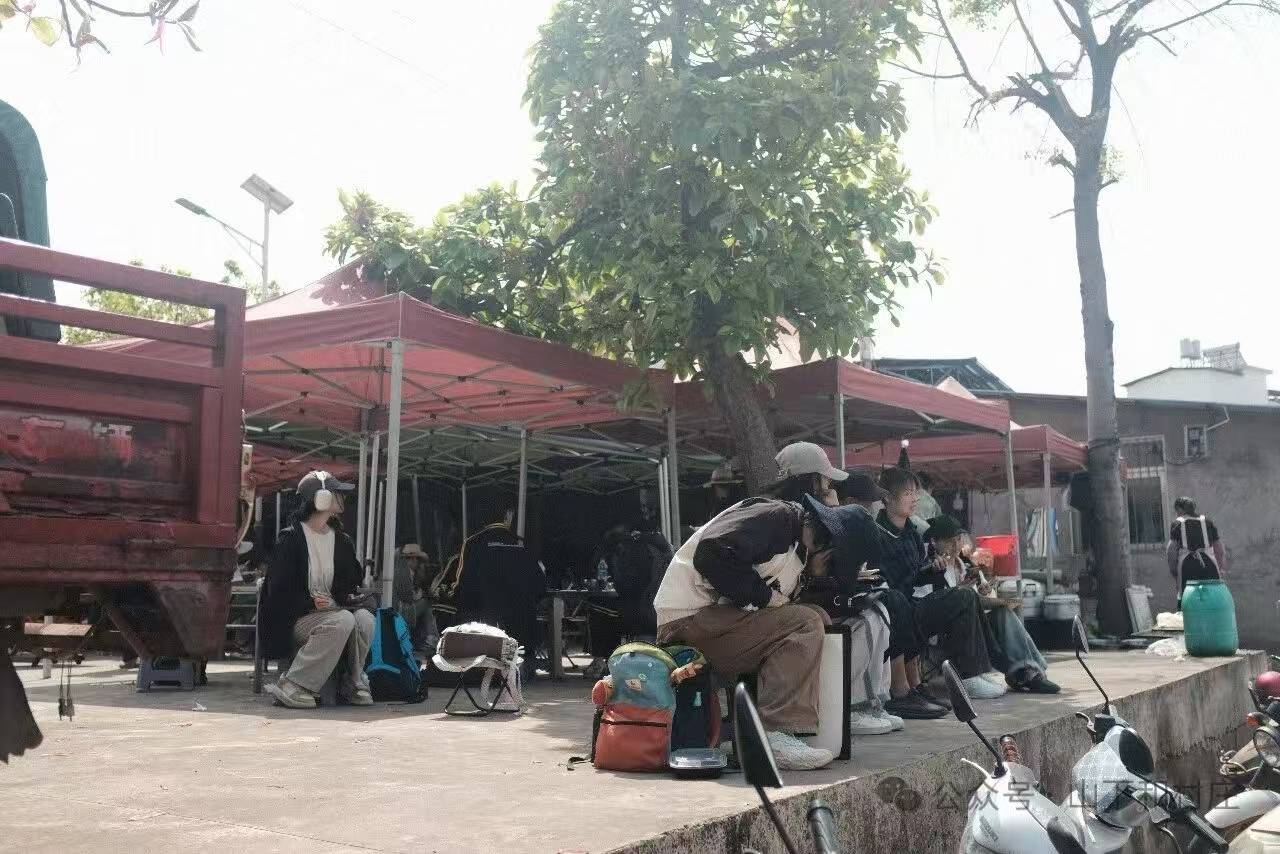
We ate at the food stalls in the livestock area. We discussed before that these stalls don't look like proper restaurants, but the food is good. Eating a meal at the local market is a special experience.
Market canteen
I think this scene is lovely: the stall owners sit inside in a row, and the mobile customers sit outside in waves. Wangwang calls it "liang fen omakase".
Grandma and grandson selling candy
The market is full of Luoboke tea. Luoboke is a place name in the Wuliang Mountains. Luoboke sounds foreign, like a foreigner's name, but it's actually a Yi name. In the Yi language, Luoboke means "place where ferocious tigers roam". The Yi people revere tigers. Along the way, many Yi villages have tiger head patterns painted on their walls. Luoboke produces tea; there are ten thousand acres of tea plantations there, famous for green tea.
The big brother buying flatbread at the stall said that the Hui people make clean and delicious food, and Han people like us love it, so he told me to buy some. Actually, as long-term residents of Dali, we often go to Hui restaurants – clean, delicious, generous portions, fair prices. I also bought some flatbread to take home; if not finished, store in the fridge, heat in the morning, it's a fragrant breakfast.
Came across some pagoda tree flower tea, bought some.
Sister selling local alkali – at first I thought it was glutinous rice cake, but upon closer look, the texture was different, like sand and stone powder formed into cakes. The grannies and uncles at the stalls usually speak Mandarin poorly; common items we can guess, but something completely unfamiliar is hard to figure out. Xiao He looked it up and found out it's local alkali, a kind of intangible cultural heritage of Nanjian, used medicinally by locals. Making it is troublesome, and eating it is also troublesome. As a big brother at the market said, "You outsiders don't know how to eat it." Meaning we don't know how to prepare it.
The market activity is a complete rural trip, I think. From the lively and bustling market to the quiet village, you enjoy that little moment of tranquility even more. So after the market, we always go from the market to a quiet village, just like locals heading home after the market.
Like Village is the next stop after the market. From Temple Street market to Like Village is not far. Along the way, spring is the green of rapeseed flowers and broad beans, mixed with warm wheat, making you feel warm.
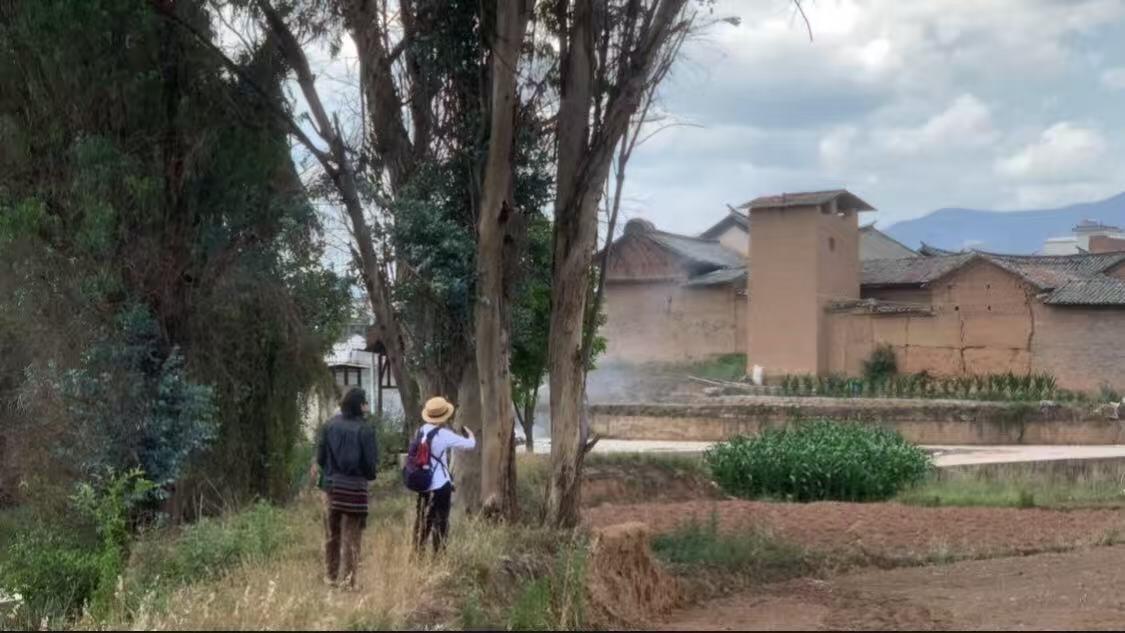
Now the residents of Like Village have moved to the periphery of the original site and built new houses. The ancient village from the Jiaqing period of the Qing dynasty has been preserved instead. Over thirty courtyards are clustered together against the mountain, each independent courtyard gathering into a solid, large fortress. Every house's murals, eaves, and door rails are completely preserved in their ancient style. Not a single modern building is mixed in. A few households still live inside, and we rarely meet anyone when we go. Occasionally, we see an old man fetching water from an old well.
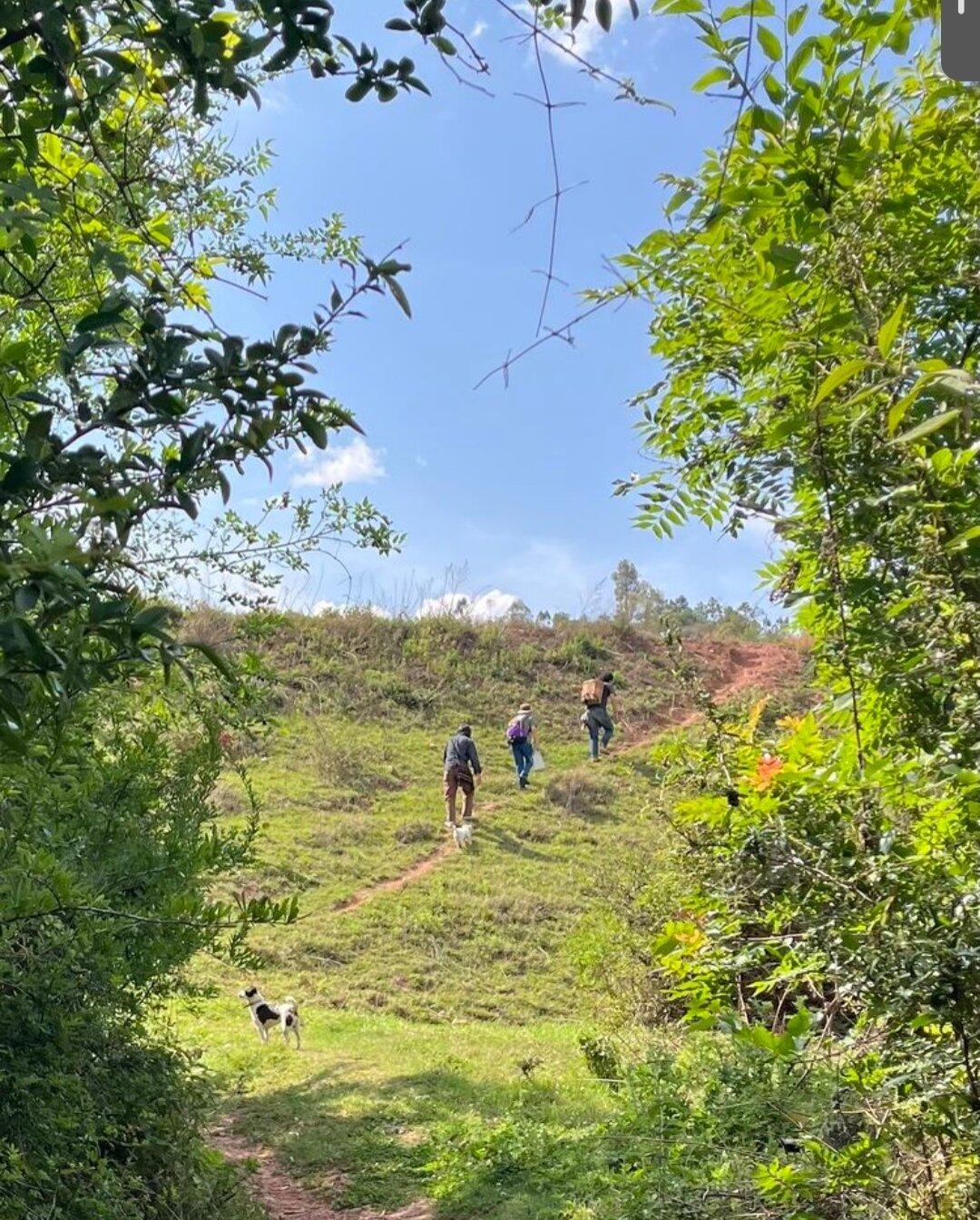
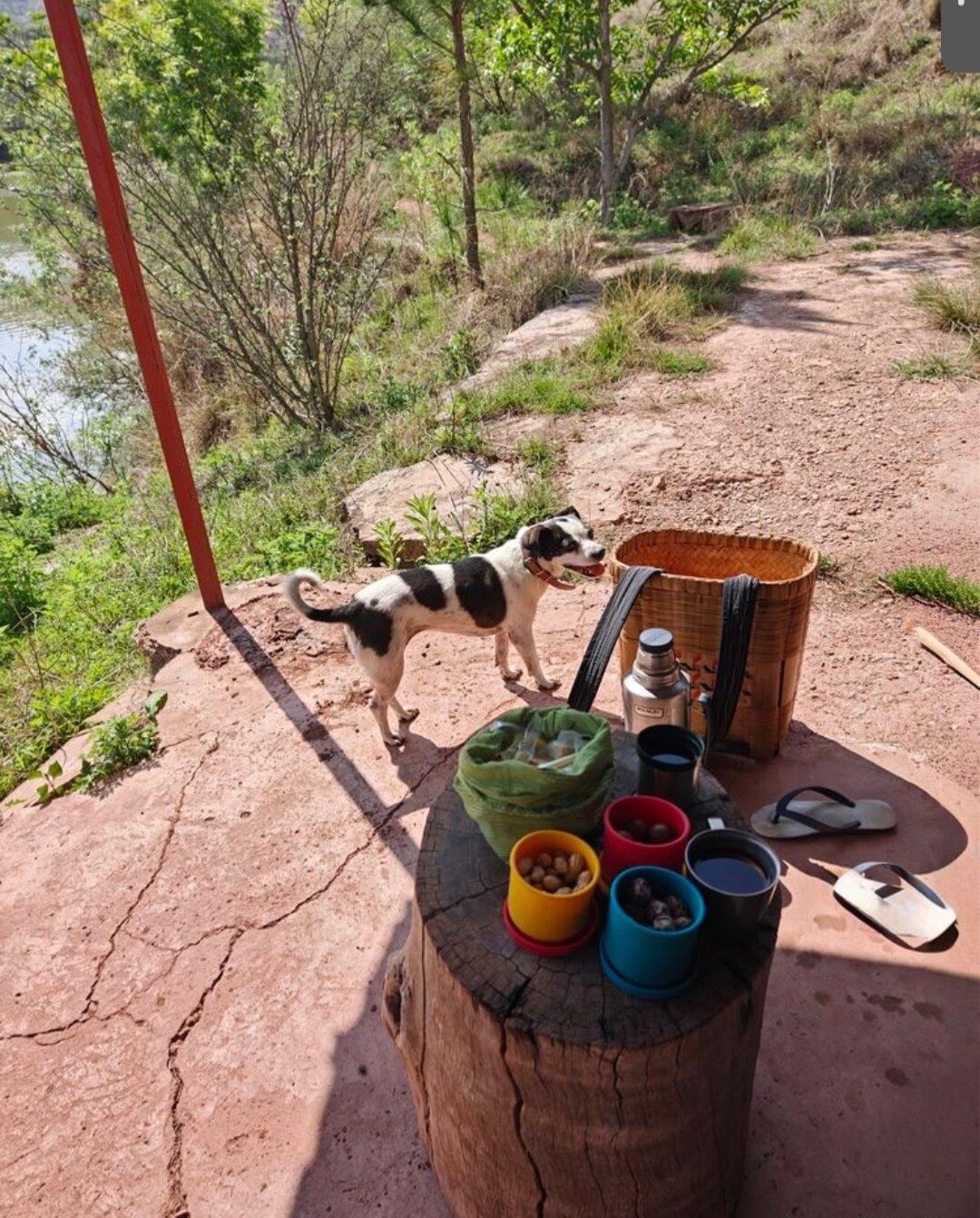
Behind the village there is a pond, and you can always see one or two fishing rods set up, but never anyone there. Walking along the embankment, we rest and drink tea in the shade by the pond. Across the mountain, cars speed on the expressway. The village is quiet on the left, birds sing by the pond, and a puppy runs around playing. It feels like hometown in a Yunnan village.
Walk back from the pond to the village entrance and overlook the entire old Like Village.
On the way to Like Village, we pass by the West River. Who would guess that this river flows through 12 provinces, stretches 1280 km, is the only major international river originating in Yunnan, and is also the largest river in northern Vietnam, the Red River? Tracing its source, it turns out to be such a clear village stream.
Green rapeseed flower waves on the riverbank.
The stone bridge at the entrance of Like Village and the huge Chinese pistache tree.
Strolling in the uninhabited ancient village.
Climb through the village up to the embankment of the pond.
On the embankment, looking at the quiet, abandoned village, the silent pond behind the houses, and the distant speeding cars, there is a feeling of crossing time.
One last look at the complete village on the way back.
Photos