October 5, 2024
Got up at 10:30, had a cup of coffee, and thought about what to do today. It seems like there's nothing on the agenda. Let's just head out first and see.
Got up at 10:30, had a cup of coffee, and thought about what to do today. It seems like there's nothing on the agenda. Let's just head out first and see. I took the outdoor water bucket, first went to Yinqiao Town to pick up a few packages, and then planned to go to Li Zhenhao's studio to fetch spring water. As long as you don't mind the hassle, many people in Dali go to fetch mountain spring water. Each village has different water collection points; some are underground springs, some are diverted from streams. They are all public points, free of charge.
I also brought the iPad, looking for a chance to give it to Xiao Liu. Recently, I've been clearing out most of the things at home, leaving only some personal items. Everything to be stored away together fills about one plastic box: several paintings, a few ceramic plates made by Xiao Jing, a plant specimen frame just given by Li Zhenhao, a lamp bought twenty years ago during a trip to Thailand—not a necessity, but since it's the only household item I brought from Shanghai, I kept it—and a small urn holding the ashes of Huahua.
Since I don't own a house, I've been renting after starting work. I've gone through several stages regarding buying things: When I first started working (1995), I had no money, so life was simple—I couldn't afford anything. A few years later, when my income improved, starting from when I lived on Xiangyang Road (2002), I bought a lot of Minguo-era furniture and often picked up household items while traveling. Ten years later (2012), before moving to Dali, it was painful—I resolutely gave away my things to friends, thinking I must live minimal from then on. After coming to Dali, for many years, I could leave with just a hiking backpack, and moving could be done with just my motorcycle. The year I moved to Guanyintang (2016), it was an empty house, and I had to furnish it myself, which troubled me: buying things meant more stuff, not buying things meant inconvenience. But it was resolved quickly: what actually troubled me wasn't the items themselves, but my reluctance to part with them. In reality, things don't get wasted or disappear; they're just sold cheaply to others or given to friends. So as long as I'm willing to let go, items naturally circulate. From then on, I've been free.
When I saw the iPad on the bedside table, I messaged Xiao Liu asking if she needed it. She replied, "I really need it." Her current job is taking photos for tourists at Longkan Pier. I often see photographers there get into arguments over gigs, even fighting. I thought to myself that Xiao Liu's adaptability must have improved a lot. I heard that a while ago she told He Chen, "An older sister led a goat, and her business was great." He Chen suggested she also lead a goat, but she refused.
After leaving, I turned onto Highway 214, and suddenly remembered that the power bank I'd left at Fangfangmian's house last time hadn't been retrieved, so I turned around and headed toward Wanqiao Town. On the way, I called him, and he happened to be home. Fangfangmian works as a real estate agent. Actually, we're not very close; he once showed me a house. Although I didn't rent it, I had a good impression of him during the process: he would tell you about potential flaws in the house. That alone is something most people wouldn't do, and I haven't met anyone else in the industry like that. Later, we met a few times on other occasions.
Because we both know Charlie, a Korean guy, he invited me to dinner a few days ago. That day, his wife, Fangmian, also joined the conversation—they were classmates in university (or high school?). Perhaps because she grew up in Jilin, she's a big Korean fan, knowing Korean dramas, movies, and variety shows inside out. She asked Charlie many questions about Korean celebrities, and she seemed very innocent in nature. I think the reason they can become truly special and successful agents, besides sincerity, is that they are both capable: they choose their own topics, film short videos, and have quite a reputation online. Through work, I've been in touch with a Singaporean investment company called REAPRA. The China head, Wang Jun, once said that the people they want to select must first do a "Boring Business"—the ability to carve out one's own distinctive edge in a mature, unremarkable industry is a real test. I think the Fangfangmian couple has achieved that to some extent.
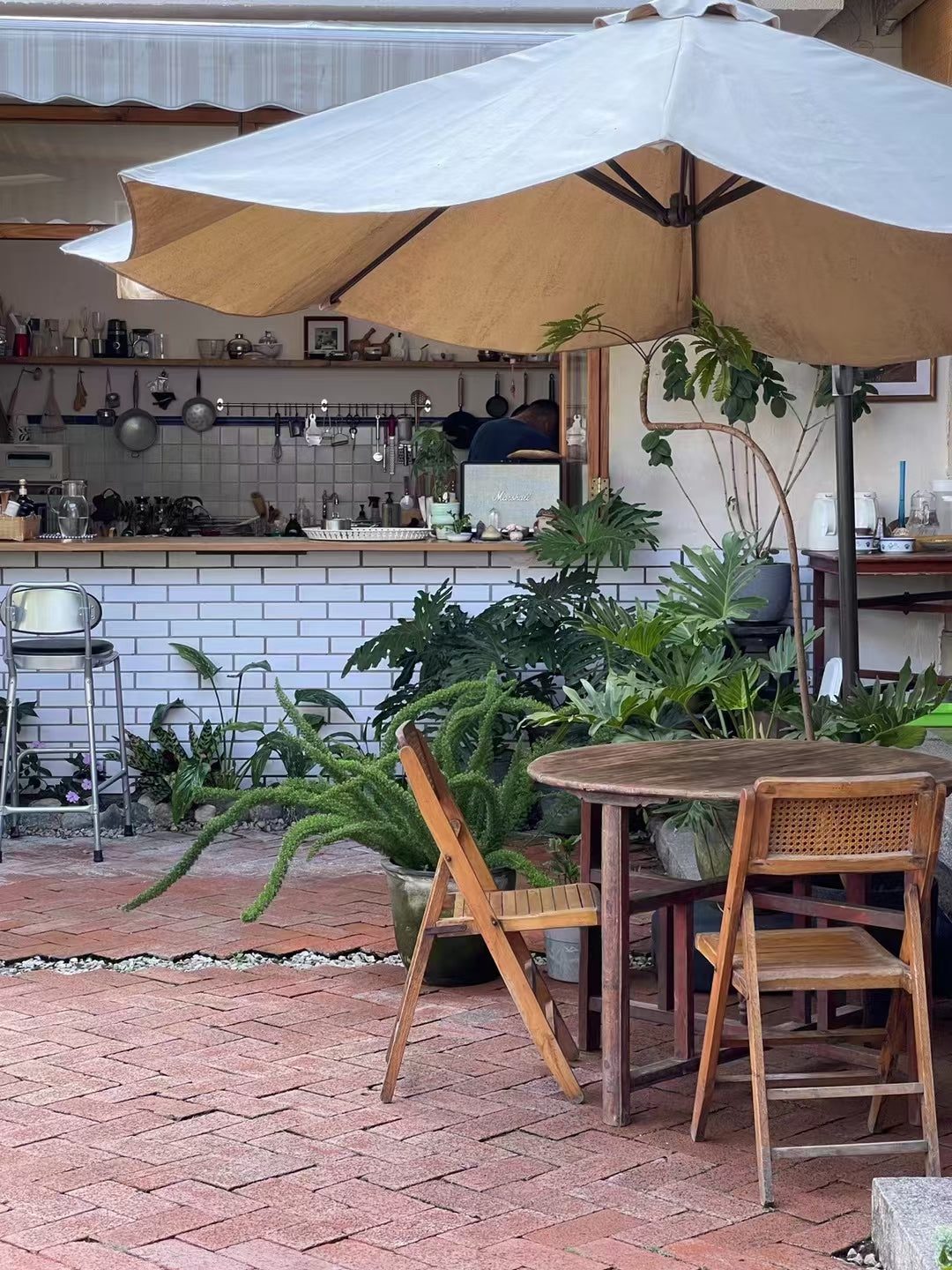
After getting the power bank, I noticed that next door to their house was the private kitchen Hunter&Rou. My van was parked right in front of his house; both buildings are traditional courtyard homes. When I came for a meal a while ago, I was impressed, so I wanted to say hello while I was passing by. It was close to noon, exactly the time for lunch service, and I could hear guests talking inside. Pushing open the courtyard gate, I saw Rou getting ready to serve the meal, while Hunter was busy in the kitchen. I greeted Rou and told her I was just passing by. She was delighted and told me to come in and sit for a while. Since I knew she wasn't just being polite, I didn't decline and sat down at the table in the courtyard. The table was under a green pergola, with several clean light-blue fabric curtains hanging around it, and one side had multi-tiered shelves with microgreens.
Hunter was busy in the kitchen the whole time, while Rou came over to chat during breaks between serving. In the end, I stayed until the guests left, and lingered a bit longer. Hunter works as a Western chef in upscale hotels, and Rou is in management. Through Fangfangmian, they came to live in Dali and became neighbors. Like many people who move to Dali from cities, they were probably tired and wanted a change of lifestyle. Hunter said, "The first half year was fine, but later you feel bored with nothing to do." They gradually started their private kitchen, from entertaining guests, friends, and online acquaintances. Rou said, "If judged as a restaurant, I'm not entirely satisfied." "Maybe if we fully followed upscale restaurant standards, it would lose some of the living atmosphere. I like the way your home looks now; it has more of your own character."
The restaurant has been running for over a year and is very popular. When Qiqi introduced me to it, she said, "It's not cheap, but after eating there, you feel it's worth it." That's high praise. It also matches my thinking: if conditions allow, this is the kind of commercial service one should offer, because everyone wants their creation to be worthwhile. This beautiful courtyard, two people who work seriously and have their own characteristics, professional culinary skills—combining these creates a unique value; it's a kind of creation. Guests who can appreciate that value will feel it's good.
Not long ago, after their baby was born, Rou said they had planned to close, but later found that the baby is so well-behaved that they still have energy to do lunch, only stopping dinner. Aside from their personal schedule, they do 15 days a month, and that pace works well.
Hunter and Rou have two dogs. One is 18 years old and can still walk five or six kilometers in the mountains, moving agilely. Hunter said, "Since coming to Dali, it's probably much happier, so it's easier to live longer."
When I left, it was already past 3 p.m. As I was about to go, I also remembered that today was the opening of He Lian's "wool felt painting" exhibition, so I drove over.
He Lian's studio is in a village 6 kilometers south of the old town, near Guanyintang, where I used to live. When I arrived, there were already many people, and I met several acquaintances. A white house at the foot of Cangshan Mountain, with a piece of land on the south side enclosed as a yard. There are several big trees in the yard, and you can see Cangshan Mountain in the distance.
Normally, I don't go to such events; I don't like crowded gatherings, and I don't know much about music or painting. Because He Lian used to come to the Midnight Diner over ten years ago when she was young—probably not long after graduating from college—she had a pair of canine teeth, so Xiao Chun and I privately called her "Little Canine Tooth." Later, when we got closer, we called her that to her face too. Because of that connection, now many years later, hearing that she's accomplished something creative, I'm genuinely happy for her and wanted to come see it. I don't know the process, but I imagine it must not have been easy.
After staying a while, I remembered that Hong Hong said DD was making xiaolongbao at her place today, so I headed over to eat. Our busy season is over, so everyone has free time to do all sorts of things. However, DD is from Wuxi, and even though Shanghainese are used to sweet food from childhood, they still couldn't handle it. All I can say is: I had authentic Wuxi-style sweet xiaolongbao, and even gave up the idea of packing some to take home.
Hong Hong asked me to take Lucky home, because she has another guiding job and needed to go to Jingdezhen in Jiangxi for a site inspection.
Weiterlesen
3
Jason | Using AI to Create Your Own Mini Program/Website
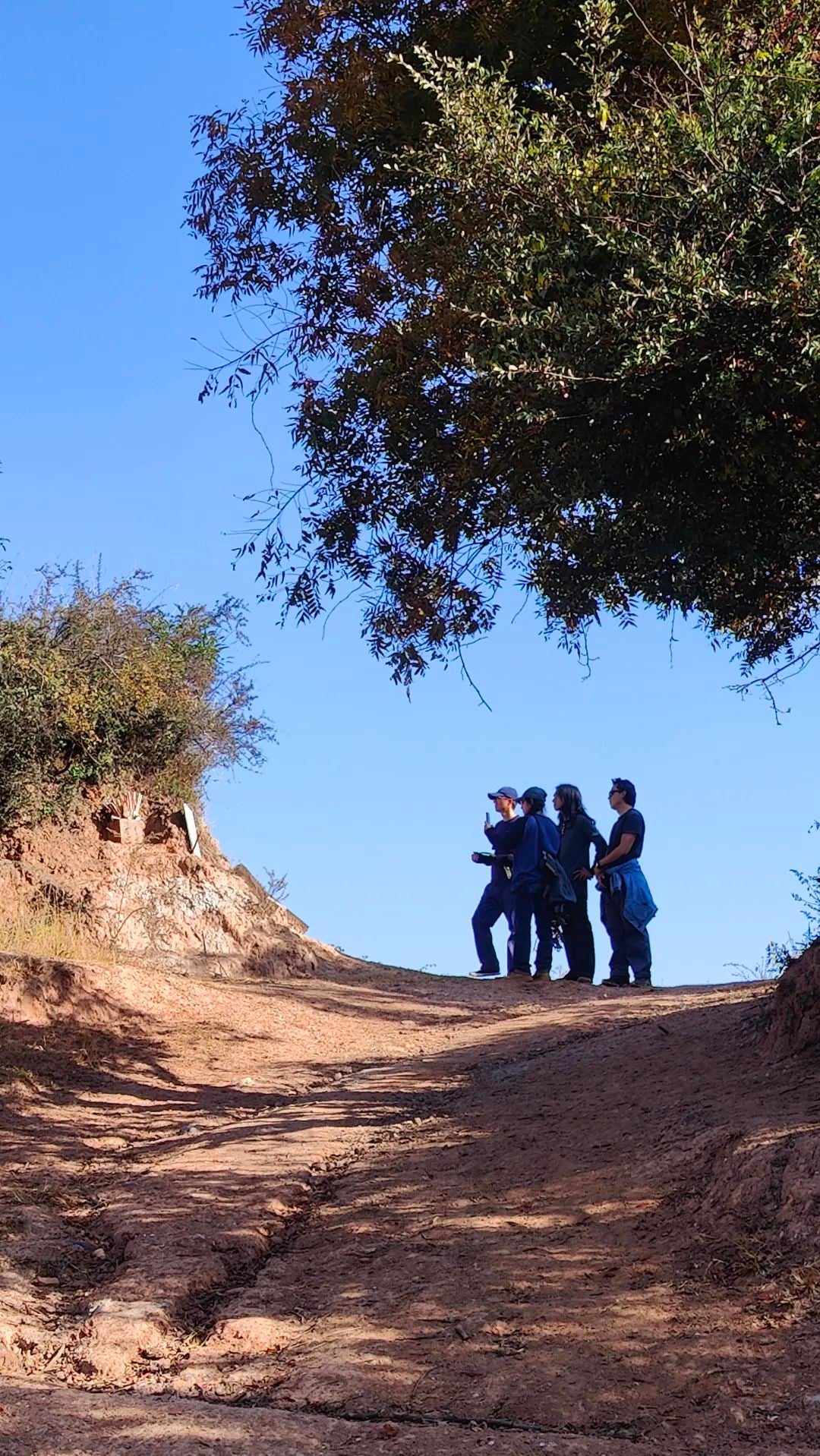
Two months ago in Chiang Mai, I stumbled upon the chance to start learning how to build mini programs. My AI programming mentor, Wangshen, told me, 'Once you finish your mini program, write a summary report.' Now I've completed the new mini program for Cangshan Hiking Home, and it's already being tested. It not only solves problems I've wanted to address for a while, like adding age tags to filter activities and providing an English version, but it has also introduced new features, such as browsing restaurants, guesthouses, and meeting points on a map for a more intuitive experience, and using AI to provide quite intelligent responses.
Learn AI Programming Together
Some information about AI programming
Celebrate the Torch Festival in a Nanzhao Royal Clan Village
Over the past two years, we have taken guests to celebrate the Torch Festival in Songhe Village, Eryuan. Together we slaughtered a sheep, and with the whole village, erected a huge torch in the center of the village square. Everyone made their own torches from hemp stalks, and together with the older and younger villagers, we rushed to grab the blessing baba (cakes) from the big torch, passing blessings to each other with fire. Even for me, a native Bai person, these are rare and precious traditional festival experiences. Dali has endless festivals, and I want to experience them more before they fade away. I remember the Torch Festival of my childhood: torches were no longer enough for me. Before the festival, I would tell my dad to prepare a bucket of waste engine oil and diesel, mix them together, and then I would tightly bind cotton and old cloth with rope into a ball (some kids would secretly take cotton from their quilts at home to make it). Finally, I would make an iron wire ball, soak it in the bucket of oil, and secretly take it out every day to look at it, looking forward to having a great time on the day of the Torch Festival. We would compete in the village and by the rice fields to see whose fireball or torch was more impressive. When the torches and fireballs were almost burned out, we would rush home, walk around the potted fruit trees in circles, and say blessing words, hoping they would grow even better in the coming year.