Spending a Day at the Home of 'Relatives' in the Mountains
While walking on the mountain meadow, looking down at the houses in the valley, the name of this travel route popped into my mind: Spending a Day at the Home of Relatives in the Mountains. This name came from a guesthouse we stayed at in Chiang Dao, Thailand, set by the fields. Several guests wrote in reviews: 'Staying here feels like visiting relatives in another province.' At that time, I thought this metaphor was really fitting. It was probably written by people from Chiang Mai city who came to Chiang Dao for a vacation.
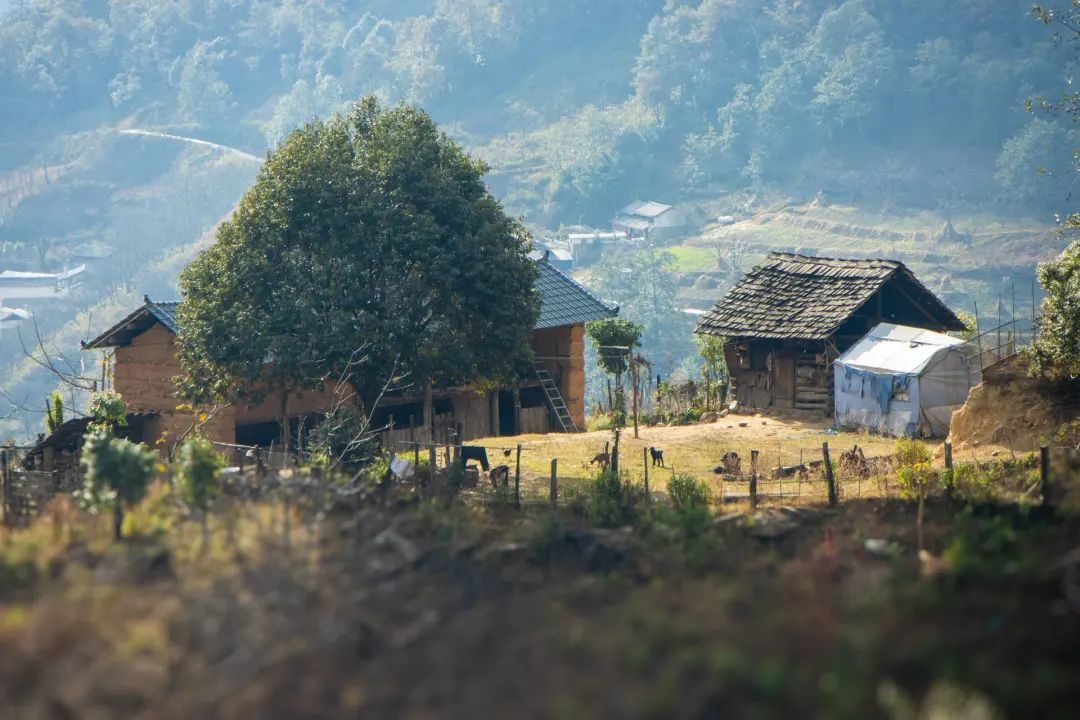
This itinerary is: A Day at a Mountain Village Home
You can experience: the life of mountain villagers, authentic mountain farmhouse meals, the village is located high in a canyon, and we will hike to nearby meadows, primeval forests, and pastures. This area is relatively traditional and natural.
This place was introduced by Xiao, a local from Yangbi County.
I met Xiao because I was originally looking for a bird-watching teacher to give us lessons. I first contacted Old Mei, but he said he had settled in Spain and wouldn't be back soon, so he recommended Xiao Kebin to me.
I went to Xiao's home to find him. That day, he was busy preparing to take an Indonesian Chinese bird-watching friend out for birding. We only chatted briefly. Although he agreed to help share some knowledge, he seemed more interested in our travel routes: he is currently stationed in a mountain village in Yangbi County, Dali, as a village worker. He really wants to develop special tourism for the local villagers and increase their income. Ordinary tour groups probably wouldn't go to such mountain villages. He thought our activities might venture into these deep rural areas.
I thought a genuine mountain village trip could be worth trying, especially with Xiao's connection. It would be great if we could do something beneficial. He said the rhododendrons there are particularly beautiful in March and April, covering the mountains. So I arranged to go with him to his village to check it out first.
It was really far. After getting off the expressway at Yangbi, we traveled along a section of the old Burma Road. This road is now a local road off the main highway, winding through the mountains, passing through villages, quiet and with few oncoming cars. Besides asphalt pavement, there is also a section of the original stone slab road, which lets you feel the difficulty during the Anti-Japanese War when the entire nation's international aid supplies came from Myanmar through this only lifeline, and later the Chinese Expeditionary Force fought in Myanmar to protect this transport lifeline.
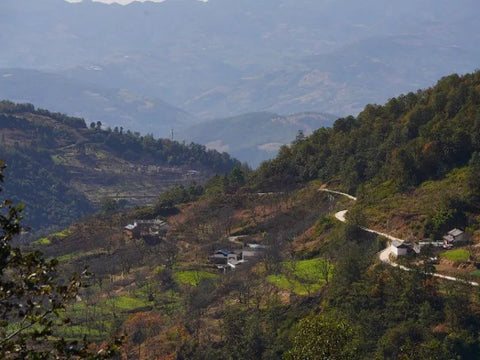
His stationed village was indeed far. After leaving the Burma Road, we drove for another hour and a half before arriving. The scenery along the way was open, winding through continuous mountains with expansive views. On the way back, he received a phone call inviting him to the year-end pig slaughter feast. He said it was at a farmhouse run by a family living on the western slope of Cangshan Mountain. He sometimes likes to stay there for a night—very comfortable. The most famous rhododendrons on the western slope are near that area. He asked if we wanted to join the pig slaughter feast. I said yes, as it would be a good opportunity to see it. Xiao joked, "I don't just promote our village; anything good for Yangbi is fine by me."
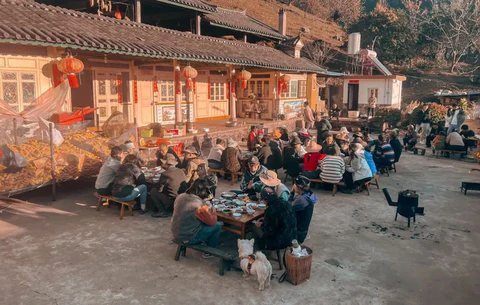
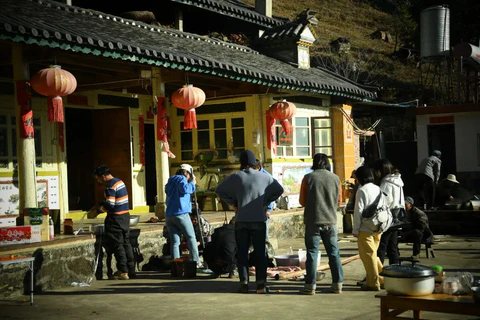
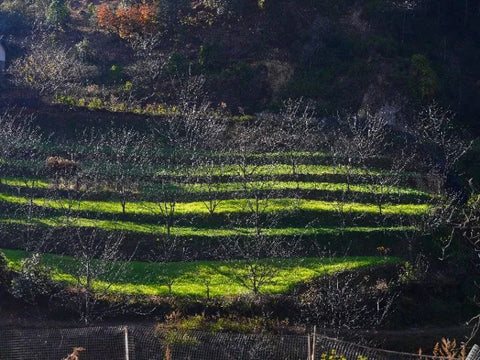
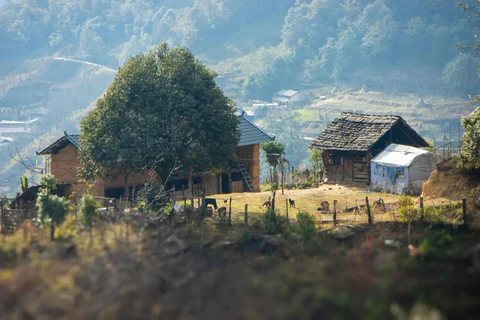
On the day of the pig feast, we had eight or nine guides, and four guests: Anna, a hiking guest from four years ago, now with her husband, a British man, and an American couple from San Francisco she met at the hotel. We drove up the mountain road to a village halfway up the slope. The farmyard was on a flat area at a high point, overlooking the valley in front. It was a spacious three-sided courtyard, with only two or three nearby houses. There were terraced fields on the hillside, with green winter wheat. When we arrived, they had already started slaughtering the pig. Relatives and villagers were busy helping, creating a very lively atmosphere.
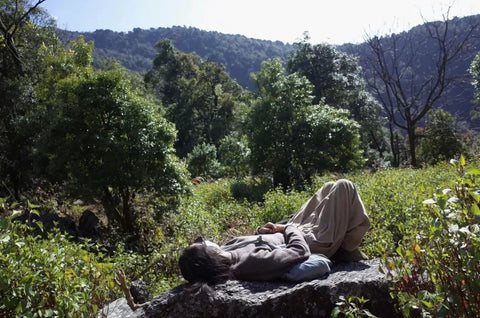
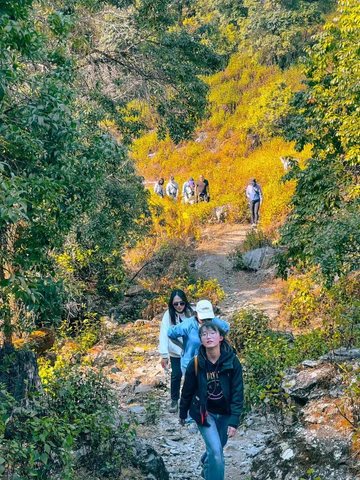
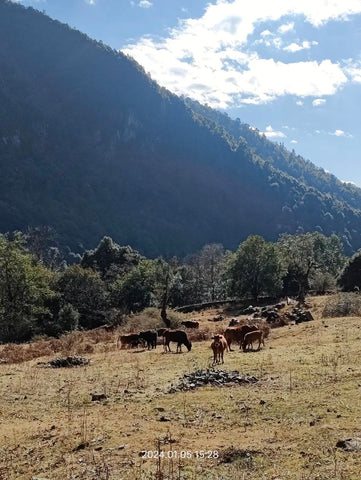
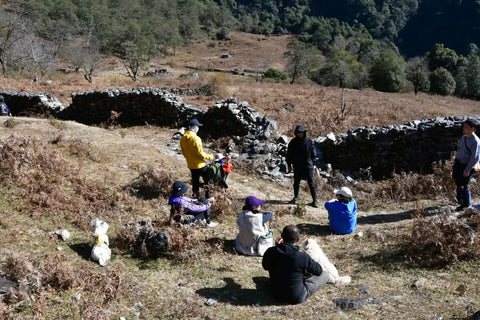
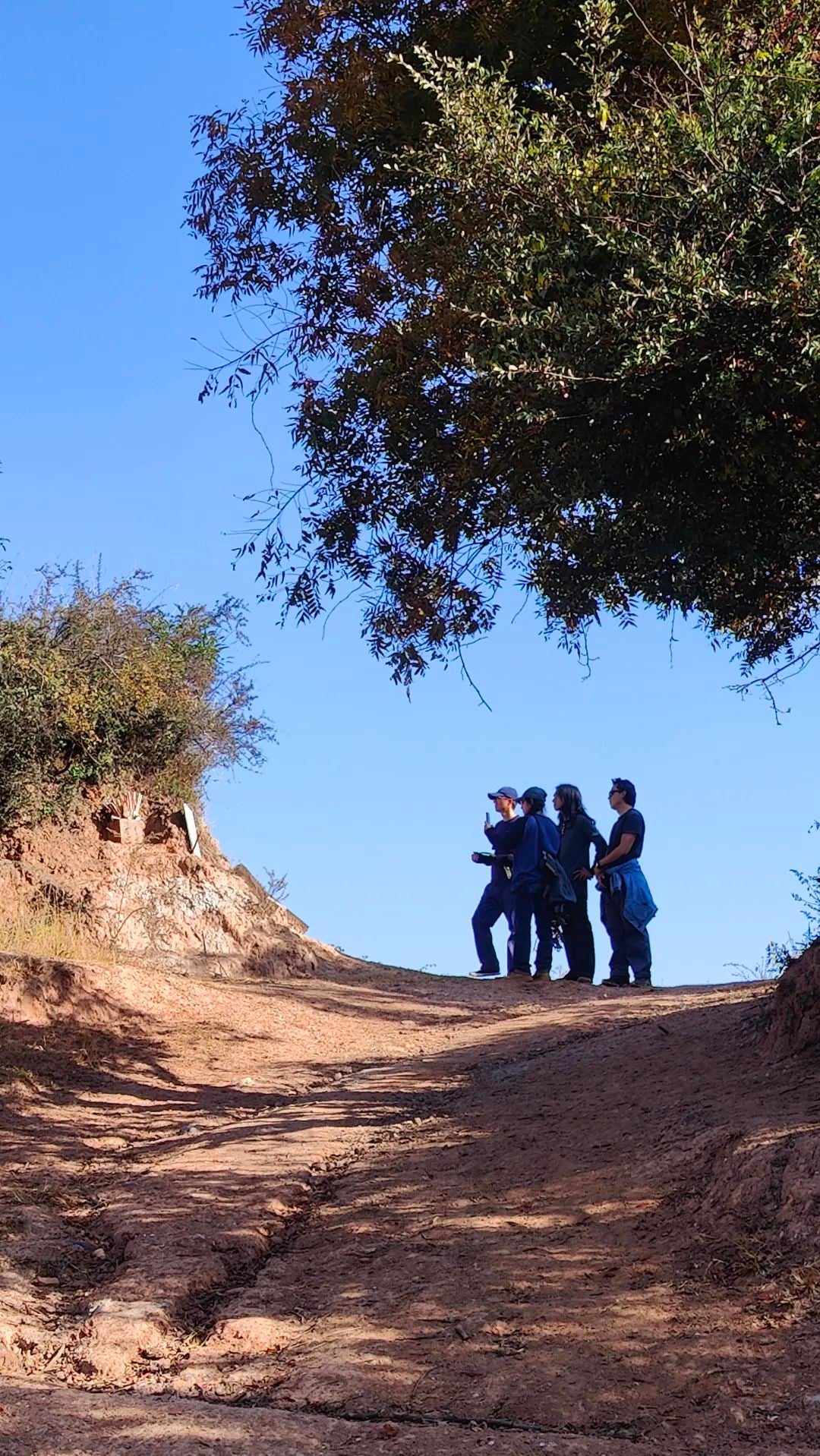
After lunch of barbecue, we hiked into the higher mountain forests. We passed through terraced fields, past two houses with cattle and sheep, and before entering the primeval forest, stood on a high meadow looking back at the wide valley and continuous mountains.
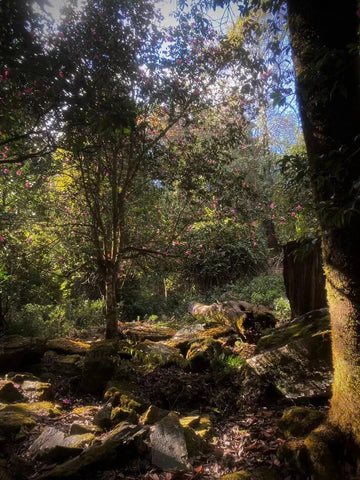
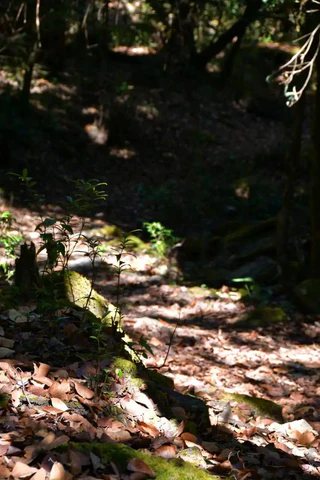
The forest on the western slope of Cangshan is very different from the side near Dali Old Town. It quickly turns into virgin forest, with all kinds of trees: alpine rhododendrons, huge osmanthus trees, camellias, and many others I didn't recognize. Fallen trees were covered with moss and thick trunks. Streams crossed the path, flowing down to the valley.
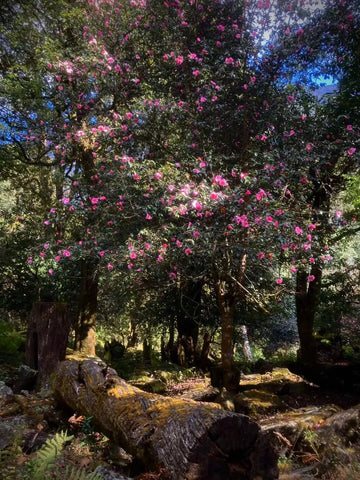
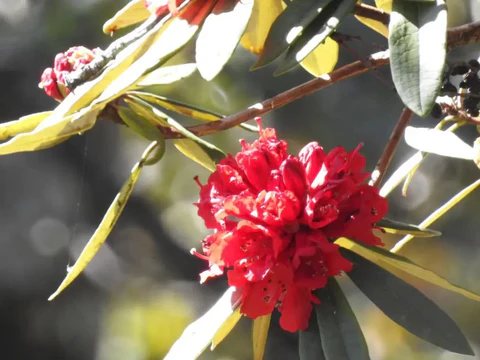
Camellias were already in full bloom in January. The rhododendrons, which bloom first, started to open from January, bright red and delicate, continuing until March when they fully bloom.
Camellia
Gradually blooming rhododendrons
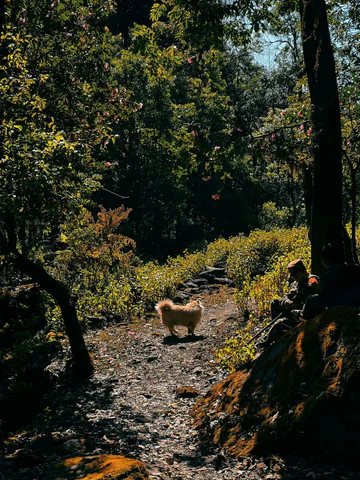
Along the path is primeval forest
Finally, we reached a valley pasture where cattle and sheep roamed. A small stream flowed through.
Mountain village farm dinner
With all this, I knew there could be a good travel route here.
While walking on the mountain meadow, looking down at the houses in the valley, the name of this travel route popped into my mind: Spending a Day at the Home of Relatives in the Mountains.
This name came from a guesthouse we stayed at in Chiang Dao, Thailand, set by the fields. Several guests wrote in reviews: 'Staying here feels like visiting relatives in another province.' At that time, I thought this metaphor was really fitting. It was probably written by people from Chiang Mai city who came to Chiang Dao for a vacation.
Some photos: taken by Chen Paris, Zacaojing, etc.
Photos
Weiterlesen
3
Jason | Using AI to Create Your Own Mini Program/Website
Two months ago in Chiang Mai, I stumbled upon the chance to start learning how to build mini programs. My AI programming mentor, Wangshen, told me, 'Once you finish your mini program, write a summary report.' Now I've completed the new mini program for Cangshan Hiking Home, and it's already being tested. It not only solves problems I've wanted to address for a while, like adding age tags to filter activities and providing an English version, but it has also introduced new features, such as browsing restaurants, guesthouses, and meeting points on a map for a more intuitive experience, and using AI to provide quite intelligent responses.
Learn AI Programming Together
Some information about AI programming
Celebrate the Torch Festival in a Nanzhao Royal Clan Village
Over the past two years, we have taken guests to celebrate the Torch Festival in Songhe Village, Eryuan. Together we slaughtered a sheep, and with the whole village, erected a huge torch in the center of the village square. Everyone made their own torches from hemp stalks, and together with the older and younger villagers, we rushed to grab the blessing baba (cakes) from the big torch, passing blessings to each other with fire. Even for me, a native Bai person, these are rare and precious traditional festival experiences. Dali has endless festivals, and I want to experience them more before they fade away. I remember the Torch Festival of my childhood: torches were no longer enough for me. Before the festival, I would tell my dad to prepare a bucket of waste engine oil and diesel, mix them together, and then I would tightly bind cotton and old cloth with rope into a ball (some kids would secretly take cotton from their quilts at home to make it). Finally, I would make an iron wire ball, soak it in the bucket of oil, and secretly take it out every day to look at it, looking forward to having a great time on the day of the Torch Festival. We would compete in the village and by the rice fields to see whose fireball or torch was more impressive. When the torches and fireballs were almost burned out, we would rush home, walk around the potted fruit trees in circles, and say blessing words, hoping they would grow even better in the coming year.