Jason | F
While waiting for cremation at the funeral home, I suddenly thought that F is the first generation who could choose where to live and where to die. In the past, dying away from home was often not by one's own choice, and it was often for official or business reasons. It wasn't because of work assignments either.
December 14, 2021
I woke up at noon. As long as there was nothing in the morning, I could sleep in naturally. Recently, I've been quite idle. Because of the epidemic, there were almost no hiking guests. I received one or two inquiries a week, but they wouldn't necessarily book in the end, so there was usually nothing to do.
I opened WeChat and received an order for local specialties from Eatwith. The quantity was quite large. I made a cup of black coffee, sat on the sofa, and turned on the heater. In Dali's winter, if there is sunshine, it is warm and bright; if not in the sun, the room feels cold. I checked the list and filled in the orders one by one on the app, which required careful verification and took some time. After the restaurant exited, now without hiking, there is no income. I started selling some Yunnan local products. The sources are mainly fruits from orchards and Luo Tingwen's Yunnan mountain goods. I sell them, and they handle shipping, making me a WeChat seller. In the simplest case, I just need a link and a brief introduction, nothing else. Their prices are fair, and I don't add a markup, intending to do long-term business. It's like opening a small convenience store; people come when they need daily items. Most customers are my hiking guests who have trekked with me, so there's some trust. Many are also old friends. I know most of them are showing care for me by placing orders. The products are good, prices are fair, and being a WeChat seller is part of making a living. I think it's fine.
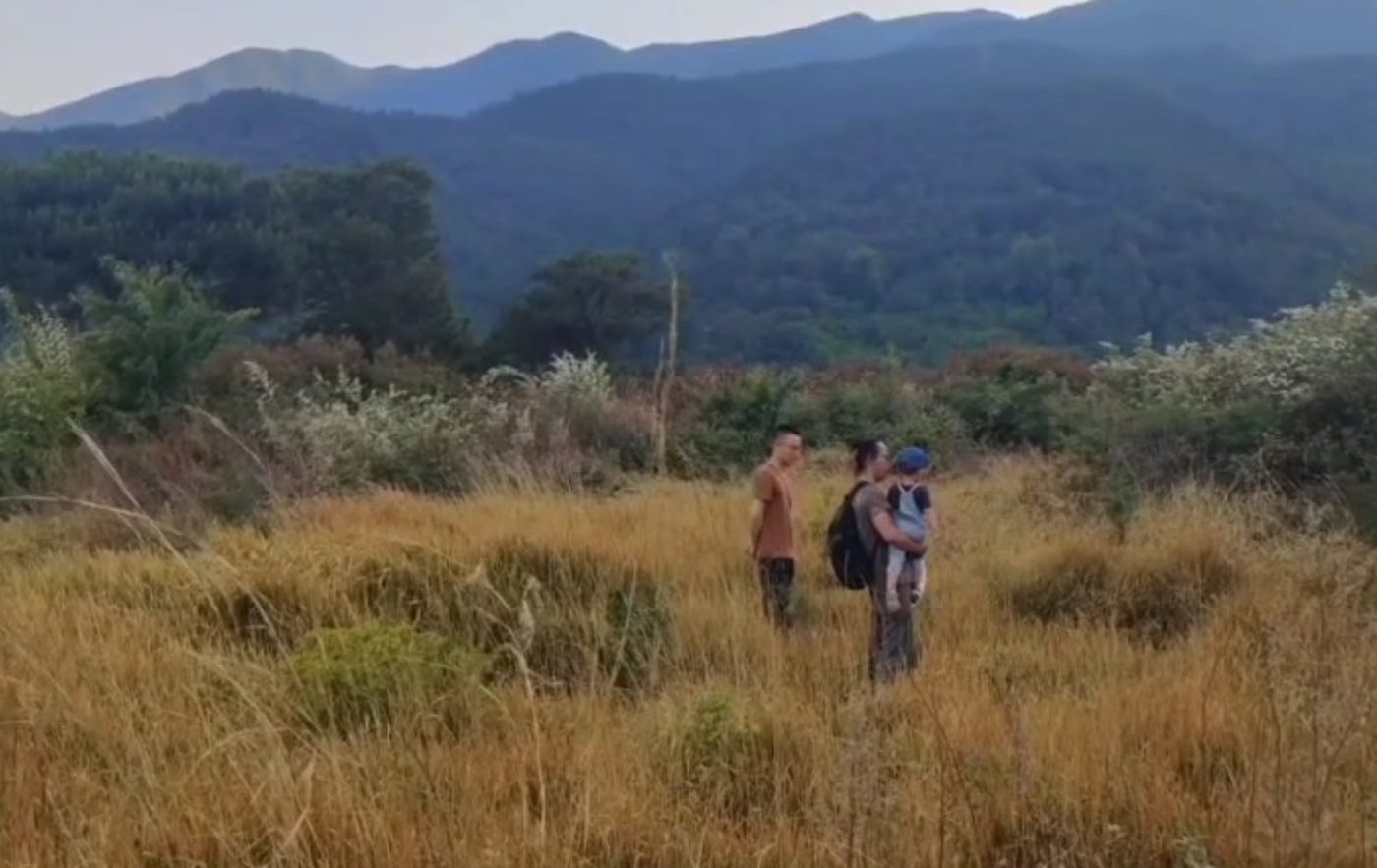
Soon it was almost two o'clock. I drove to the residence of F in the south area of Xiaoyuanzi. Today I had an appointment for acupuncture at the clinic. About three weeks ago, I suddenly learned that he had health problems. He was brought back to Dali from Tibet by a friend, where he had been running a guesthouse. The hospital examination revealed a brain tumor. The doctors didn't recommend surgery; it was useless. I checked some information and learned that, generally speaking, there wasn't much time left. I knew F in Shanghai. More than ten years ago, we were in the same outdoor club and had met once. Later, he also came to Dali, and because he met his ex-wife in Tibet, he moved here. Gradually we became somewhat acquainted, but we didn't really interact much—never had a meal or coffee together alone. However, I had a good impression of him. Roughly speaking, he was the kind of person who doesn't change after many years. He might have experienced many things and upheavals, but he remained sincere and maintained his sense of self. He was simple-minded in his interactions. We played football together. He played with a certain artistry: tall and big, when attacking he passed the ball lightly and cleverly, making it comfortable for teammates to receive. When defending, he was like a one-man wall, with the demeanor of a general. He had no bias about teammates' skills; if you were in position, he would pass to you, even if he knew you might not handle it well. F also got angry when people didn't play seriously or cheated. His attitude on the football field was probably his attitude in daily life. Last year, he came to Dali for winter because there were no guests at the Tibet guesthouse. He stayed on the second floor of my place for three months, so we became closer. However, he spent his days outside finding friends to play shuttlecock, frisbee, and board games. We didn't eat together or chat. His two dogs, Wukong and A Lai, were walked by me. Last year, there were quite a few hiking guests, so I often took them into the mountains. At that time, Harry and Nuo Mi were still around, and four dogs made a grand procession.
Now F has this illness. He soon took to bed, weak. The first time I visited him, he could still speak a few words, and with support he could go out for a meal. A week later, he couldn't speak or walk. Partly, he didn't want to talk, nor did he want friends to visit him.
His residence was close to Guanyin Tang, a modern residential area. I parked on the roadside outside the courtyard, and Yao Yao said F was still taking his afternoon nap. When I first learned that F was ill, Deng Shi, who sent him to the hospital, told me that F was now bedridden in a nearby guesthouse and didn't want to see friends. The person taking care of him now was a woman who had come from elsewhere with her child. I could hardly imagine the scene: a woman with a child is not easy, and she also had to take care of a large, bedridden man. I didn't know her. I could only imagine a picture that wasn't pleasant. I wasn't mentally prepared, didn't know what to say, and didn't visit F. A few days later, Deng Shi said it would be better to visit F, talk to him, and perhaps he would become more optimistic.
That day, I found the guesthouse. F was in a room on the third floor. My foot was still red and swollen, and I used a crutch, so going up was quite laborious. The timing was inconvenient; they were just about to change his diaper, so I ended up being involved in that. The room was a standard twin room with two mattresses on a tatami. There was also a fat cat in the room, brought by the mother and daughter. F looked haggard. We exchanged a few words about trivial matters, and he always broke off mid-sentence. I brought Wukong, but it didn't seem to recognize F and didn't approach him. Yao Yao sat on the other bed, looking wary and uneasy. Of course, she didn't know me or understand me, and she knew that F didn't want to see people. I was an uninvited visitor. It was also my first time meeting her, and I could tell at a glance that she was a capable and efficient woman. She knew very little about me, and although I knew nothing about her, the fact that she could come from elsewhere to take care of a friend in such circumstances and handle this difficult situation was beyond ordinary affection.
It wasn't an atmosphere for a long visit, so I soon took my leave.
The second time I visited F, Yao Yao had already rented a small courtyard and hired a caregiver. We had also chatted on WeChat several times and had become familiar. That day, I brought salty pork and vegetable rice, together with Xiao Nuo and Shu Hui. The new home was spotless and spacious, with three rooms. Yao Yao's daughter, Bai Le Bao, was lively, calling F handsome and playing with him, not treating F as a patient. Yao Yao fed him while talking to him, very gently, like talking to a child. F was declining quickly. His cheeks were sunken, he could barely speak, and could hardly lift his head. He could only communicate with his eyes, but they were dull. Xiao Nuo and Shu Hui couldn't accept such a drastic change and couldn't hold back their tears. When F left Dali for Tibet last year, his last meal was at their home, and they even packed food for him to take on the road. They were both friends and also like an older brother and sister to a younger brother who needed care, even though F was older than them.
It already felt like a home, with a cheerful atmosphere. Yao Yao had a kind of strength that could support a whole sky to take care of F. To achieve what she had done required not only affection but also strength. Finding a courtyard, hiring a caregiver, moving, settling F, buying various supplies—many things required careful planning. After F was diagnosed, the doctor said there was nothing they could do. Friends found his older brother through various channels, wanting to send F back to Shanghai. But the brother only had a blood obligation; the relationship was not close. F didn't want to go back to Shanghai. From the hospital, he called Yao Yao. I think she must be the person he trusted most, because F was not the type to trouble friends.
May 2, 2022
When I woke up, I looked at my phone. It was still before seven. I had slept for five hours and felt very awake. I got up and went to the adjacent living room to make a cup of black coffee. It was very simple: boiled water, poured some coffee powder into a stainless steel filter cup, and added boiling water. This filter cup was something F bought after seeing me make coffee this way when he stayed at my place during the Spring Festival last year. He thought it was simple and practical, no need for filter paper, so he bought one. This is the one he bought and gave to Yao Yao.
In the next room, Yao Yao and Bai Le Bao were still asleep. Two days ago, F passed away. The next day, friends sent him on his final journey to cremation. That day, caregiver Li Shi also dragged his suitcase and left. On the way back, Yao Yao asked me to come stay for a few nights, until the end of the first seven days. She had found a place nearby and planned to stay until the 49th day, as a final companion for F.
When the hearse came to pick him up, four of us—Deng Shi, Jiang Cuo, Li Shi, and I—carried F into the car. The illness had wasted him, and he had become very light. I felt calm. In general, the physical birth and death of the body doesn't easily move me. Moreover, for F, leaving at this time was a relief. When the bag was finally sealed, Lao Deng took out a rattan ball wrapped in paper and placed it beside F. Suddenly I felt sad. This person who had just passed away returned to his youthful image. He loved playing football, shuttlecock, rattan ball, and board games, and he was good at them. Life had gone through changes and he had made his home everywhere, with joys, disappointments, and confusion, but no matter what, he enjoyed playing these games with gusto. I also recalled that before Harry and Nuo Mi were buried last year, when Hong Hong placed their bowls and toys beside them, I was touched in my heart.
Looking back at these years' records, it's all about the passing of the things around me. Only at times like this does it touch the heart. If it's just a move in life, even going far away to work, study, or travel, in this era of the internet, it's not a real departure.
While waiting for cremation at the funeral home, I suddenly thought that F is the first generation who could choose where to live and where to die. In the past, dying away from home was often not by one's own choice, and it was often for official or business reasons. It wasn't because of work assignments either.
Your browser does not support the video tag.
Weiterlesen
3
Jason | Using AI to Create Your Own Mini Program/Website
Two months ago in Chiang Mai, I stumbled upon the chance to start learning how to build mini programs. My AI programming mentor, Wangshen, told me, 'Once you finish your mini program, write a summary report.' Now I've completed the new mini program for Cangshan Hiking Home, and it's already being tested. It not only solves problems I've wanted to address for a while, like adding age tags to filter activities and providing an English version, but it has also introduced new features, such as browsing restaurants, guesthouses, and meeting points on a map for a more intuitive experience, and using AI to provide quite intelligent responses.
Learn AI Programming Together
Some information about AI programming
Celebrate the Torch Festival in a Nanzhao Royal Clan Village
Over the past two years, we have taken guests to celebrate the Torch Festival in Songhe Village, Eryuan. Together we slaughtered a sheep, and with the whole village, erected a huge torch in the center of the village square. Everyone made their own torches from hemp stalks, and together with the older and younger villagers, we rushed to grab the blessing baba (cakes) from the big torch, passing blessings to each other with fire. Even for me, a native Bai person, these are rare and precious traditional festival experiences. Dali has endless festivals, and I want to experience them more before they fade away. I remember the Torch Festival of my childhood: torches were no longer enough for me. Before the festival, I would tell my dad to prepare a bucket of waste engine oil and diesel, mix them together, and then I would tightly bind cotton and old cloth with rope into a ball (some kids would secretly take cotton from their quilts at home to make it). Finally, I would make an iron wire ball, soak it in the bucket of oil, and secretly take it out every day to look at it, looking forward to having a great time on the day of the Torch Festival. We would compete in the village and by the rice fields to see whose fireball or torch was more impressive. When the torches and fireballs were almost burned out, we would rush home, walk around the potted fruit trees in circles, and say blessing words, hoping they would grow even better in the coming year.