Jason | Zayaa
A note on Zayaa, recording the wonderful people and moments.
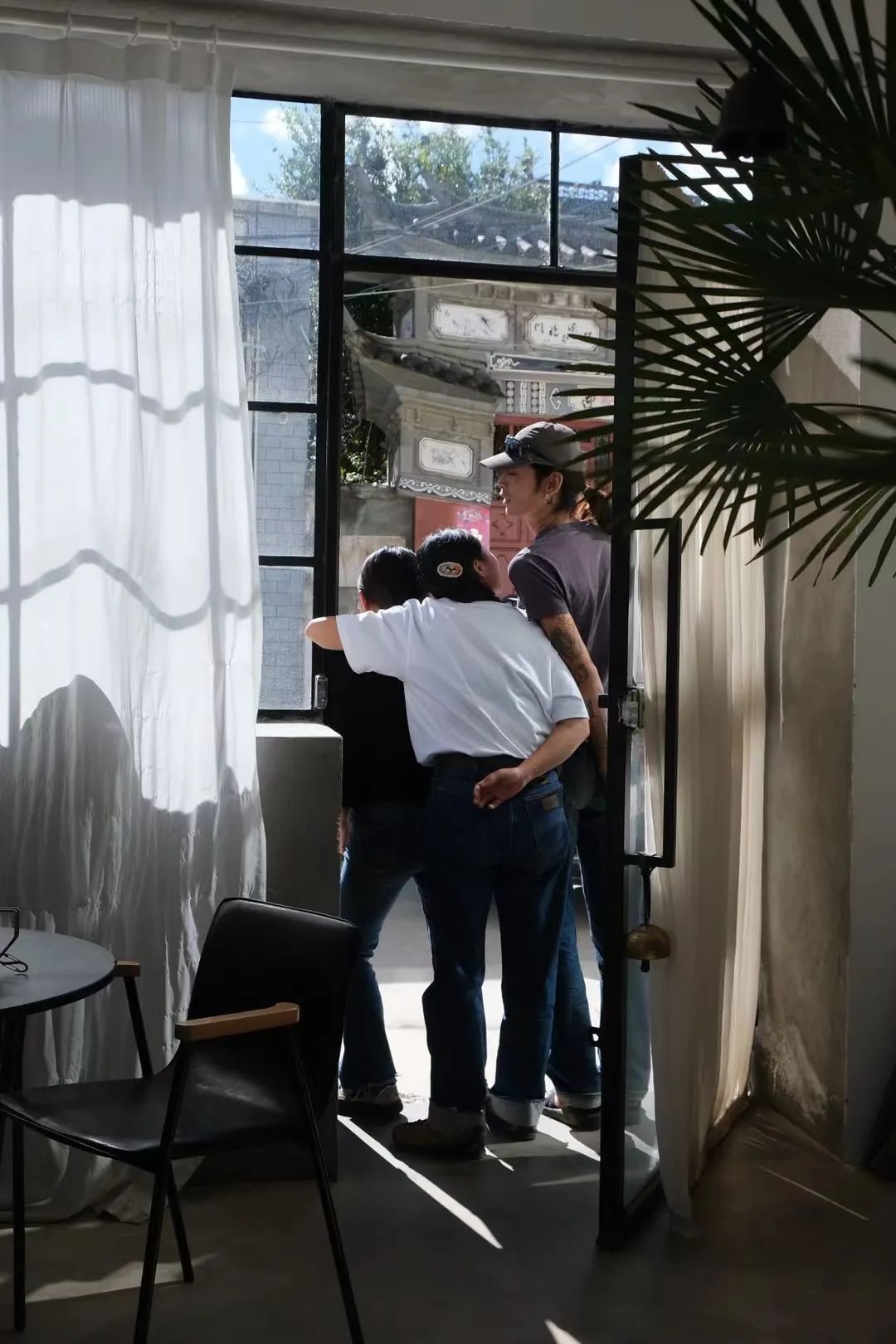
2023.12.27
"Zayaa Camping Café" feels like a slice of our past, present, and future lives.
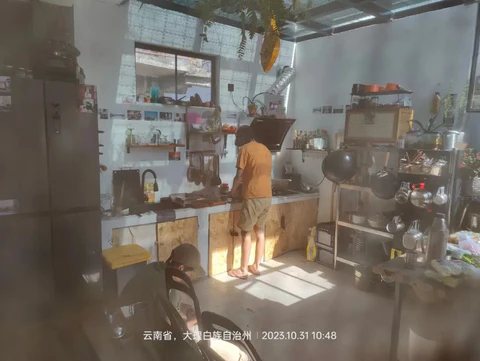
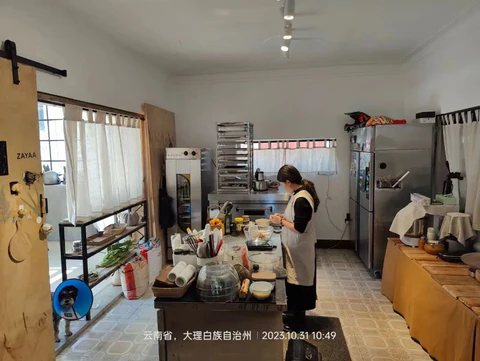
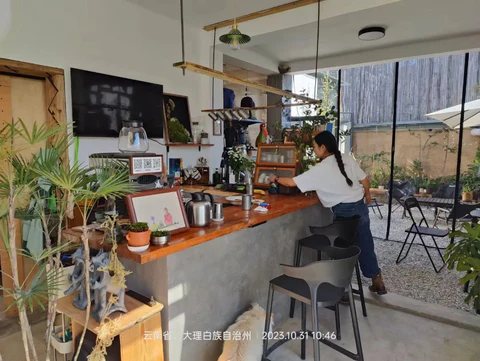
After the summer vacation, our off-season began. Aruna, He Chen, and Li Zhenhao tidied up the courtyard and turned it into a community café: Aruna completed the initial renovation and took charge of baking, with her own baking room where she makes bread, bagels, or cakes every Monday; Li Zhenhao works at the front counter making coffee and drinks; He Chen prepares community lunches and has his own kitchen.
With this place, our guides, guests, and friends from the Dali community would drop by to sit for a while or have lunch whenever they were free. No appointments needed—you could always run into someone. Activities heading out far also sometimes gathered here, so guests could easily have a simple lunch and a coffee before departing. You could also see specimens of various plants, ferns, and mushrooms collected by the guides on the mountains in different seasons. The shop played nature documentaries. Everyone was busy with their own things, occasionally chatting.
Aruna
Aruna is a young woman from Inner Mongolia, of the Mongolian ethnic group. She rented the current small courtyard of Zayaa in April this year in Xiaocen Village, by a field near the village entrance. A few days before that, after a brief conversation, she joined the Cangshan Hiking Home. We had known each other many years earlier, when our Foothill Restaurant shared a storefront with Pirate Wine Castle, and she worked at the latter, always smiling.
After decorating the courtyard, summer arrived, and Aruna started offering a "flower cake making" experience there. She had previously run a bakery, so it came naturally. When the independent camping group was formed in July, she and He Chen scouted routes together, refined them, and then busied themselves for two full months. In the end, she still preferred being out in nature, so she gradually stopped teaching flower cake making and spent more time leading camping and hiking trips. Before making this her work, she had traveled and camped in her van, selling nomadic coffee (a mobile coffee truck) in various places. I once drank a cup of her coffee on the roadside at the northern end of Cangshan Avenue, not knowing then that we would work together in the future.
Aruna is smart, brave, and straightforward. When she first came to Dali, she built her own house in the fields and raised 200 chickens. She loves freedom, and when needed, she can handle pressure. Once she is willing to take on the next task, the rest of us don't need to worry.
He Chen
He Chen was the longest-serving manager at Midnight Diner. At one point, he had to manage two stores and look after many people and matters. After my hiking work income became enough to live on, I formally left Midnight Diner the year before last. My 50% share in one of the stores was, as per convention, given to He Chen, the manager. Actually, he chose to leave Dali; to some extent, his staying to work at the diner for so many years was constrained by our connection, though that wasn't my intention.
He then went to Chengdu, not to seek development, but to try a different new life—Li Zhenhao was working there. He tried making bread on his own, set up stalls selling drinks and books, and worked as a clerk in a hardware store, earning little. As the outdoor business grew better and we were short-handed, we needed Xiao Chun, the tailor, to come help too. I sent him a message asking him to come back; even if he didn't want to lead trips, he could drive. He refused, saying the time wasn't right. One day, after drinking, Xiao Chun also called him to come back and join us, but he gave no definite answer. Another day, Xiao Chun said to me, "Let He Chen come back. If there's not enough work, he can lead my team." He returned before the winter Chinese New Year.
In mid-January, he started following routes with me, Xiao Chun, and the tailor, and by the end of the month, he was leading his own team. Compared to others, He Chen is the farthest from the traditional concept of a guide, and in a sense, he has the most potential to be an excellent guide. This has been proven before: when he first came to Midnight Diner, he was a person with almost no social life and no need for socializing, struggling to control his own emotions. In the end, he had the most people to take care of in his work and life, and shouldered the most responsibilities. He seemed emotionally unstable, but ultimately showed the strongest resilience. Perhaps it was intuition, perhaps luck—he was the only person I told to come to work the next day without even meeting him, and the newcomer who took on the store manager's duties months later during a difficult time. We have been through many things together; we don't communicate much verbally, but we understand and trust each other.
By summer, he had become an excellent guide. Together with Aruna, he formed the camping group in July and quickly improved through practice. In September, it became independent as "Zayaa Camping": opening new routes, writing copy, promoting, building a booking system, and finding their own guests. Independence and freedom are probably important foundations of creativity, just as truth is the foundation of beauty.
*Regarding the idea of each group running its own operations independently, I wrote a piece: Crossing Baishi Creek
Thanks to his experience in cooking, He Chen is responsible for community lunches at "Zayaa Coffee." From Monday to Friday, he makes different dishes each day, gradually stabilizing both the taste and the customer base, and improving rapidly. When I don't feel like cooking and want a coffee, I go there.
Li Zhenhao
Li Zhenhao is the leader of the mushroom-picking group. Over the summer, she collected a large number of mushrooms and plants. Now that she has free time, she has turned them into many specimens at the café, framed them, and hung them on the walls. She also picks various peculiar plants and fruits during camping trips to farther places, like the Jinsha River. This hobby of hers gives the space its own unique beauty and atmosphere—a natural vibe, without flashiness or deliberate catering to tastes.
American coffee is 10 yuan a cup, the drink most people have at Zayaa. Li Zhenhao makes it carefully, and Xiao Hua is her coffee bean supplier. Milk tea and special drinks have gradually been added. At the front counter, she also attends to dining guests, offering them snacks, cigarettes, and tea. When free, she watches documentaries on animals and plants and works hard to learn English from scratch.
In May, Li Zhenhao truly moved to Dali to join He Chen. Before coming, she had concerns about whether she could fit in with a relatively unfamiliar group of people. I suggested she could work independently, running a third-party summer camp, collaborating with our activities, and then she felt she could try. In June, the summer camp started, and she hit it off with Aruna right away, becoming good friends. In July, she joined the mushroom-picking group and pitched in to lead other groups when needed. By August, she was busy leading trips every day and no longer needed the summer camp.
A note on Zayaa, recording the wonderful people and moments.
He Chen is cooking
Aruna is baking
Li Zhenhao is in the coffee area
Photos
Keep reading
3
Jason | Using AI to Create Your Own Mini Program/Website
Two months ago in Chiang Mai, I stumbled upon the chance to start learning how to build mini programs. My AI programming mentor, Wangshen, told me, 'Once you finish your mini program, write a summary report.' Now I've completed the new mini program for Cangshan Hiking Home, and it's already being tested. It not only solves problems I've wanted to address for a while, like adding age tags to filter activities and providing an English version, but it has also introduced new features, such as browsing restaurants, guesthouses, and meeting points on a map for a more intuitive experience, and using AI to provide quite intelligent responses.
Learn AI Programming Together
Some information about AI programming
Celebrate the Torch Festival in a Nanzhao Royal Clan Village
Over the past two years, we have taken guests to celebrate the Torch Festival in Songhe Village, Eryuan. Together we slaughtered a sheep, and with the whole village, erected a huge torch in the center of the village square. Everyone made their own torches from hemp stalks, and together with the older and younger villagers, we rushed to grab the blessing baba (cakes) from the big torch, passing blessings to each other with fire. Even for me, a native Bai person, these are rare and precious traditional festival experiences. Dali has endless festivals, and I want to experience them more before they fade away. I remember the Torch Festival of my childhood: torches were no longer enough for me. Before the festival, I would tell my dad to prepare a bucket of waste engine oil and diesel, mix them together, and then I would tightly bind cotton and old cloth with rope into a ball (some kids would secretly take cotton from their quilts at home to make it). Finally, I would make an iron wire ball, soak it in the bucket of oil, and secretly take it out every day to look at it, looking forward to having a great time on the day of the Torch Festival. We would compete in the village and by the rice fields to see whose fireball or torch was more impressive. When the torches and fireballs were almost burned out, we would rush home, walk around the potted fruit trees in circles, and say blessing words, hoping they would grow even better in the coming year.