Mage | The West Slope of Cangshan | The Enchanting 'Other Side'
I recalled a saying I once saw online: people come to this world to serve their sentence. Heaven and earth are the prison, the body is the prison uniform, and others are hell. When the sentence is served, one is free. On the way back, we saw the continuous snow-capped mountains and the new moon of the fourth day of the lunar new year.
A Day at the Mountain Household on the West Slope
"I'm the group leader with the worst physical fitness among all of us." As soon as He Chen finished speaking, I burst out laughing. I love hearing things like that — it implies today's journey will be quite leisurely! And how could a group leader introduce himself like that, hahaha!
Despite his poor stamina, he's an excellent driver. The route to the west slope is a long drive, from the east side of Cangshan to the west side. After leaving the expressway, there's still a long winding cement mountain road, with terrifying sharp turns and steep slopes, especially when two cars meet head-on. Yet it all felt firmly under He Chen's control. The whole trip had a bizarre feeling of constantly switching between anxiety and calmness.
Due to Spring Festival traffic, the journey became even longer than usual. He Chen was very talkative, able to chat easily with Duoduo, a teenager, and also share with me some of Guangdong's customs and traditions. He mentioned an ideal camping spot near Baiyun Mountain, where a delicious farmhouse meal with a large goose costs several hundred yuan. He also talked about the lively atmosphere of Guangzhou and the boldness of its residents, prompting me to share some changes in southern media coverage in recent years and the shift in Guangzhou's overall city vibe.
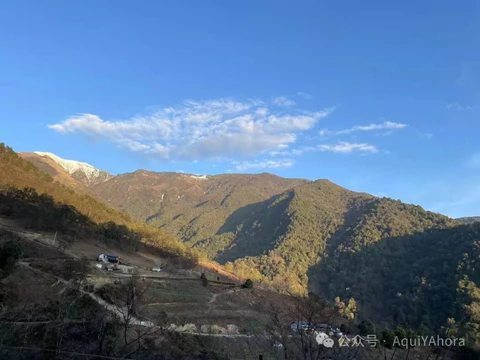
When the car reached the expressway opposite Yangbi County town, we could see the continuous snow-capped peaks of Cangshan from the back side, looking especially white and sacred under the sunlight. At that time, He Chen talked about the differences between the Bai and Yi people's Torch Festivals, the church rituals over in Nujiang, the historical ties between the Bai and Han peoples, and how Kublai Khan conquered Dali back then... He's incredibly knowledgeable and remembers so much! He claimed he didn't know much about plants, but along the way he taught us plenty. As soon as we entered the mountains, he pointed out the purple primroses, though that was a generic name. Later, halfway up the mountain, we really did see a patch of light purple flowers on the opposite slope, stretching from the mountainside down to the ravine.
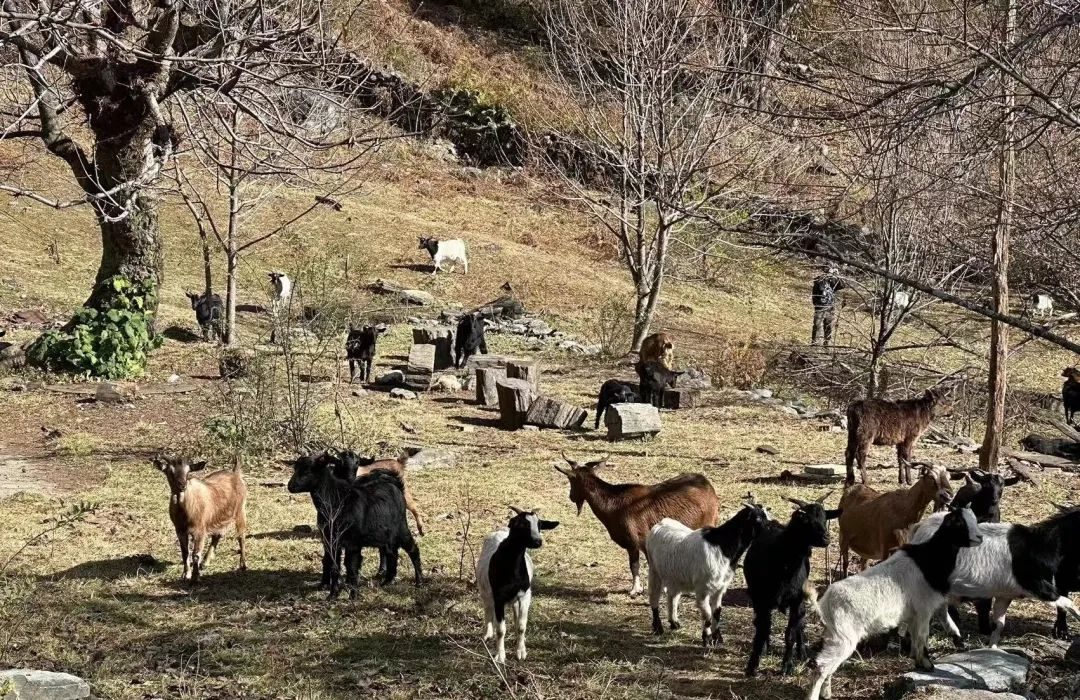
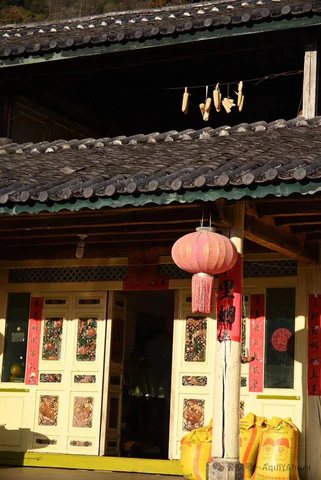
We had lunch at a farmhouse halfway up the mountain (at Xiao Ayan's home). The house was backed by the west slope of Cangshan and faced the valley, overlooking the winding road we had come up, layered like terraced fields. There were two or three two-to-three-story flat buildings, with a flat open area in front as a courtyard. Below the courtyard were sheds for cattle, sheep, pigs, and chickens, plus a large pile of dried ferns. Around the house were beehives, vegetable gardens, wheat fields, and walnut, camellia, and rhododendron trees... They had rice to cook, a roof over their heads, and flowers to enjoy — truly contented and at ease.
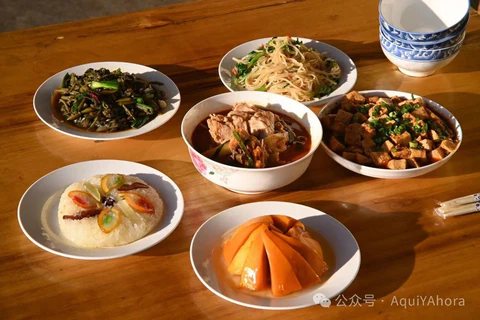
We ate Gaohe pickled vegetables, mustard greens with sweet broth, cured salted meat, and sausages. For dinner, we even had sticky rice. He Chen said it was bought from downhill, a sign of respect for guests. Indeed, it's somewhat extravagant in rural areas to specially buy meat and vegetables for guests, while in the city, cooking yourself is considered heartfelt. Interesting.
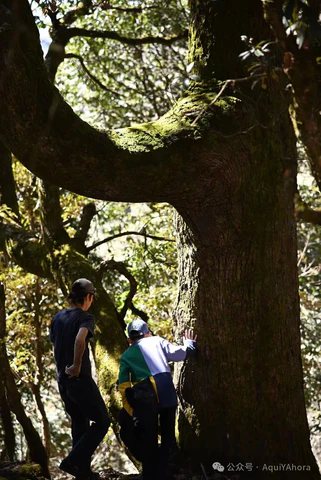
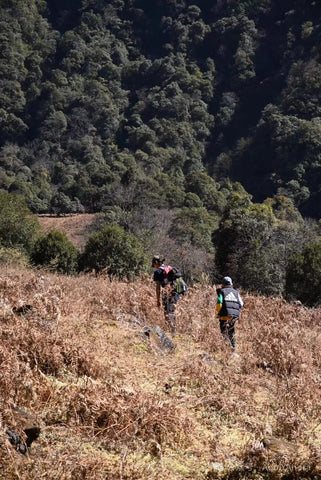
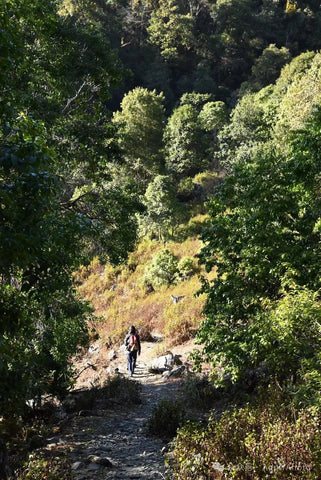
After the meal, we hiked deeper and higher into the mountains. Crossing wheat fields and passing a few households, we came upon the super tall walnut tree He Chen had mentioned on the way. The west slope of Cangshan really has a completely different character from the east slope. The east slope is almost all pine trees, and there are few towering ancient trees. On the west slope, you hardly see any pines; there are many giant trees with lots of moss, and some have already withered, toppled, and become hollow — people can even play inside them.
He Chen said that the west slope of Cangshan is a primeval forest, while the east slope is artificially planted. Oh, that completely explains why the vegetation on the east slope is so monotonous. Then he talked about the nationwide movement sixty or seventy years ago, when people smashed their iron pots to smelt steel and felled the trees in the mountains to fuel the fires. I wonder if those who cut down trees ever felt any awe or reluctance in front of a towering ancient tree. It certainly couldn't be cut down with a single stroke; it must have taken countless repetitions, with so much sap flowing and wood chips flying everywhere.
I thought of "The King of Trees." For those who believe that all things have spirits, such a death is somewhat cruel. The west slope of Cangshan is also strewn with "deaths," almost all from natural withering or competition between species. Many giant trees have fallen across the path, leaving only stumps on the roadside. The walnut trees are left with bare, withered branches.
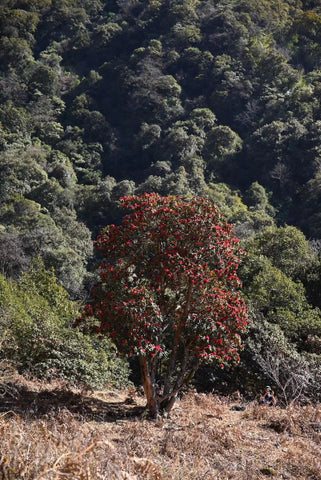
But amid the death there is vibrant life; the most striking are the ubiquitous strangler plants and parasitism. And the bright red Mengma rhododendron. "Don't you think it looks like a red-tasseled spear?" He Chen said. I looked at the flowers — each cluster was the size of a bowl, made up of bell-shaped blooms piled together, fiery red and gorgeously flamboyant. It's the color of the south, the temperament of the south. Along the way, there was also a subtle, inexplicable fragrance. I assumed it came from some plant, but when I asked, I learned it was the scent of wild viburnum by the roadside. That day I got to know quite a few new plants.
We played for a good while, then headed down the mountain. I love going downhill, just as I love the sunset. As the car descended, we could see the setting sun shining into the valley — on the snowy peaks, rooftops, treetops, wheat ears... everything was bathed in a gorgeous, dreamlike golden light, as if there were no tomorrow, no next moment.
Compared with sunrise, I prefer sunset; sunrise can be so exhausting. He Chen kept exclaiming over the beauty of the setting sun and the evening glow. Later he talked about his past cycling experiences in Tibet and the literary works he loves. His life is like his reading — colorful and extraordinary, completely different from my own life as someone who's conventional, timid, overly cautious, and dependent on industrial civilization. Even the styles of works we like are entirely different; I can no longer even remember the authors and book titles he mentioned, and he can't appreciate Dostoevsky either.
But I enjoy such conversations, conversations that reveal a different "other side." I finally truly saw the charm of those works and stories, which I could never appreciate from my own perspective. Because of such dialogue, you can at least try to see, appreciate, and understand from the point of view of a real person. He Chen said many things along the way, but the one that left the deepest impression on me was: "Isn't reading just to pass the time?" It's been a long time since anyone told me that the purpose of doing something is simply to pass the time, with no other goal. Even with my closest friends, we think that because time is precious, it's best to spend it on the people and things we like. Or rather, the best gift to give someone is time. We've almost forgotten that time is not as scarce as we imagine; on the contrary, it needs to be passed, and there is plenty of it.
I recalled a saying I once saw online: people come to this world to serve their sentence. Heaven and earth are the prison, the body is the prison uniform, and others are hell. When the sentence is served, one is free.
On the way back, we saw the continuous snow-capped mountains and the new moon of the fourth day of the lunar new year.
Photos
Weiterlesen
3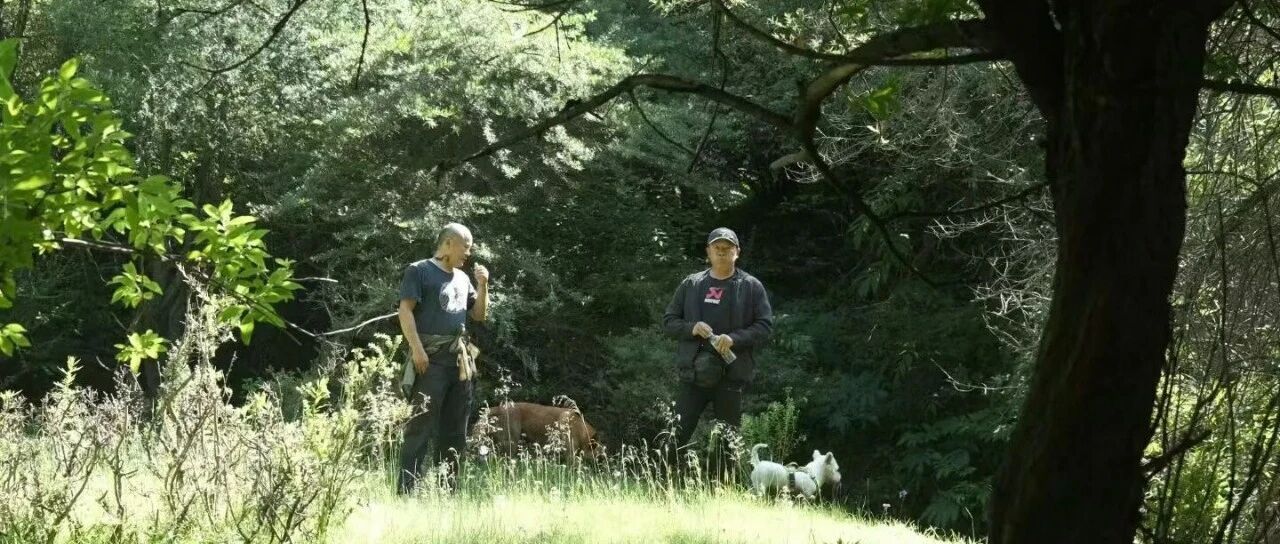
Jason | Using AI to Create Your Own Mini Program/Website
Two months ago in Chiang Mai, I stumbled upon the chance to start learning how to build mini programs. My AI programming mentor, Wangshen, told me, 'Once you finish your mini program, write a summary report.' Now I've completed the new mini program for Cangshan Hiking Home, and it's already being tested. It not only solves problems I've wanted to address for a while, like adding age tags to filter activities and providing an English version, but it has also introduced new features, such as browsing restaurants, guesthouses, and meeting points on a map for a more intuitive experience, and using AI to provide quite intelligent responses.
Learn AI Programming Together
Some information about AI programming
Celebrate the Torch Festival in a Nanzhao Royal Clan Village
Over the past two years, we have taken guests to celebrate the Torch Festival in Songhe Village, Eryuan. Together we slaughtered a sheep, and with the whole village, erected a huge torch in the center of the village square. Everyone made their own torches from hemp stalks, and together with the older and younger villagers, we rushed to grab the blessing baba (cakes) from the big torch, passing blessings to each other with fire. Even for me, a native Bai person, these are rare and precious traditional festival experiences. Dali has endless festivals, and I want to experience them more before they fade away. I remember the Torch Festival of my childhood: torches were no longer enough for me. Before the festival, I would tell my dad to prepare a bucket of waste engine oil and diesel, mix them together, and then I would tightly bind cotton and old cloth with rope into a ball (some kids would secretly take cotton from their quilts at home to make it). Finally, I would make an iron wire ball, soak it in the bucket of oil, and secretly take it out every day to look at it, looking forward to having a great time on the day of the Torch Festival. We would compete in the village and by the rice fields to see whose fireball or torch was more impressive. When the torches and fireballs were almost burned out, we would rush home, walk around the potted fruit trees in circles, and say blessing words, hoping they would grow even better in the coming year.