Jason | Mehdi of Isfahan
Arrived in Isfahan last night. After checking into the youth hostel, the others went out to eat while I took a taxi to Azin's house. It wasn't far, about 15 minutes by taxi. We had arranged it on the way from Kashan to Isfahan, and she said her father would be home later.
Arrived in Isfahan last night. After checking into the youth hostel, the others went out to eat while I took a taxi to Azin's house. It wasn't far, about 15 minutes by taxi. We had arranged it on the way from Kashan to Isfahan, and she said her father would be home later.
I waited at her doorstep for a while, then a car pulled up to the curb. A middle-aged Iranian woman got out from the passenger seat. I guessed she was Azin's mother, but I was surprised—had she come back from Canada?
Around the same season last year, I had traveled to Isfahan and stayed at their homestay. I had found it randomly on a map, and the rating was high. But when I arrived, it didn't feel like a homestay, just a private house. Inside, there was a young girl (who looked somewhat like a boy) and her grandfather. She said her father would come soon to take us to another house.
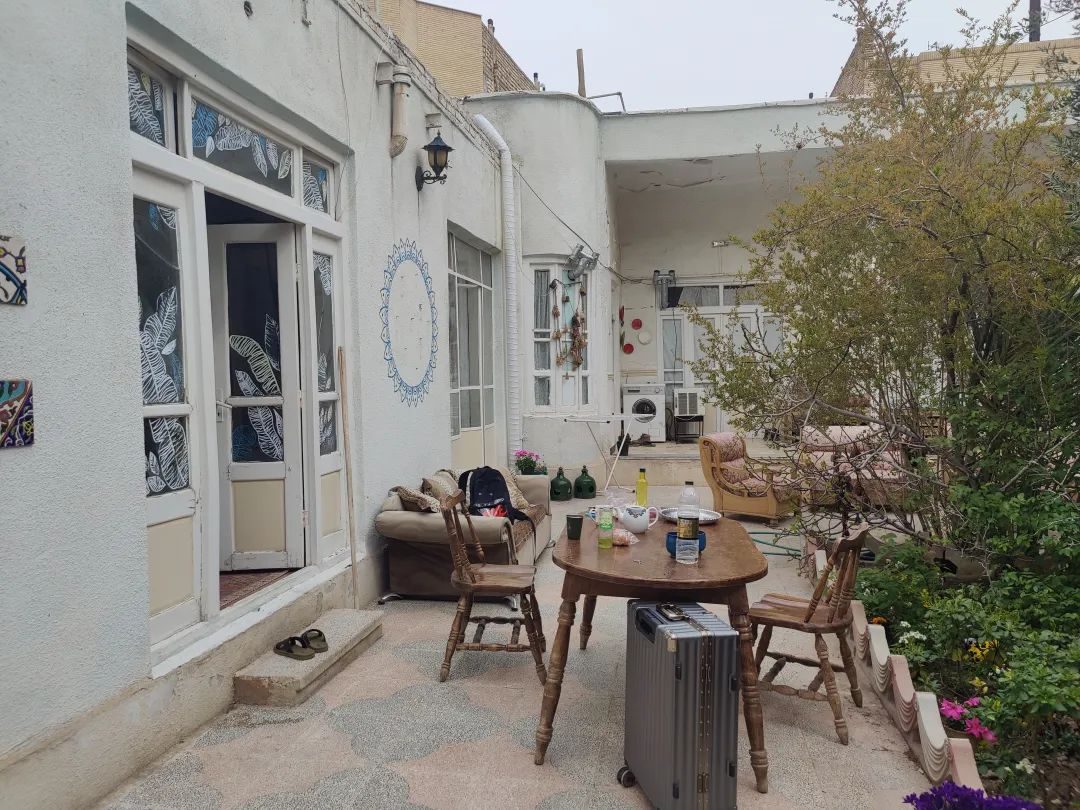
Her father Mehdi was a serious, somewhat depressed-looking middle-aged man in his fifties. He showed no warmth at all, like leading prisoners, he drove us to a courtyard without speaking on the way. There were no other guests there either. The courtyard looked run-down, as if no one had lived in it for a long time. After arranging the rooms and explaining how to lock and unlock the doors, he left without a single smile. We thought, at most, we'd stay one night and then leave.
Though the courtyard was a bit shabby, it had trees and flowers, and no other people, so it was comfortable and free. Outside was a living area with many alleys, scattered with various small shops selling vegetables, fruits, groceries, and coffee shops. It was perfect for strolls. The next morning, we went to the nearby supermarket, bought ingredients, and cooked for ourselves. We quickly got tired of grilled meat and pizza. Mehdi came over at noon from his nearby workplace to check on us, probably feeling a bit uneasy. We invited him to taste our stir-fried peppers. He cautiously tried a little, then a bit more, and asked, "Can you get this fragrance just by frying with oil? Only oil?"
From then on, we started chatting until he had to return to work. In very basic English, he asked me countless questions about China and the world. He also told me he was a manager at an electric power company, earning $300 a month, which was decent in Iran. But compared to his best days in his youth when he could earn $2,000, the current situation was much worse. His wife had gone to Canada on a tourist visa and managed to get a work visa due to her special status as an Iranian, but he didn't want to go. "My language skills are poor—what could I do there? I don't want to go."
In the evening, Mehdi's daughter Azin came over. She studied chemistry at Isfahan University. She said her mother used all the money in her grandfather's card to buy plane tickets, tricking him into thinking they were just traveling together, but she actually wanted to stay in Canada. The grandfather was very angry. Her mother used to run "cooking classes" for foreign tourists and was good at English, but due to the pandemic and the street protests from the anti-headscarf movement, Western tourists had almost disappeared, and her business plummeted. "There's no hope in life," so she wanted to go to Canada herself and take her daughter too. However, her daughter's visa application was rejected. Azin wanted to learn English, take the TOEFL, and apply to study abroad, but it was hard. "There's no hope in Iran; I want to leave," she said. As a young person with new ideas, she felt angry and hopeless about the repressive and conservative social atmosphere and the economy strangled by US sanctions. This reminded me of China in the 1980s—the outside world was vibrant, wealthy, and colorful, and everyone wanted to go out at any cost, but going out brought hardships and ups and downs.
We stayed another night, and then still didn't want to leave, so we stayed one more. Each day we went out through the alleys to buy groceries and cook. Mehdi slipped back from work several times a day to chat with us, then tried to offer us different things to eat and drank tea together. A serious, dispirited middle-aged man turned into someone who seemed serious but was actually lovely and humorous. During our days in Isfahan, we barely visited any sights, but they were good times.
Unexpectedly, this time when I returned, the mother Maryam was back. She was a warm person, clearly capable, and the one in charge of the household. Sitting on the couch inside, we chatted. Grandfather was sitting on the carpet; he had difficulty moving, but his eyes were clear and spirited. Last year when Azin was taking care of us, he reminded her not to forget to serve tea—he noticed even such details.
Maryam said she had lived in Canada for 11 months but decided to return to Iran: "I still felt a bit homesick. Since I couldn't bring my daughter there, there was no point in staying by myself." She continued running the homestay, now hosting only Iranian local guests, and wanted to resume cooking classes, but there were no foreign customers. She asked if I could promote her on WeChat. I thought it wasn't that simple. Moreover, the courtyard where we had stayed and where she used to hold cooking classes was no longer affordable, so it had been returned to the landlord.
During our chat, a large bowl of Ash (a thick soup) like salty noodles was brought out as dinner, said to be made in the style of Mehdi's hometown, Mahdieh, a small town a few dozen kilometers from Isfahan.
Azin continued her classes at Isfahan University; she had an exam tomorrow. I gave her a Xiaomi bone conduction headset, hoping she could use it for learning English without her ears getting uncomfortable. I personally think such headphones are suitable for long listening sessions. Mehdi was still as lovely as ever. He was happy to see me, but because Maryam was back, he couldn't get a word in. Also, he said he got up very early and was sleepy, so he slept on a couch in the courtyard. When I left, he woke up and said goodbye groggily. They invited me to come again the next day.
The next morning I woke up at 6:30 and received several WeChat messages saying Iran had attacked Tel Aviv, the capital of Israel, in the middle of the night. Worried about the outbreak of war, I woke the others and changed the plan, leaving Isfahan for Shiraz.
2024.04.14
Keep reading
3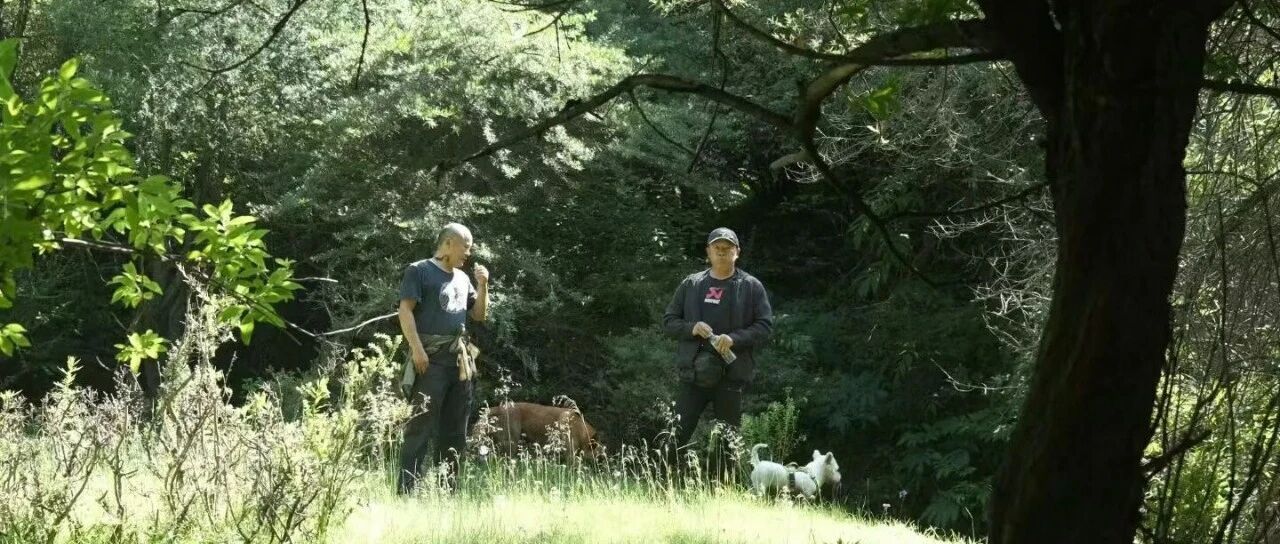
Jason | Using AI to Create Your Own Mini Program/Website
Two months ago in Chiang Mai, I stumbled upon the chance to start learning how to build mini programs. My AI programming mentor, Wangshen, told me, 'Once you finish your mini program, write a summary report.' Now I've completed the new mini program for Cangshan Hiking Home, and it's already being tested. It not only solves problems I've wanted to address for a while, like adding age tags to filter activities and providing an English version, but it has also introduced new features, such as browsing restaurants, guesthouses, and meeting points on a map for a more intuitive experience, and using AI to provide quite intelligent responses.
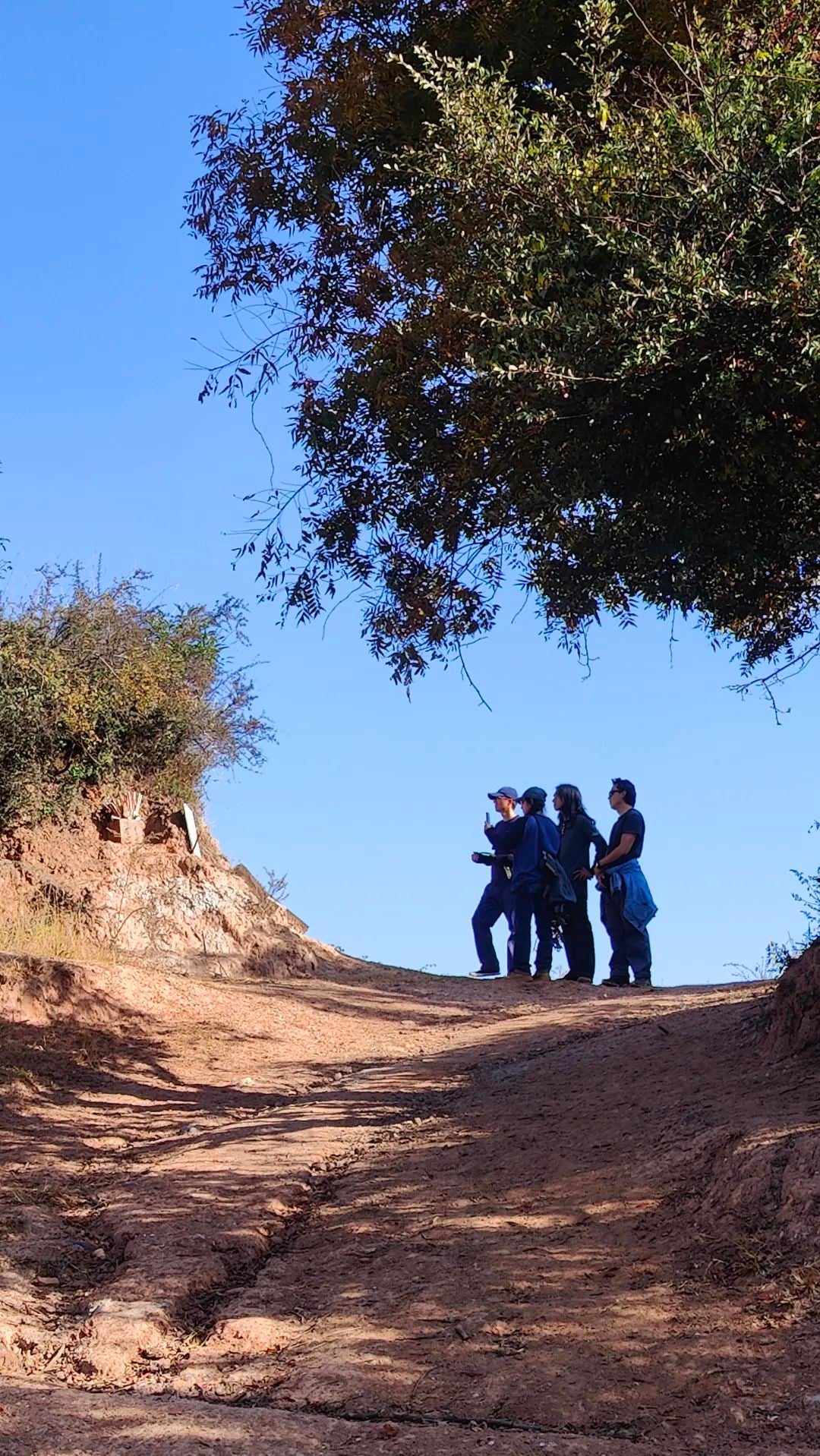
Learn AI Programming Together
Some information about AI programming
Celebrate the Torch Festival in a Nanzhao Royal Clan Village
Over the past two years, we have taken guests to celebrate the Torch Festival in Songhe Village, Eryuan. Together we slaughtered a sheep, and with the whole village, erected a huge torch in the center of the village square. Everyone made their own torches from hemp stalks, and together with the older and younger villagers, we rushed to grab the blessing baba (cakes) from the big torch, passing blessings to each other with fire. Even for me, a native Bai person, these are rare and precious traditional festival experiences. Dali has endless festivals, and I want to experience them more before they fade away. I remember the Torch Festival of my childhood: torches were no longer enough for me. Before the festival, I would tell my dad to prepare a bucket of waste engine oil and diesel, mix them together, and then I would tightly bind cotton and old cloth with rope into a ball (some kids would secretly take cotton from their quilts at home to make it). Finally, I would make an iron wire ball, soak it in the bucket of oil, and secretly take it out every day to look at it, looking forward to having a great time on the day of the Torch Festival. We would compete in the village and by the rice fields to see whose fireball or torch was more impressive. When the torches and fireballs were almost burned out, we would rush home, walk around the potted fruit trees in circles, and say blessing words, hoping they would grow even better in the coming year.