Xiaochun & Jason | Old Times · Dali Rainy Season
It is the rainy season in Dali again. The rain falls sparsely, washing over the stone slabs of Dali's old town, and also washing over people's memories. Some memories become blurrier with each wash, while others become clearer.
After working all day, when it got dark, I thought I should still go out. I brought Zhamao, drove the van toward the old town, with no particular destination, just following the traffic and driving forward. After passing the Three Pagodas, I stopped on Cangshan Avenue to handle an order.
A car pulled up and called my name. It turned out that Xiaochun had brought guests back from Huoshan and needed to take them to Pushi. He said to the guests in a mocking tone: "This is our big boss." The guests in his Tank 300, if they noticed my mottled Wuling van, would inevitably be skeptical. I said I would go to Pushi to find him later.
After finishing the order, I drove to Pushi. Xiaochun was standing by the car waiting for me; Pushi was already closed. Having a seat and a cup of coffee after work is our tradition. At this hour, no nearby cafés were open. So I called Aruna. She had led a trip to Xibo today and had just returned. She was happy on the phone and told us to come over.
At zayaa, Aruna made us coffee at the bar and prepared some snacks and fruit. Xiaochun and I sat across from her. We casually chatted about things that happened while leading tours. During the summer vacation, there were many guests and many incidents. Some guests got along really well, making us feel that the work was valuable. There were also unsatisfactory situations—some were regrets due to incompatible tastes, and some guests had no ordinary human kindness or decency, making us not want to deal with one more.
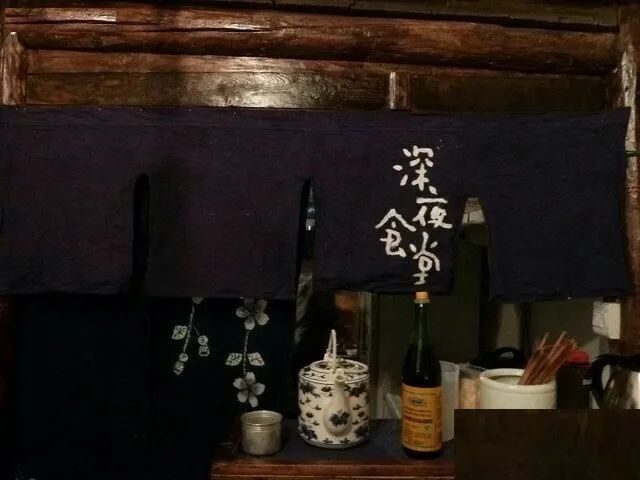
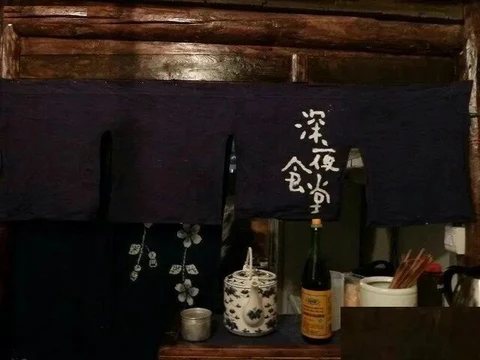
Soon the tailor came. Every time Xiaochun chats, he always remembers to invite him. Then they started teasing each other about their current situations, and soon they talked about the days of working together at the Late Night Diner. Many stories have been told dozens of times, but every such chat still makes them relished once more, sometimes with new embellishments. Huahua and Xiaohai were also often mentioned; at these moments, they felt alive again.
Actually, the time we worked together was three years, from 2013 to 2016. But because everyone had just arrived in Dali, life was new, the things we did were new, and we met many people. Back then, the Dali community was very small, only in the old town, so the density of daily interactions was high, and all sorts of things were happening. Hence, there were especially many people and events to remember.
During the five years when we lost contact, everyone scattered into their own lives, seemingly without many shared memories, often skipped over in conversations.
Perhaps in the last two years, we have come together again to lead travel activities, experiencing many common things, spending time together. New people have joined our lives, and deep connections have been established. Many small things are happening. In a few years, these recent times will become vivid memories again, and we'll be willing to savor this period over and over.
If there's something we can talk about that's almost the same each time, yet we never tire of it, it's inseparable from Xiaochun's subtle different renditions every time. Like this evening, he recalled that after some late-night shifts at the diner, in the early morning hours, the tailor would pick up a poetry collection from the bookshelf and recite Yeats's poems to him, which left a deep impression. Although he had always thought Yeats was a woman, that clearly didn't matter:
Your browser does not support the video tag.
Yeats's poem "The world is full of cries, you don't understand"
In addition, he pulled up an article he had written ten years ago, after working at the Late Night Diner for a year, and recited it with deep feeling.
We had agreed to end the chat at 1:30, but because Aruna had to lead a bagel baking experience at nine in the morning, Xiaochun forcibly extended it to three. He was still not done, and I said, "We really have to go." Aruna still had to clean up. We went out, the night was pitch black, each of us drove home, and Zhamao waited for me in the car.
Rainy Season in Dali
2014-06-17 08:35 Feng Xiaochun'er
It's the rainy season in Dali again. The rain falls sparsely, washing over the stone slabs of Dali's old town, and also washing over people's memories. Some memories become blurrier with each wash, while others become clearer.
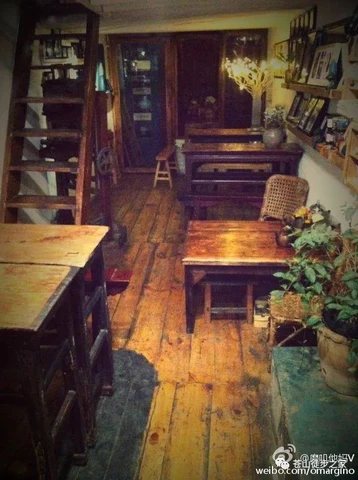
Thinking about it, I've been in Dali for exactly two years now, and at the Late Night Diner for almost a year. When I first came to the Late Night Diner last year, it was also the rainy season. Every early morning, there would be a steady drizzle. After closing, Jason and I would sit on the rattan chairs by the lowest wooden table near the door. Sometimes we'd be peeling boiled eggs, sometimes just smoking and chatting while waiting for the rain to stop. A few steps away there was a Hangzhou steamed bun shop. When the rain stopped, we'd go there for breakfast: two portions of soup dumplings and two bowls of plain congee.
Jason is twelve years older than me, experienced, rational, unkempt, and his humor matches mine. The guests would see him always in a white tight T-shirt, faded jeans, a pair of well-worn crazy horse leather shoes, or a pair of slippers that cost ten yuan at a street stall. He's from Shanghai, I'm from Hebei, one from the south and one from the north, twelve years apart. I don't know if this counts as a friendship that defies age, but it doesn't matter.
Even now, when I think back on those days at the Late Night Diner, the most relaxed moments were then, when we chatted idly about whatever topic. Sometimes we'd just sit there, drinking coffee, saying nothing, but not feeling awkward, listening to the rain outside and thinking our own thoughts. Last year's rainy season was passed in such conversations; I can't remember the topics now, but mostly I talked and he listened. He rarely talked about himself. He didn't say, and I didn't want to know. None of this hindered our conversations.
At ten o'clock every day, I was probably happiest. Opening time had just arrived, and I'd put on Shanghai old songs from the fifties and sixties, waiting for the guests. Many guests were like old friends to me. Their arrival brought not only their appetite but also other things. I don't know how to express it; I just felt a closeness. This time slot was the busiest, and I barely had time to say more than a few words to the guests before diving into the kitchen. Even when they left, I just said a simple goodbye. But that was fine; no small talk was needed.
Around midnight, things slowed down. That's when Jason and I would declare the battle over, sit down, and have a smoke to rest. Jason always rolled his own cigarettes. Every time, he unhurriedly placed the tobacco and filter tip on the rolling paper, spread them evenly, gently rolled it, licked the paper's edge to seal it, twisted off the excess tobacco at the tip, and then lit it. I tried rolling my own too, but after half a pack I gave up and went back to my Zhongnanhai brand. I didn't have the patience.
After midnight, guests came less in clusters, more sporadically. I preferred this time. The workload was lighter, the pace less intense. I could cook in the kitchen unhurriedly and still have the energy to chat with guests through the curtain across the doorway. At these moments, I felt happy, closer to the ideal late-night diner in my mind.
Quite a few people in Dali live a nightlife. There may be many ways to live the night, but some people just want a place to read, write, or simply sit for a while. I remember a few such people. At around two in the morning, when the shop was not crowded, he would lift the door curtain and come in, order a bowl of fermented rice dumplings, or just pour himself a cup of bitter buckwheat tea, sit for an hour, occasionally exchanging a few words with Jason and me, but mostly just sitting alone. Both Jason and I liked such guests: quiet, and not disturbing others.
There was also a girl whom Jason and I only knew as Xiao Mao. For a certain period, she came to the shop between two and three every day, poured herself a cup of bitter buckwheat tea, and climbed up to the loft on the second floor to draw. When tired, she'd take a nap. Neither Jason nor I disturbed her. Occasionally, when hungry, we'd fry a plate of pickled cabbage egg fried rice and would make a little extra to give to Xiao Mao. This went on every day until closing, and she'd leave with us. Around the end of the rainy season, she was leaving Dali. Before she left, she painted an oil painting in her own style, on which she wrote "Late Night Diner." It was quite abstract. Neither Jason nor I knew much about art, but we seriously placed it on the wooden shelf with the cups. Even now, when I think of Xiao Mao again, I still miss her. I really look forward to her coming back.
Four in the morning was closing time. At that hour, the whole old town was quiet, and it was the most relaxed time of the day for Jason and me. If there weren't many ingredients to prepare for the next day, Jason and I would sometimes have a cup of coffee in the shop and sit for a while, or leave right away. But if it rained, we'd keep chatting until the rain stopped. The joy in that, I think, only Jason and I know.
Except for every Monday, I've been busy from last year's rainy season to this year's rainy season without noticing. Due to changes in work distribution, the time I work with Jason has decreased a lot. But even when I'm alone, I still like to sit in the shop after closing, listen to music, doodle a bit, smoke a cigarette, drink a cup of coffee, and empty my mind. On rainy mornings, I also wait for the rain to stop, without feeling lonely.
Every day when I leave the Late Night Diner, walk out through the side door alley, breathe the fresh air, step on the morning stone slabs, and see the lantern that hangs outside as a sign, I always think gratefully: living life like this is enough.
2014.06.17
Photos
Keep reading
3
Jason | Using AI to Create Your Own Mini Program/Website
Two months ago in Chiang Mai, I stumbled upon the chance to start learning how to build mini programs. My AI programming mentor, Wangshen, told me, 'Once you finish your mini program, write a summary report.' Now I've completed the new mini program for Cangshan Hiking Home, and it's already being tested. It not only solves problems I've wanted to address for a while, like adding age tags to filter activities and providing an English version, but it has also introduced new features, such as browsing restaurants, guesthouses, and meeting points on a map for a more intuitive experience, and using AI to provide quite intelligent responses.
Learn AI Programming Together
Some information about AI programming
Celebrate the Torch Festival in a Nanzhao Royal Clan Village
Over the past two years, we have taken guests to celebrate the Torch Festival in Songhe Village, Eryuan. Together we slaughtered a sheep, and with the whole village, erected a huge torch in the center of the village square. Everyone made their own torches from hemp stalks, and together with the older and younger villagers, we rushed to grab the blessing baba (cakes) from the big torch, passing blessings to each other with fire. Even for me, a native Bai person, these are rare and precious traditional festival experiences. Dali has endless festivals, and I want to experience them more before they fade away. I remember the Torch Festival of my childhood: torches were no longer enough for me. Before the festival, I would tell my dad to prepare a bucket of waste engine oil and diesel, mix them together, and then I would tightly bind cotton and old cloth with rope into a ball (some kids would secretly take cotton from their quilts at home to make it). Finally, I would make an iron wire ball, soak it in the bucket of oil, and secretly take it out every day to look at it, looking forward to having a great time on the day of the Torch Festival. We would compete in the village and by the rice fields to see whose fireball or torch was more impressive. When the torches and fireballs were almost burned out, we would rush home, walk around the potted fruit trees in circles, and say blessing words, hoping they would grow even better in the coming year.