Jason | Three Weeks in Kyoto: Some Progress and Joy
Happy today: Deposited rent into the housing management company's account at an ATM. Such a small thing made me very happy. More
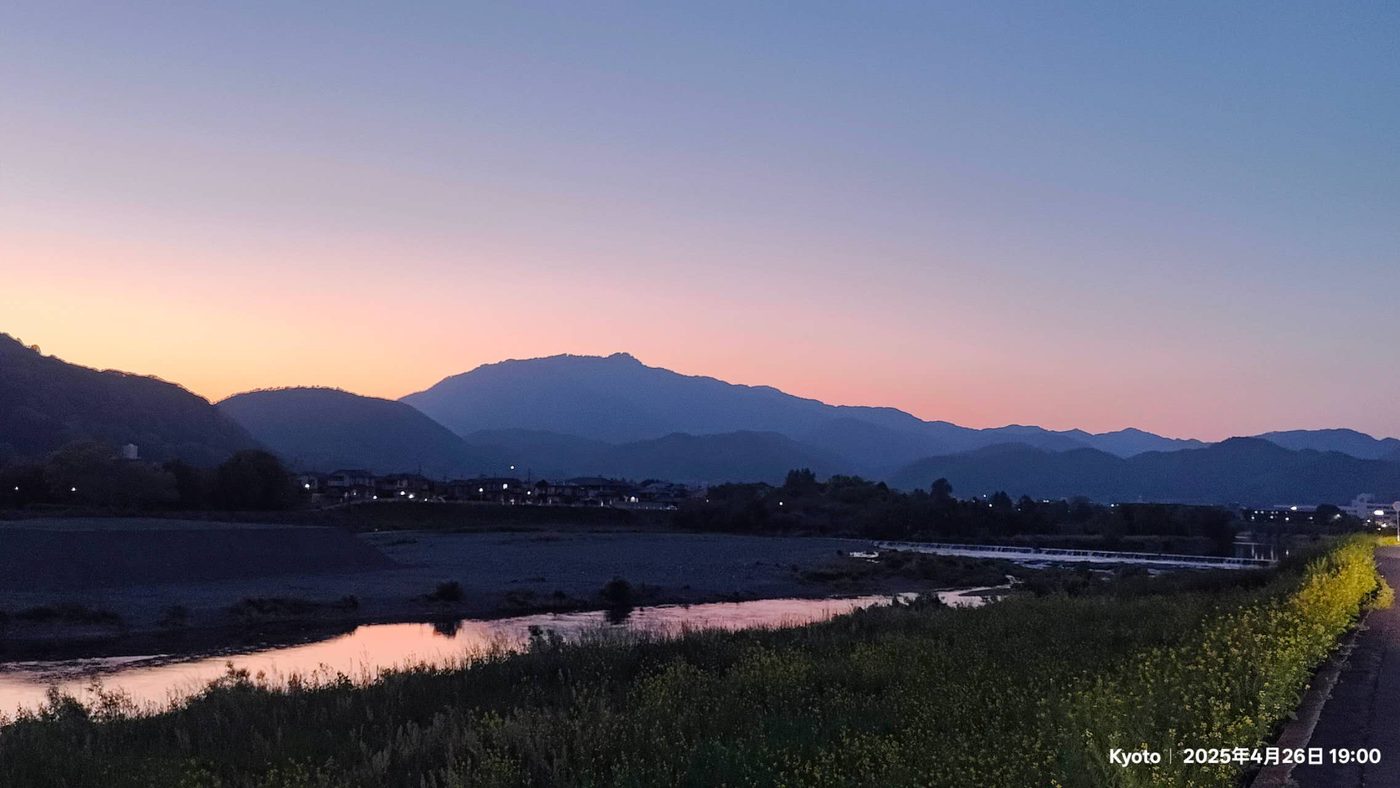
Happy today: Deposited rent into the housing management company's account at an ATM.
Such a small thing made me very happy. First, because the system was all in Japanese, and being able to do it on my own was exciting. Second, I unlocked paying institutions, so I can pay other institutions the same way in the future. I tried using China Merchants Bank for cross-border payment, but it only allows payments to personal accounts or schools.
I first went to an ATM of the Kyoto Central Shinkin Bank near my home, but it couldn't deposit cash, only cards. Then I rode my bike four kilometers to another bank. It was a rare wide road, and I had to cross a pedestrian bridge. There were few people on the road, and the sun was scorching the ATM room. Combined with nervousness, I was soon sweating. I entered various information, finally deposited 40,000 yen, the ATM returned 1,200 yen in change, and the excitement felt like I had accomplished a big thing.
In a completely unfamiliar environment, it's easy to have experiences and a sense of achievement, although others might see it as trivial. The feeling of completing an unknown task on my own is really great.
Yesterday was also a happy day: I got a perfect score on the Japanese grammar phase test (Lessons 5-9), with 29 questions, and I finished in only half the time.
When I first arrived in Kyoto, because I had been self-studying by listening to courses, I couldn't read hiragana and katakana well, so I could barely understand the entrance test questions. Now I can read and solve questions quickly.
It sounds like just a small breakthrough, but it really makes me happy.
For example, now I know that the place I live is Sagano Arashiyama, the nearby river is Katsura River, and the Kamo River is Kamogawa. Because I know the kanji, I tend to ignore their Japanese readings. When someone asks, I can't say them in Japanese. So now when I learn Japanese, I try to ignore the kanji readings as much as possible, learning the kana like a foreigner.
After three weeks, my Japanese has improved rapidly, and I can selectively use Japanese for simple expressions. I originally thought three months would pass quickly and I would only study symbolically, but actually, the on-site teaching by Japanese teachers is very useful. Their English is limited, so the whole class is in Japanese, which has a subtle effect. Also, classroom discussions and dialogue practice are helpful.
Our class is also interesting. After four people transferred, there are twelve people from ten countries: three from China, and one each from Italy, France, Canada, the UK, the US, Mexico, Brazil, Russia, and Malaysia. Their ages and reasons for enrollment vary.
Sabrina, a French woman of African descent, and I are short-term students, but we both study very seriously. Tom wants to be a chef, but compared to cooking, he prefers making beverages. Chris, an American from South Carolina, loves anime, just graduated from high school, and is preparing to take Japanese university entrance exams. The others are not yet clear.
Another reason for my rapid improvement is that I've been following Duolingo recently, practicing whenever I have free time. Many times I practice until my eyes are too tired to stay open, but it's a great pleasure. I didn't think Duolingo was useful before; I felt it was better to listen to traditional course explanations. That's how I had been learning, but it gradually became more difficult, requiring a lot of focus to start. The learning method was heavy, and it was hard to start during short fragmented times.
Until two weeks ago, when I had a meal with Zhang Chen, who was traveling. He ordered in Japanese fluently, which surprised me. He said he hadn't taken classes, just completed Duolingo, and now he uses English to brush up. I went home and tried it, and soon I was engaged and found it helpful. Through Duolingo's seemingly simple repetitive exercises, I subconsciously remembered words, which I used to forget easily. So my takeaway is that I can listen to grammar explanations, but I need to use Duolingo's practice system to consolidate vocabulary and sentence patterns, using them together.
For learning Japanese, knowing Chinese is an advantage because you can understand kanji, and knowing English is also a big advantage because many new words are borrowed from English, perhaps as many as Chinese characters. Without English, it's equally difficult to memorize these katakana pronunciations by rote. So I should have some advantages to learn well.
I'm also gradually getting familiar with my dormmates. Since most of them are not students, everyone has their own rhythm. I occasionally meet them on the first floor of the dorm, and if they cook in the kitchen, it's easier to run into them. Usually, Yoshi (a Japanese), Noah (a German), and Travor (a Canadian) cook. We chat when we meet, occasionally sharing food and life experiences. Noah is a graduate student, his Japanese is good, and he can even read and write kanji.
There's also an Australian named Muni, who looks of Indian descent. He says he's working while traveling, has been in Japan for over a year, and has learned some Japanese, enough for basic communication. We talked about China's manufacturing rise, and he said, "Japan's products used to be poor too, they improved gradually; it's a necessary process." I said, "You know, you seem quite familiar with history." He replied, "Yeah, I don't believe those media."
Although it's said that nine people live in this two-story building, it's usually very quiet. It doesn't feel like there are so many people, as if everyone is busy outside or in their rooms.
My classmate X, however, is not so lucky. The other day, a teacher from the school asked to talk to him. When asked what it was about, he said, "I ended up in a den of Indians. They're noisy every day, I can't sleep well. People on the first floor yell at people on the third floor, relatives calling all the time. I have dark circles under my eyes. I complained to the school teacher, but it didn't help." He added, "I told the school: either refund my money or change my dorm, or I'll hire a lawyer and sue you." He lived in the US for many years, so he still has an American way of thinking.
Last night, while I was smoking outside, Ginny, a Taiwanese girl, was cleaning up her room, sorting garbage, and moving it to the big trash bin outside. After greeting each other, we chatted for a while.
"I'm moving in a couple of days. I plan to go to Tokyo to look for a job."
"Is it that job opportunities are fewer in Kyoto?"
"Kyoto is mostly service industry-related. I studied design and want to work in my field. If I can't find one, I'll go back to Taiwan."
"What kind of design do you do? Were you in an advertising agency before?"
"Illustration. Not an ad agency; I was in product design at a company."
"Then could you first take an ordinary job and then slowly look?"
"If I take a job that doesn't require a professional background, it's easier. Some people use it as a stepping stone. The kimono shop owner where I part-time asked if I wanted to work there, but I didn't accept. She would have needed to train me for a year, and I thought it wouldn't be good to leave then."
She continued, "But this year of living and studying in Kyoto has been very rewarding. Even if I go back without finding a job, I'm very satisfied."
"Cross-cultural living and studying is certainly rewarding. For your one year in Kyoto, did you spend about NT$500,000?"
"More than that, about NT$700,000. Later, I made more friends, so I spent more on food, gatherings, and travel. But I also visited many places in Japan."
"How much do you earn from your part-time job at the kimono shop?"
"The maximum is 28 hours per month. I can earn about 100,000 yen (about NT$20,000) per month from the kimono shop, but I spent it all without keeping track. I have to thank my parents for their financial support."
"Oh, in Taiwan, do parents generally support their children?"
"It depends. I'm grateful that they supported me to study. I'll continue packing; I have a lot of things."
계속 읽기
3
Jason | Using AI to Create Your Own Mini Program/Website
Two months ago in Chiang Mai, I stumbled upon the chance to start learning how to build mini programs. My AI programming mentor, Wangshen, told me, 'Once you finish your mini program, write a summary report.' Now I've completed the new mini program for Cangshan Hiking Home, and it's already being tested. It not only solves problems I've wanted to address for a while, like adding age tags to filter activities and providing an English version, but it has also introduced new features, such as browsing restaurants, guesthouses, and meeting points on a map for a more intuitive experience, and using AI to provide quite intelligent responses.
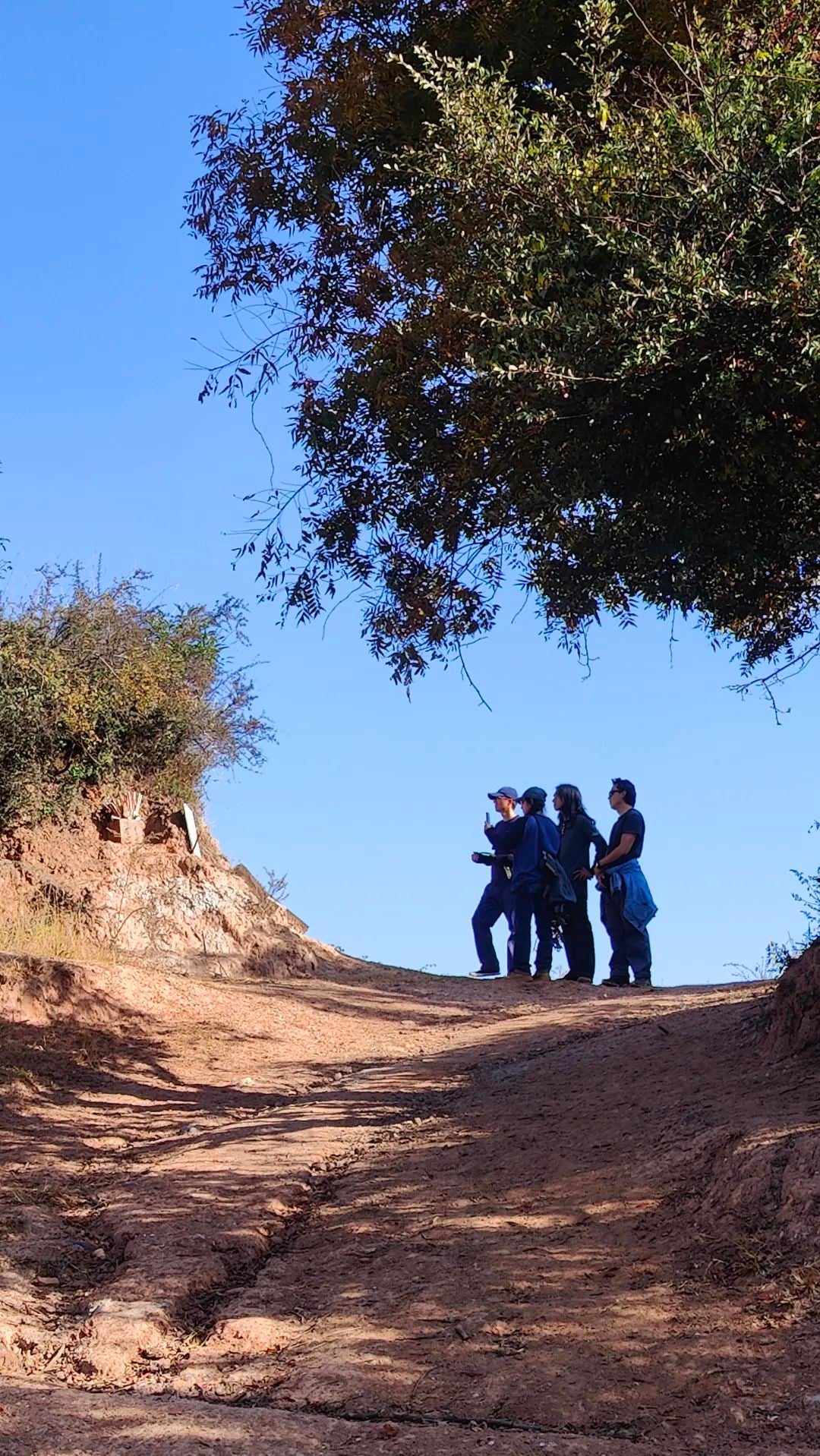
Learn AI Programming Together
Some information about AI programming
Celebrate the Torch Festival in a Nanzhao Royal Clan Village
Over the past two years, we have taken guests to celebrate the Torch Festival in Songhe Village, Eryuan. Together we slaughtered a sheep, and with the whole village, erected a huge torch in the center of the village square. Everyone made their own torches from hemp stalks, and together with the older and younger villagers, we rushed to grab the blessing baba (cakes) from the big torch, passing blessings to each other with fire. Even for me, a native Bai person, these are rare and precious traditional festival experiences. Dali has endless festivals, and I want to experience them more before they fade away. I remember the Torch Festival of my childhood: torches were no longer enough for me. Before the festival, I would tell my dad to prepare a bucket of waste engine oil and diesel, mix them together, and then I would tightly bind cotton and old cloth with rope into a ball (some kids would secretly take cotton from their quilts at home to make it). Finally, I would make an iron wire ball, soak it in the bucket of oil, and secretly take it out every day to look at it, looking forward to having a great time on the day of the Torch Festival. We would compete in the village and by the rice fields to see whose fireball or torch was more impressive. When the torches and fireballs were almost burned out, we would rush home, walk around the potted fruit trees in circles, and say blessing words, hoping they would grow even better in the coming year.