Weed Scene | Deep Mountain Mushroom Picking 2024
I think I achieved my goal: I stole a relaxed and happy time during the summer peak season that should have been anxious. Thanks! See you next year.
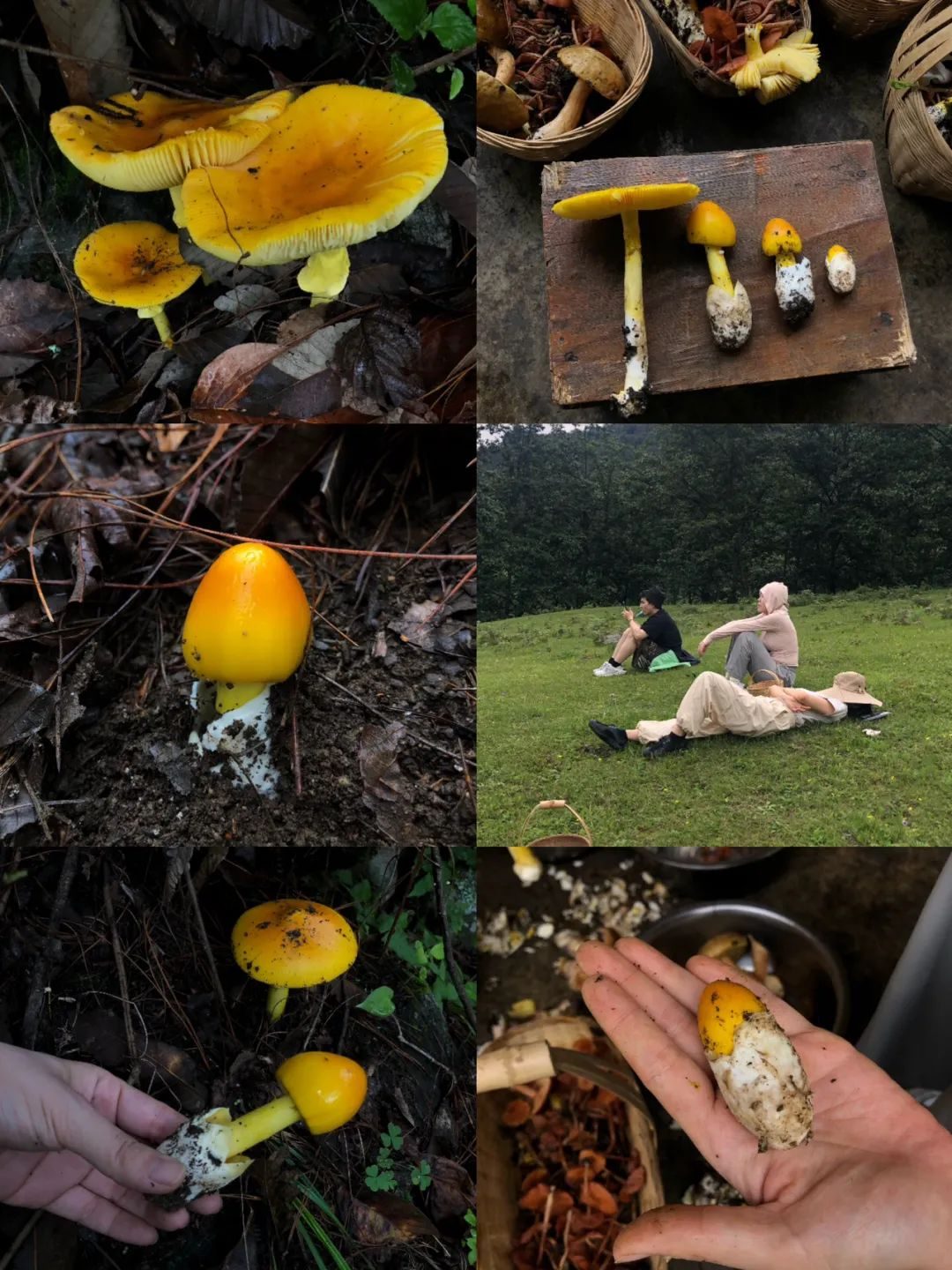
In early July 2024, I bid farewell to Cangshan Mountain and started the deep mountain mushroom picking experience...
On the evening before the activity started, I would stew chicken soup, prepare pots and pans, and cut the side dish for stir-fried mushrooms: cured meat. The cured meat was sent by my mother from my hometown. It is Hunan bacon with a smoky flavor, very suitable for stir-frying Yunnan mushrooms. It tastes good, but it is very hard and difficult to cut. I don't like cutting it. To avoid getting flustered during cooking the next day, it is best to cut it at home in advance. Garlic and green peppers I would leave for the next day, letting the guests cut them together. Otherwise, I don't know what tasks to assign to everyone.
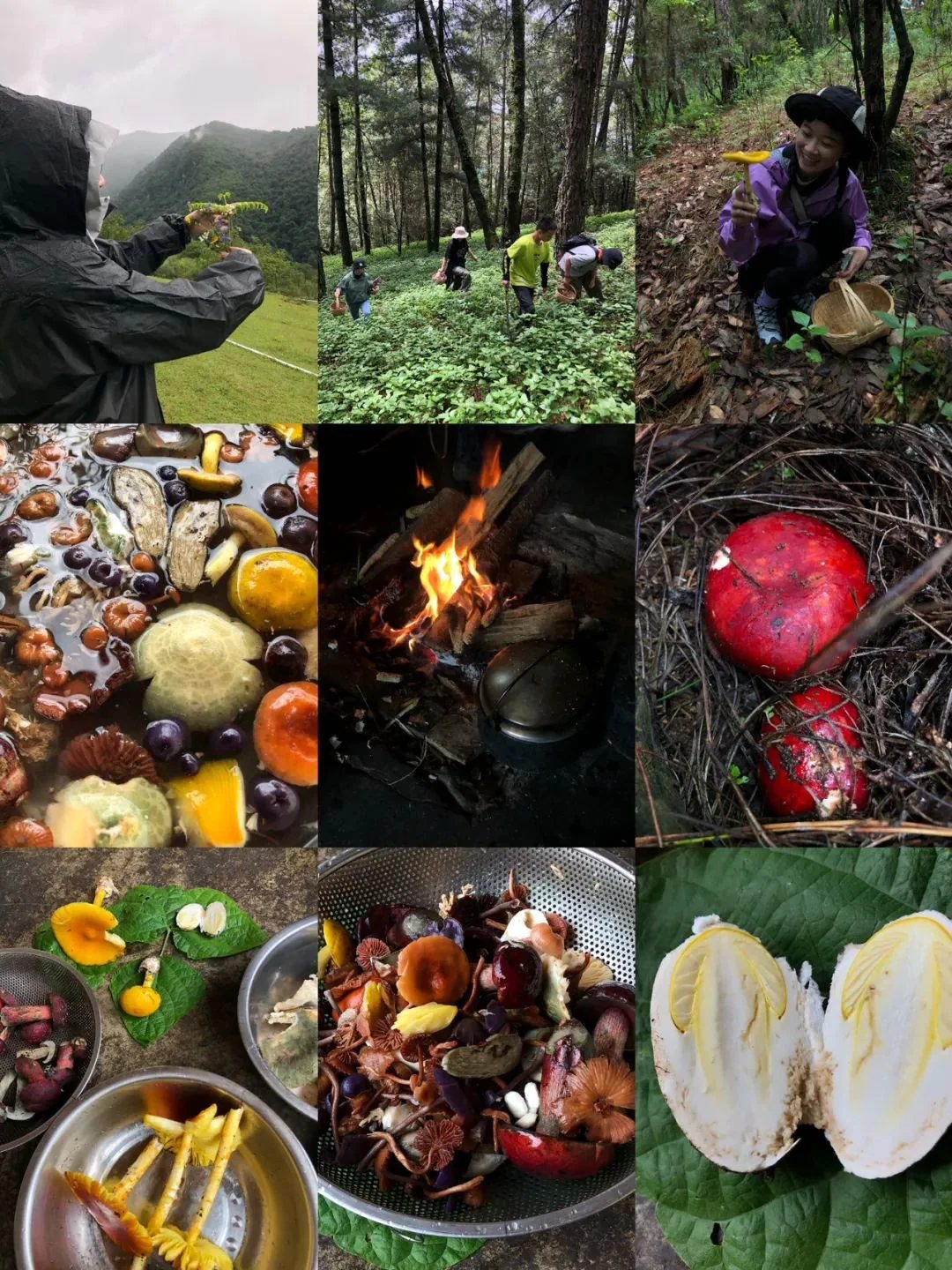
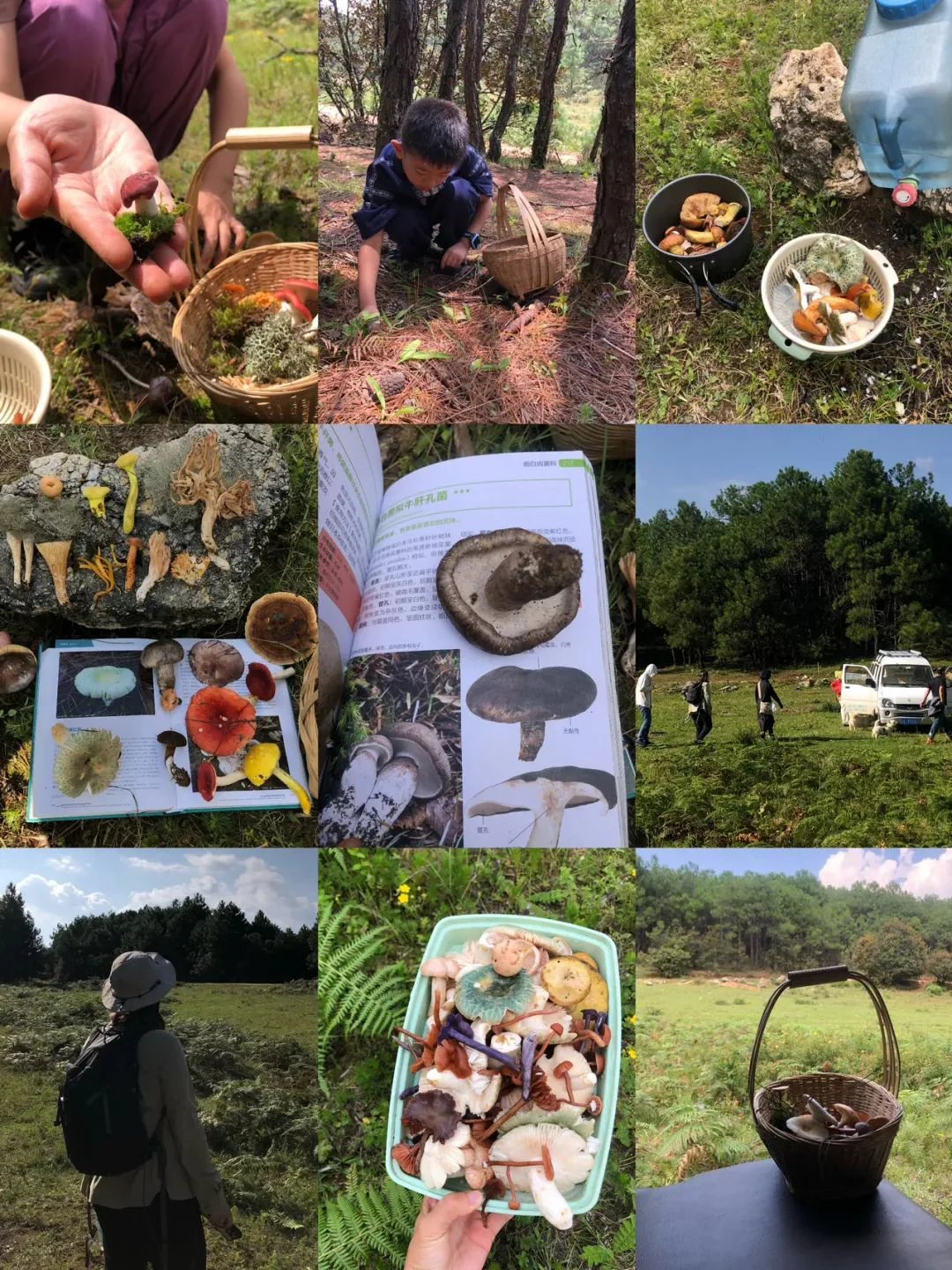
The next day, after arriving by car, each person gets a basket, twice the size of the one used in the regular mushroom picking version. We each carry our baskets and go into the forest. If you are a beginner, the probability of picking many delicious mushrooms is not high. Your eyes need practice to become sensitive to mushrooms. At this time, I have to go all out, because the deep mountain experience is not like the regular one. In the regular experience, we only need to collect enough samples, and the mushrooms eaten at noon are picked by the sisters. But for the deep mountain eating mushrooms, we have to rely on ourselves to pick. I need to quickly shuttle through the jungle, first take a rough look at the mushroom situation on the mountain, to gain confidence.
After picking enough, I divide the mushrooms in everyone's baskets into edible and inedible. Among the edible ones, I further divide them into those suitable for soup and those suitable for stir-frying.
The mushrooms picked each time are not certain, but there are some rules for putting mushrooms in the chicken soup. So on the way up the mountain, if I have the chance to meet villagers picking mushrooms, I will first buy some of their green-headed mushrooms (qingtou jun), orange-yellow amanita (chenghuang egao), or a few types of blue bruising boletes (jianshou qing) that can be stewed to bring out umami, as backup.
For mushrooms stewed in the soup, it is best to only put one type. If you put different varieties, you must understand whether their textures and flavors are compatible. If they don't match well, the mushroom soup will become chaotic and impure. If you don't understand the mushrooms in hand, it is better to just put one type.
Common mushrooms we can pick that are suitable for soup: green-headed mushroom (qingtou jun), white onion boletus (bai cong niu gan jun), brown-pored wrinkled-cap boletus (he kong zhou gai niu gan jun), chanterelle (ji you jun), several species of the orange-yellow amanita group (cheng huang e gao), morel (yang du jun), shaggy mane (mao tou gui san), ashen-red russula (hui rou hong gu), red-gilled russula (hong zhi ru gu), wax cap (la jun), spike mushroom (ding jun)...
Generally speaking, mushrooms suitable for soup are also suitable for stir-frying. Stir-fried mushrooms are more casual. In addition, there are also some suitable for tempura. Currently, I think slender and small ones like purple wax cap (zi la jun) and wine-red wax cap (jiu hong la jun) are suitable.
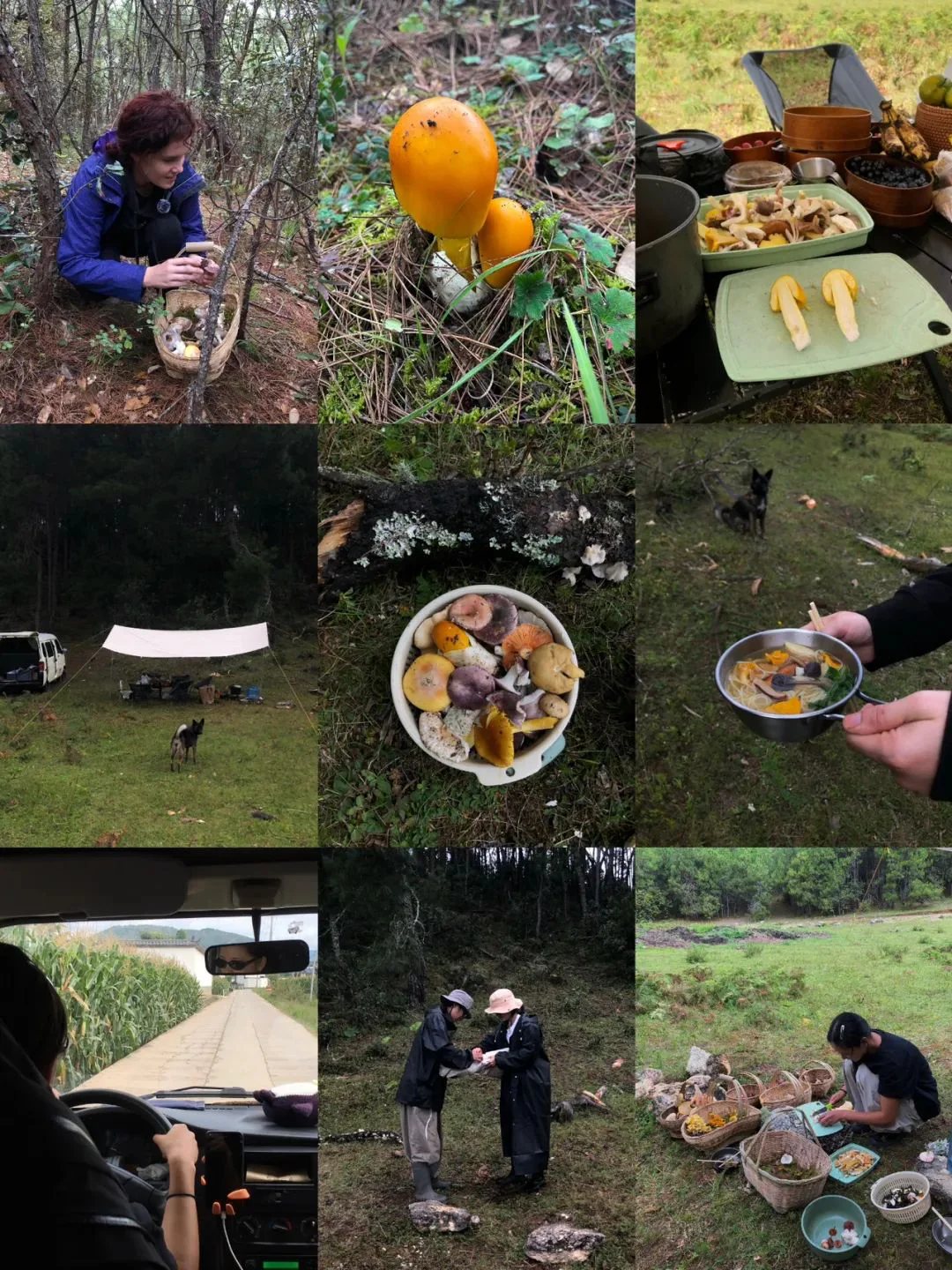
When the mushroom soup is ready, first give each person a bowl to drink. After tasting the pure mushroom soup, you can put noodles into the soup.
At this time, the stir-fried mushrooms are almost ready to be taken out of the wok. In contrast to the mushroom chicken soup, I like to mix several kinds of mushrooms together in stir-frying. For example: thick-fleshed boletus and juicy blue-yellow-red russula (lan huang hong gu), plus small wax caps stir-fried together. The gills of the blue-yellow-red russula are juicy and the flesh is soft, balancing the thick slices of boletus, while the small wax caps act like a seasoning mixed in. Add fragrant cured meat, dried chili peppers, and garlic. The resulting sauce goes well with rice and is also suitable as a topping.
When the noodles are cooked, take them out, cover them with the stir-fried mushrooms as a topping, and mix. In this way, we can both drink the pure mushroom soup and eat the mixed-flavor mushroom noodles. Occasionally I would fry some tempura, but not every time. After several activities, I found that my two hands were not enough. I had to wrap the noodles, watch the mushrooms in the oil pot, and pick them up at the most appropriate time. After a flurry of activity, the chicken soup on the other side might be boiling, and I had to go cook the dishes.
I always fantasize that one day I can become a chef. This experience is partially a dream come true, right? Although it feels more like playing house.
This summer, the deep mountain mushroom picking was held a total of 14 times. Every time I would send the following message to the guests who booked the activity:
"Deep mountain mushroom picking is more like an exploration and an uncertain trip, with many unknowns. Maybe we are lucky enough to pick enough mushrooms to feast on, then we can wash and cook them right on the mountain and eat them. If unlucky, we didn't pick enough mushrooms, then we can only cook some instant noodles to fill our stomachs."
Actually, we wouldn't really let everyone eat instant noodles. This was just a trick I used to test everyone's level of relaxation.
What makes me happy is that most guests passed the relaxation test. Later, it was also proven that whether it was wind and rain, or wheels stuck in a ditch, everyone really handled it with ease. This is probably part of the spiritual value this experience brings to me.
I think I achieved my goal: in the summer peak season that should have been anxious, I stole a relaxed and happy time. Thanks! See you next year.
The first deep mountain mushroom picking session:
My old mushroom friend Mo, and her friends went all the way from Shanghai to Chuxiong to pick mushrooms, then from Chuxiong to Dali to pick mushrooms. This is the fourth year Mo has come to Dali to pick mushrooms. I have to say: I am moved for the mushrooms.
Also participating was new mushroom friend Xiaoxue.
Mo (reposted from Mo's Moments):
Arrived at the doorstep of the god of boletus mushrooms.
This is the fourth year entering the Cangshan Mountain to pick mushrooms. Sitting in Xiaojing's passenger seat, holding Haha, my eyes were full of walnut trees in Yangbi. The forest scent became stronger with each breath, and my mind kept recalling Anna Lowenhaupt Tsing's preface in "The Mushroom at the End of the World": "What do you do when your world starts to fall apart?"
She said take a walk, and perhaps unexpectedly encounter mushrooms, reminded by them of the luck of being here and now—"even amid the fear of uncertainty, there is still fun to be found." I deeply agree.
Searching for mushrooms is the opposite of certainty: understanding the preferences of various mushrooms, identifying tree species, and learning about the symbiotic relationships between mushrooms and plants and animals certainly helps, but it does not guarantee anything. After all, mushrooms grow freely; they do not exist attached to human expectations and imaginations. Walking quietly through the forest, I often hear the voice of calculating unpredictable costs and returns—it's not that you will harvest only by crossing mountains and ridges, so why bother? Applying this purpose-oriented framework to mushroom picking should often make you feel frustrated, but the beating heart and the excitement filling my body remind me it is not just that.
We, along with mushrooms, trees, and mountains, can be integrated into a grander perspective. Here, we focus on the process itself. Perhaps we will feel the russula buried under the oak leaves, perhaps we will follow the aroma to termite mushrooms, perhaps we will locate the white boletus by the buzzing of mosquitoes. We may see it or not. This is a song composed of serendipity. Chance and surprise are the motives. The audience entering the venue will be forced to listen until they learn to appreciate uncertainty with curiosity and leave satisfied.
Being constantly called into the woods full of uncertainty—perhaps this is the course I need to learn.
Sessions 2 to 14 (photos from one session are missing):
Finally: Because I ate a lot of orange-yellow amanita mushrooms this year, I will write an article about identification information for this mushroom later.
Photos
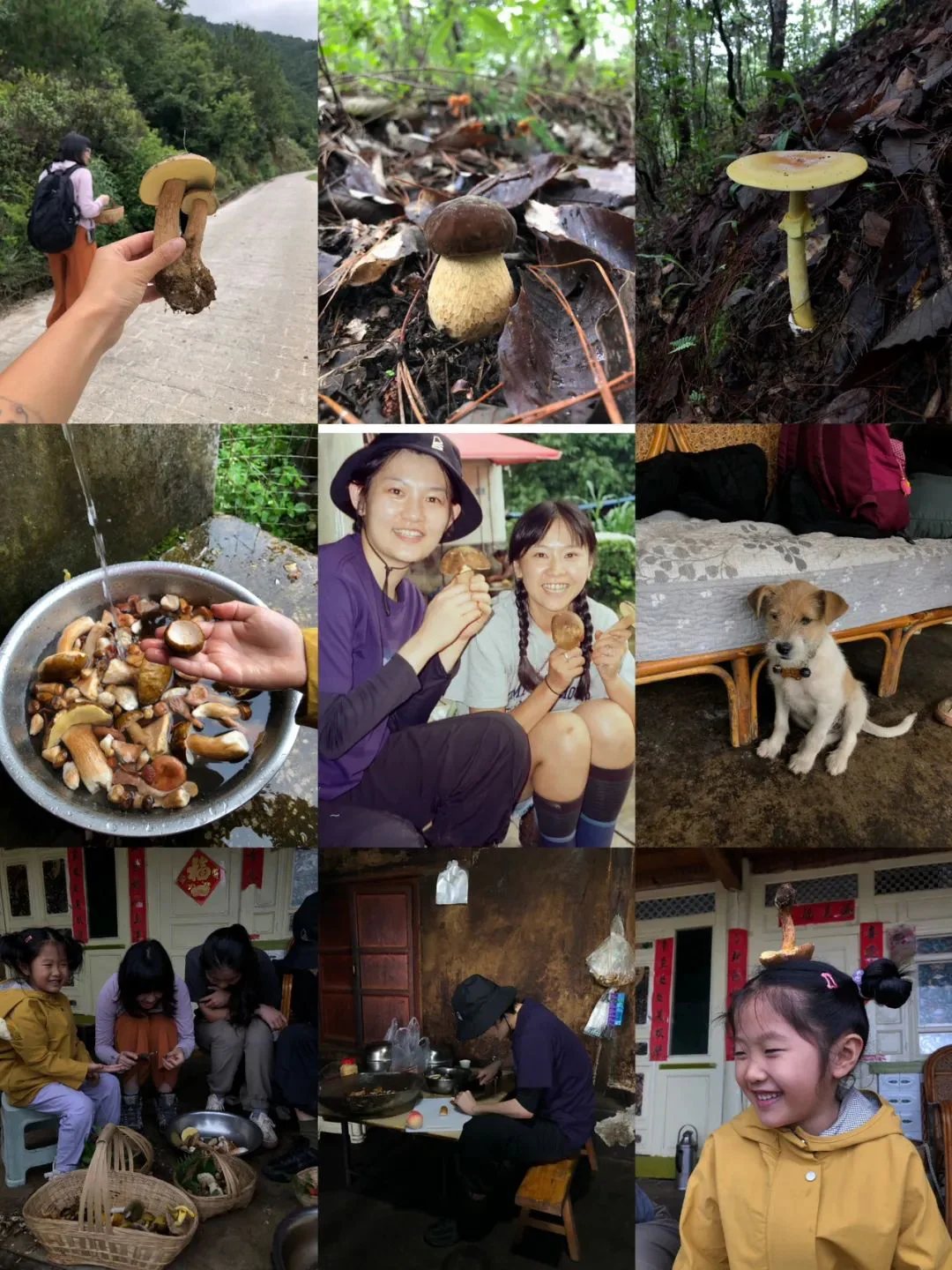
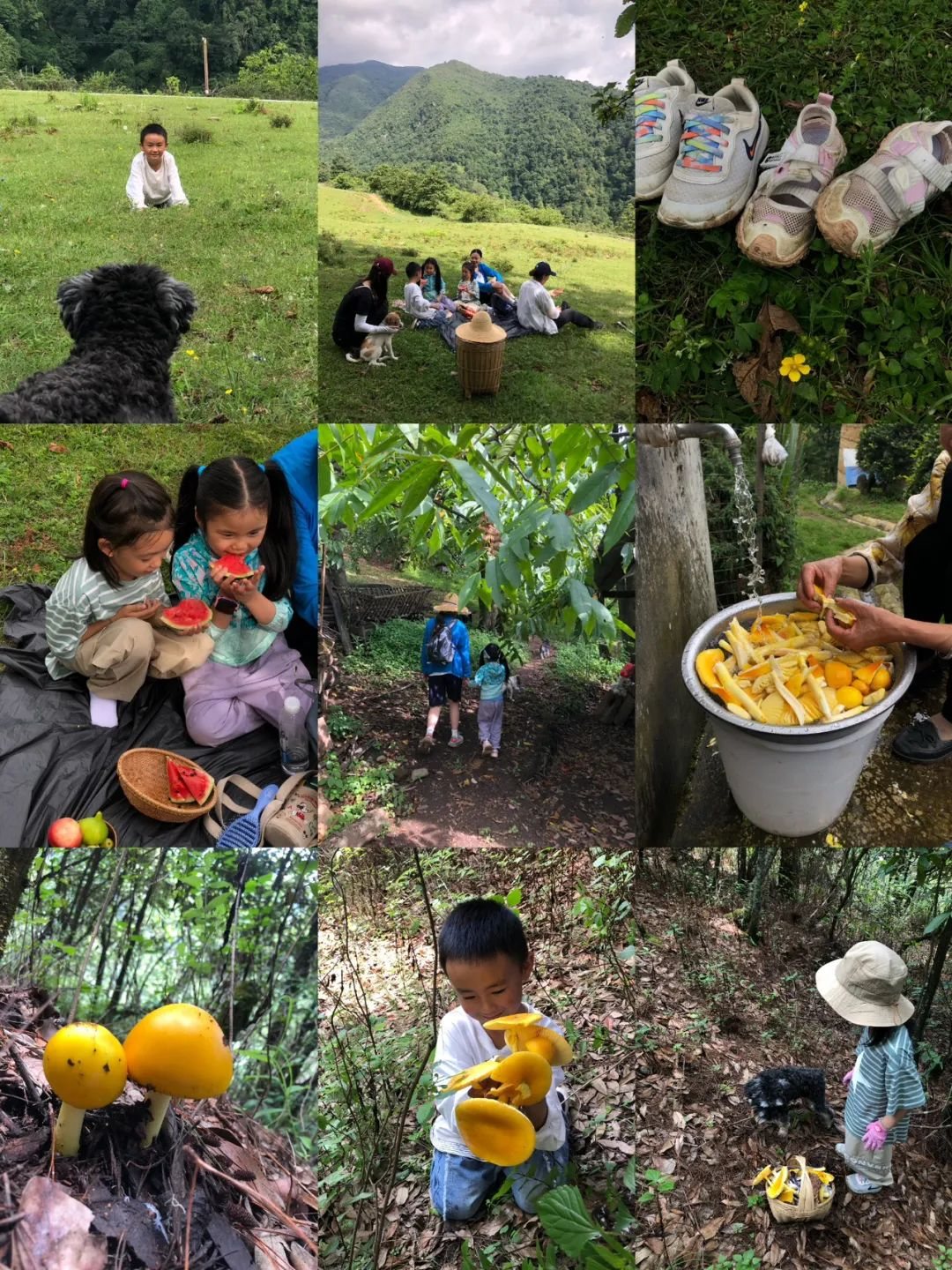
계속 읽기
3
Jason | Using AI to Create Your Own Mini Program/Website
Two months ago in Chiang Mai, I stumbled upon the chance to start learning how to build mini programs. My AI programming mentor, Wangshen, told me, 'Once you finish your mini program, write a summary report.' Now I've completed the new mini program for Cangshan Hiking Home, and it's already being tested. It not only solves problems I've wanted to address for a while, like adding age tags to filter activities and providing an English version, but it has also introduced new features, such as browsing restaurants, guesthouses, and meeting points on a map for a more intuitive experience, and using AI to provide quite intelligent responses.
Learn AI Programming Together
Some information about AI programming
Celebrate the Torch Festival in a Nanzhao Royal Clan Village
Over the past two years, we have taken guests to celebrate the Torch Festival in Songhe Village, Eryuan. Together we slaughtered a sheep, and with the whole village, erected a huge torch in the center of the village square. Everyone made their own torches from hemp stalks, and together with the older and younger villagers, we rushed to grab the blessing baba (cakes) from the big torch, passing blessings to each other with fire. Even for me, a native Bai person, these are rare and precious traditional festival experiences. Dali has endless festivals, and I want to experience them more before they fade away. I remember the Torch Festival of my childhood: torches were no longer enough for me. Before the festival, I would tell my dad to prepare a bucket of waste engine oil and diesel, mix them together, and then I would tightly bind cotton and old cloth with rope into a ball (some kids would secretly take cotton from their quilts at home to make it). Finally, I would make an iron wire ball, soak it in the bucket of oil, and secretly take it out every day to look at it, looking forward to having a great time on the day of the Torch Festival. We would compete in the village and by the rice fields to see whose fireball or torch was more impressive. When the torches and fireballs were almost burned out, we would rush home, walk around the potted fruit trees in circles, and say blessing words, hoping they would grow even better in the coming year.