First Time Cooking on April 13
Amonad said she would go to Kyoto on Sunday for errands and asked if we could meet. I suggested having a meal together, initially thinking of eating out. At noon, I told her: I'll buy groceries and cook at my dorm. More
Amonad said she would go to Kyoto on Sunday for errands and asked if we could meet. I suggested having a meal together, initially thinking of eating out. At noon, I told her: I'll buy groceries and cook at my dorm.
Amonad has been studying at a language school in Kyoto since last year. I came here inspired by her. She used to live in Dali and joined my hiking tours, so we got to know each other and became friends, keeping in touch occasionally. This year she switched to a language school in Tokyo. Her students Qiulai and Adong had dinner with us in Tokyo last April.
I moved in on April 9 and hadn't really cooked yet, still getting to know the place. I decided to start cooking today, and I saw Travor cooking in the communal kitchen. I asked him where to buy groceries. I only knew Fresco, where vegetables seemed quite expensive. He happily told me there's a nearby supermarket that is much cheaper, some items half the price. Turn left out of the door, first left, very close.
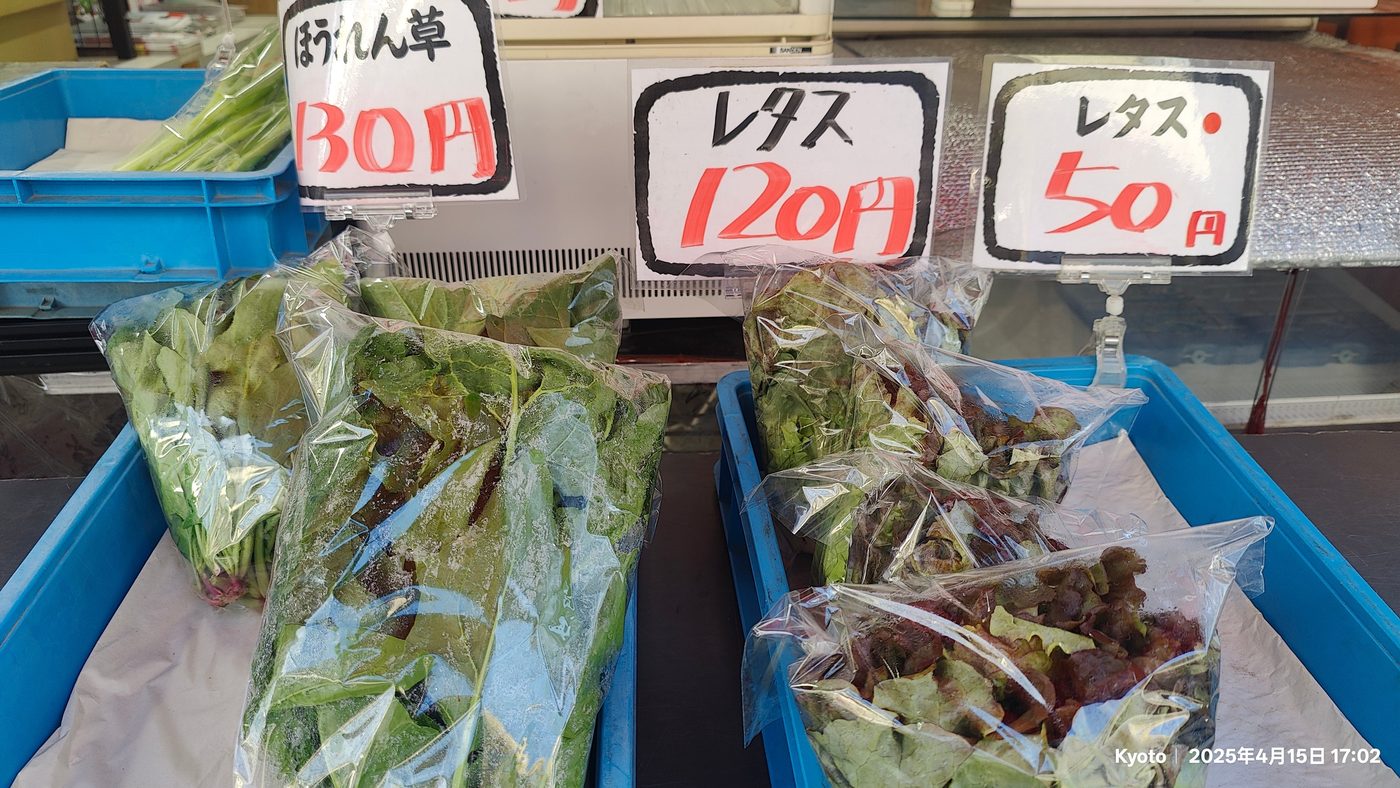
I indeed found that supermarket. The promotional small cucumbers were six for less than 6 yuan (110 yen), not expensive.
I bought 4 jin of rice for 100 yuan, 2 jin of oil for 30 yuan, a bottle of soy sauce for 20 yuan, three onions for 10 yuan, bean sprouts for 5 yuan, 100g minced meat for 14 yuan, and five types of fish sashimi for 60 yuan. There were some other items too.
Overall, rice is very expensive at 25/jin because Japan imports rice with high tariffs and quota restrictions to protect domestic agriculture. Vegetables are a bit expensive, and pork is also expensive. However, meat is easy to get in bento boxes, while vegetables are more precious, especially leafy greens; 10 yuan only buys a small bunch, and bento boxes usually don't have them. The next day, I cooked again and stir-fried a plate of very green tender vegetables. I shared some with a Taiwanese girl, Ginny, who was heating her food. Even though she is very introverted and seemed like the type who doesn't want to accept things from others to avoid unnecessary connections, she didn't refuse: 'No one can refuse a plate of simple stir-fried leafy greens.'
Cooking greatly increases the chances of understanding a place. You have to go to the supermarket or market to buy ingredients, which leaves a much deeper impression than just walking into a supermarket.
At around 5 o'clock, while I was cooking, Amonad arrived and rang the doorbell. As soon as she came in, she said, 'This is amazing. I walked all the way from the station, and it's so beautiful.' She toured my room and said, 'Compared to Tokyo, the space here is really not small.' Talking about food prices in Japan, she said Tokyo is too expensive; she can't bring herself to buy vegetables and fruits there. Kyoto is much better; she can afford them. My German roommate Noah said, 'In Kyoto, eating out and cooking at home isn't much different. In Germany, eating out is unaffordable.'
We cooked and chatted. I said, 'You look great.' Indeed, she radiated a happy and lively aura.
'I'm in a very good mood in Japan,' she said. 'But today at Ueno Park station, I encountered a girl from China. She was stepping back and almost stepped on me. She didn't say sorry and even glared at me.'
'Indeed, if people around you are unconsciously defensive and aggressive, it's hard to be in a good mood. Something like that can ruin a whole day's mood,' I empathized. 'Probably people in China are under a lot of pressure.'
'Japanese people are under a lot of pressure too.'
'Then it's about quality, I guess.'
We fantasized about going to Kanazawa language school together later, a place with a long history, quaint and not expensive.
I made onion meatballs, stir-fried bean sprouts, and steamed over-cooked spring bamboo shoot meat patties. I didn't buy enough leafy greens.
After dinner, around 7 o'clock, it was getting dark, I walked Amonad to the station to take the train back to Kobe, because Kyoto homestay is still too expensive recently; she was staying in Kobe, only 20 minutes by train. It was raining outside, so we walked with umbrellas. It turned out the electric train station was very close to my place, only a 5-6 minute walk. I also saw the stream outside, its name is Arisugawa, written on a small bridge called Saikyo Bridge, a beautiful name. The train arrived in 7-8 minutes, stopped, a short train of two or three cars, then clattered off again.
Near, a five- or six-minute walk. Also saw the stream outside, its name is Arisugawa, written on a small bridge called Saikyo Bridge, a beautiful name. The train arrived in 7-8 minutes, stopped, a short train of two or three cars, then clattered off again.
계속 읽기
3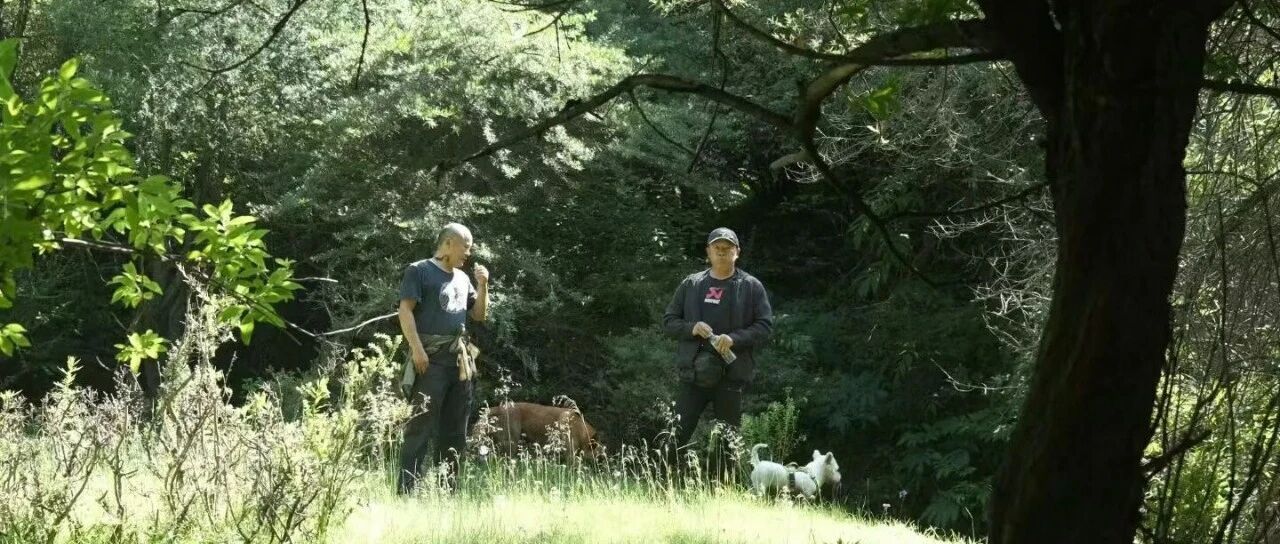
Jason | Using AI to Create Your Own Mini Program/Website
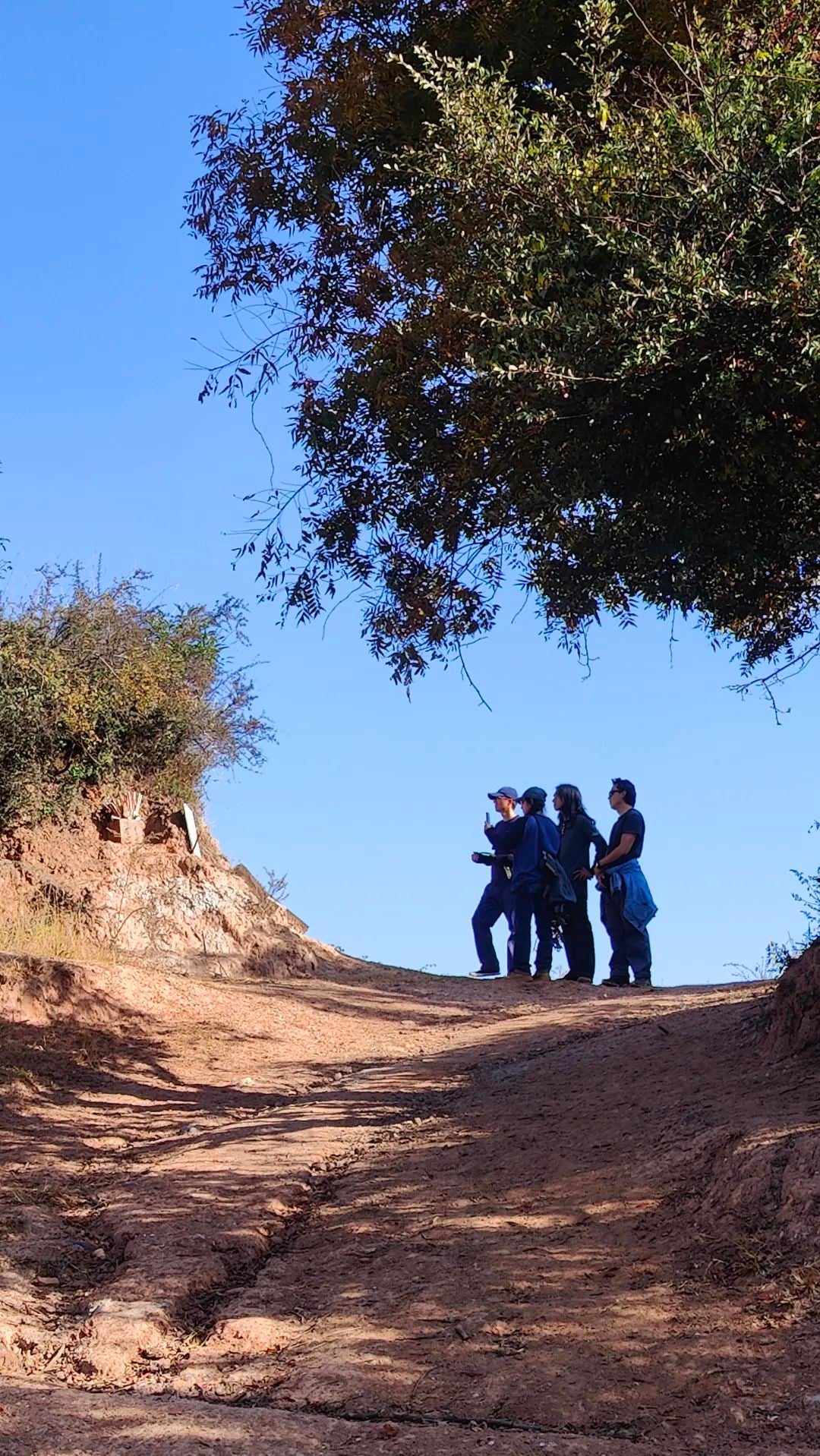
Two months ago in Chiang Mai, I stumbled upon the chance to start learning how to build mini programs. My AI programming mentor, Wangshen, told me, 'Once you finish your mini program, write a summary report.' Now I've completed the new mini program for Cangshan Hiking Home, and it's already being tested. It not only solves problems I've wanted to address for a while, like adding age tags to filter activities and providing an English version, but it has also introduced new features, such as browsing restaurants, guesthouses, and meeting points on a map for a more intuitive experience, and using AI to provide quite intelligent responses.
Learn AI Programming Together
Some information about AI programming
Celebrate the Torch Festival in a Nanzhao Royal Clan Village
Over the past two years, we have taken guests to celebrate the Torch Festival in Songhe Village, Eryuan. Together we slaughtered a sheep, and with the whole village, erected a huge torch in the center of the village square. Everyone made their own torches from hemp stalks, and together with the older and younger villagers, we rushed to grab the blessing baba (cakes) from the big torch, passing blessings to each other with fire. Even for me, a native Bai person, these are rare and precious traditional festival experiences. Dali has endless festivals, and I want to experience them more before they fade away. I remember the Torch Festival of my childhood: torches were no longer enough for me. Before the festival, I would tell my dad to prepare a bucket of waste engine oil and diesel, mix them together, and then I would tightly bind cotton and old cloth with rope into a ball (some kids would secretly take cotton from their quilts at home to make it). Finally, I would make an iron wire ball, soak it in the bucket of oil, and secretly take it out every day to look at it, looking forward to having a great time on the day of the Torch Festival. We would compete in the village and by the rice fields to see whose fireball or torch was more impressive. When the torches and fireballs were almost burned out, we would rush home, walk around the potted fruit trees in circles, and say blessing words, hoping they would grow even better in the coming year.